By Ivy Tejano
DAVAO CITY – Mindanao has emerged as the country’s most improved region in reducing poverty and stabilizing prices, while remaining a surplus producer of rice and fish, according to the Mindanao Development Authority.
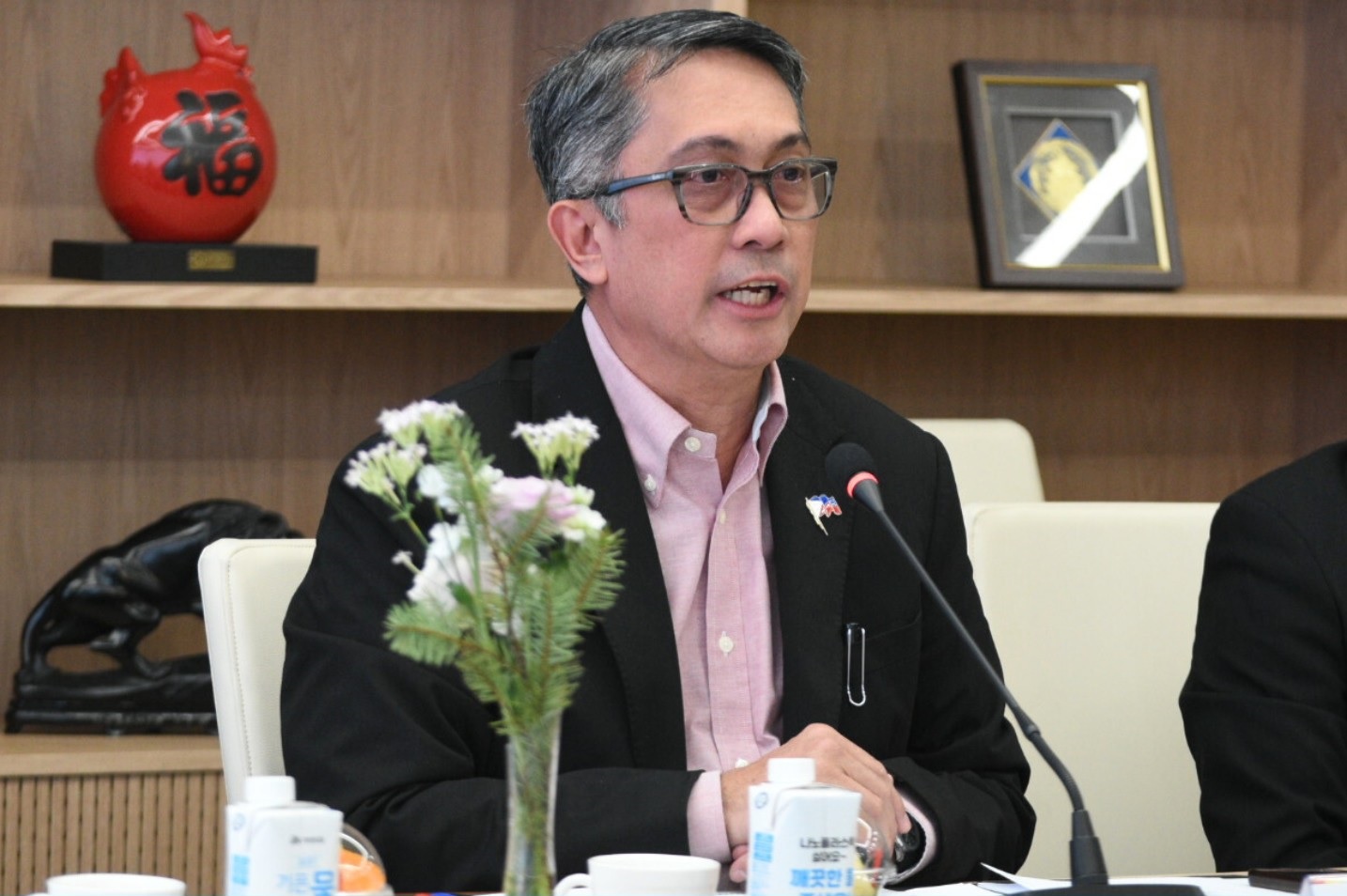
Mindanao Development Authority Chairperson Secretary Leo Tereso Magno assessed the 19-page “Mindanao Socioeconomic Analysis Report, First Semester 2025” as he presented it in a business forum at NCCC Victoria Plaza.
He said that recent data showed Mindanao recorded the largest drop in poverty nationwide, with a 7.3-percentage-point decline from 2018 to 2023, as economic growth, improved peace, and higher social spending began to reach more communities.
Though Mindanao still faces underemployment, infrastructure gaps, and years of receiving less national budget support, Magno said the whole island is showing resilient performance across multiple indicators.
Big Contributor, Young Labor Force
Mindanao is the country’s second-largest island, accounting for 34% of the land area and home to over 26 million people, or 26% of the population. It accounts for 15.3% of the national GDP, 42% of the country’s food trade, and 45% of fish production.
“The island’s demographic profile is significantly youthful,” Magno said, giving it a potential labor-force advantage but also posing challenges in generating enough quality jobs to match the rapid growth of its working-age population.
From 2023 to 2024, Mindanao’s economy experienced steady regional gross domestic product growth, averaging 0.82 percent per quarter, according to the report.
Regions 10 (Northern Mindanao), 11 (Davao Region), and 13 (Caraga) posted GRDP growth rates above the national average, driven mainly by robust gross capital formation and infrastructure spending.
The shift, Magno said, signals a transition “from a purely consumption-driven economy to a more production- and investment-oriented development path.”
Improve Jobs, Underemployment Persists
Mindanao’s labor market has expanded in size and complexity, with higher labor force participation and changing employment patterns across regions, according to the report. Jobs are improving, but underemployment remains a persistent issue.
It also noted that improved peace and order in the Bangsamoro Autonomous Region in Muslim Mindanao and parts of Caraga have enabled more job seekers to work in nearby communities, thereby boosting agricultural and manufacturing activity.
“Urban centers like Davao have also attracted high-skilled and technical workers through the business process outsourcing industry,” the report stated.
However, underemployment remains “persistent and troubling,” particularly in Regions 9, 10, 12, and BARMM, where many workers are in low-paying or part‑time jobs that do not match their skills.
Magno said the trend reflects job informality and skills mismatch that limit workers’ productivity and earning potential, especially in Western Mindanao and SOCCSKSARGEN, which are more vulnerable to market disruptions and climate-related shocks.
He said reducing underemployment will require skills training that matches industry needs, along with more public works and infrastructure projects to help local economies move beyond low-value agriculture and services.
Inflation Tamed, Poverty Pockets Remain
Meanwhile, after spikes in 2022 and 2023, inflation across Mindanao returned to the 1–4 percent “healthy range” in 2024. Regions 9, 10, 11, and 13 all posted rates within target, while BARMM stood out for maintaining low and stable prices from 2019 to 2024, indicating stronger local food supply systems.
Despite these gains, Magno stressed that poverty remains deeply rooted in post-conflict and geographically isolated areas, such as the BARMM uplands, Caraga, and the upland areas of SOCCSKSARGEN. These places face weak connectivity, limited access to services, and residual conflict.
Mindanao’s Human Development Index averaged 0.68 in 2022, slightly below the national average of 0.71, with scores ranging from 0.483 in Region 12 to 0.698 in Region 13 and 0.646 in BARMM.
A MinDA-generated poverty map identified provinces such as Lanao del Sur, Sulu, Maguindanao Norte and Sur, Tawi-Tawi, Basilan, Zamboanga del Norte, Agusan del Sur, Surigao del Norte and Sur, Sultan Kudarat, and North Cotabato as priority areas.
Proposed interventions include accelerating Marawi rehabilitation, expanding water and health infrastructure in island provinces, strengthening local governance in conflict-affected areas, improving sea transport and tourism links, building rural roads and value chains, and reinvesting gains from the mining and extractive industries into regional development.
Trade & Logistics Gaps
Mindanao’s total trade volume in US dollars has risen over the past two decades. Still, growth has been “intermittent,” with sharp fluctuations in regional import and export volumes, according to the report.
The Davao Region continues to dominate external trade due to its agri-industrial base, major seaports, and established trade routes, while Northern Mindanao benefits from the Cagayan de Oro port and its manufacturing and agribusiness activities.
In contrast, trade in BARMM, Caraga, and the Zamboanga Peninsula remains constrained by inadequate infrastructure, limited private sector integration, and logistical bottlenecks.
To enhance competitiveness, Magno said Mindanao must invest more in logistics, export‑oriented processing zones, and digital trade systems to link producers, especially in rural areas, to larger markets.
Food Basket of the Philippines
The report reaffirms Mindanao’s role as the country’s food basket, noting that the island is a net surplus producer of both rice and fish.
In 2024, Regions 12, 13, and BARMM achieved 100 percent rice self-sufficiency, producing more rice than they consumed. Davao region sustained rice production growth despite weaker irrigation facilities.
Regarding fisheries, while the national fish sufficiency ratio declined from 97.2 percent in 2022 to 88.6 percent in 2024, Mindanao maintained a surplus production.
BARMM alone produced about six times its local fish consumption needs, underscoring its status as the top fishery region in the country. Region 12 also recorded substantial surpluses from its coastal and inland fishing industries.
Conversely, Regions 10 and 11 consistently recorded deficits, failing to meet local fish demand—a gap Magno said underscores the need for post-harvest facilities, cold-chain systems, and sustainable aquaculture.
Long‑standing Budget Gap
The report also called attention to what it described as Mindanao’s historical underfunding. Between 2007 and 2018, Mindanao received only 11.45 percent of the national budget, despite contributing approximately 15.3 percent to the GDP.
In 2024, the allocation improved to 23 percent of the national budget, slightly above Mindanao’s 18 percent GDP share; however, the report stated that this still falls short of fully addressing infrastructure and local government investment gaps.
The report cited 2021 data where Luzon generated P15 trillion in GDP and received P2 trillion in the national budget, while Mindanao produced P4 trillion but got only P800 billion, highlighting what he called “consistent underinvestment relative to economic contribution.”
At the regional level, borrowed development funds remain underutilized, weakening the fiscal leverage of local governments.
In BARMM’s 2024 budget of P98.4 billion, for example, education received P30.2 billion (30.6 percent), public works P17.7 billion (11.8 percent), and health just 7.7 percent.
Building a “Better Mindanao”
To sustain gains and close lingering gaps, the MinDA outlined a set of policy directions under the theme “Building a Better Mindanao.” These include the following:
Strengthening food and fisheries supply chains island‑wide through investments in post‑harvest infrastructure, cold storage, aquaculture, and connectivity from surplus areas such as BARMM, XII, and XIII to major markets.
Boosting total factor productivity (TFP) via digital transformation, integrated financial management systems, and more transparent, user‑friendly governance platforms.
Investing in human capital through vocational training, technology transfer, and stronger partnerships with the private sector to improve innovation and competitiveness.
Reinforcing peace and development in BARMM using strategic block grants focused on infrastructure and essential services, and embedding transitional justice and “peace dividends” in public investments.
Improving monitoring and evaluation of government spending using results‑based systems, and involving local communities and civil society in budget tracking to strengthen transparency.
Magno said economic growth has helped raise incomes and reduce poverty in many parts of Mindanao. However, he noted that multidimensional poverty, underemployment, and unequal access to services persist, underscoring the need for stronger, better-targeted investments in human capital, infrastructure, and good governance.