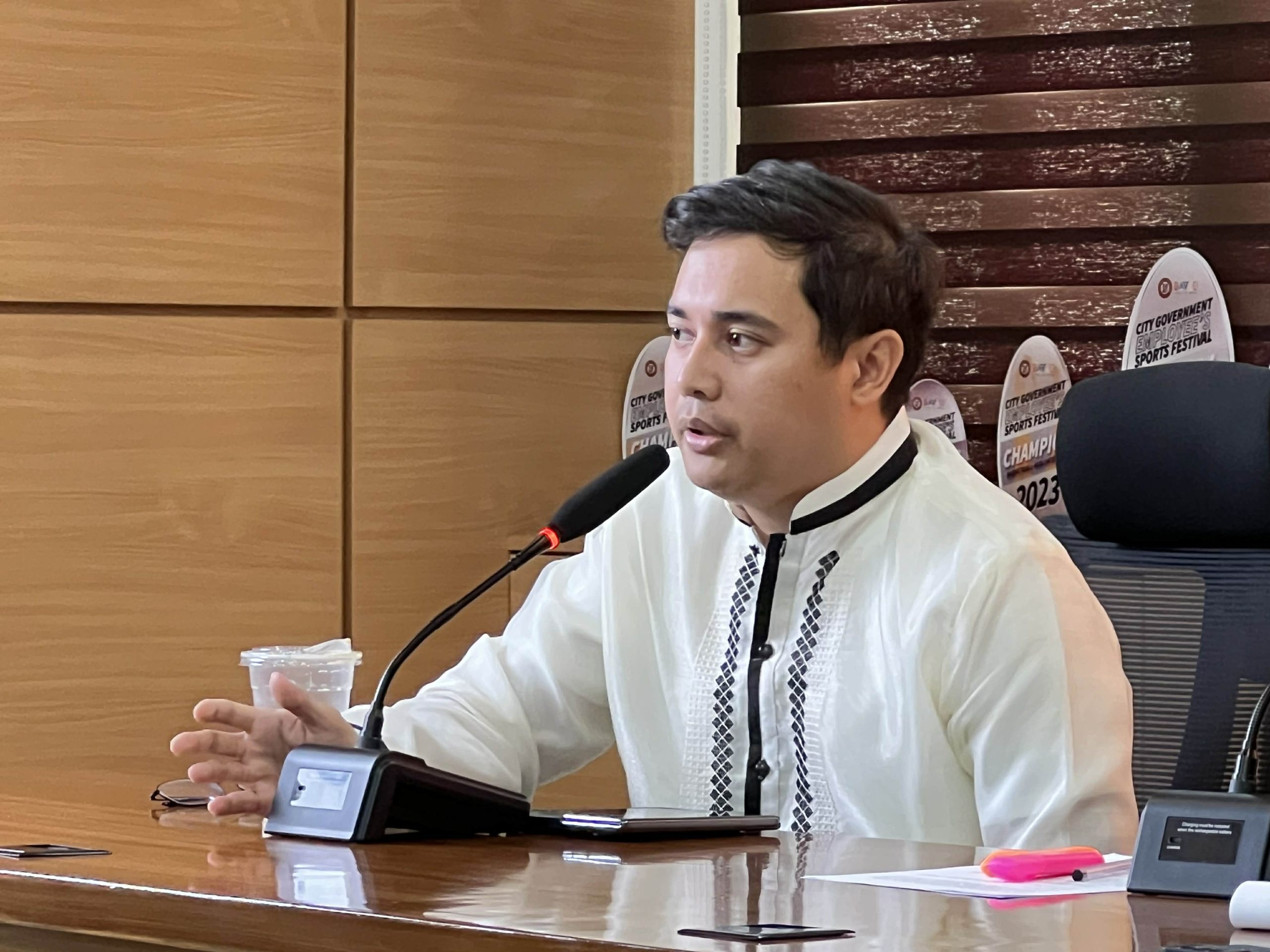
In Photo: Councilor Bonz Andre Militar
DAVAO CITY – A Davao City councilor confirmed that several hacking attempts have targeted the city government’s digital systems, prompting the filing of a proposed ordinance to establish a centralized data center to strengthen cybersecurity and improve data management.
Speaking at the Pulong-Pulong sa Dabawenyos over the weekend , at Sangguniang Panlungsod, Councilor Bonz Andre Militar, chairperson of the Committee on Information Technology, disclosed that the City Information Technology Center reported multiple attempts to breach government systems.
The councilor recalled that at least one incident involved hackers penetrating a system and accessing confidential files, according to the report, though the CITC contained the breach immediately.
“Many are trying to hack our systems. In one instance, they were able to see confidential files that they were not supposed to access,” Militar said, citing the office for immediately reporting such concern to CITC, which immediately shut down the system.
He explained that while Davao City is moving toward becoming a “smart city,” with most agencies digitalized, the lack of a unified system leaves the local government vulnerable. He added that city offices currently operate on separate servers, maintain separate server rooms, and manage fragmented databases.
“This setup is not only inefficient but also risky,” he said, noting that disparate systems expose the city to security threats, duplication of information and communication technology resources, and operational difficulties during emergencies.
Under the proposed ordinance, a single, secure facility will host and safeguard the digital systems of all city departments, offices, attached agencies, and instrumentalities. The centralized data center will consolidate databases currently managed independently by various offices.
Militar said centralization would allow the city to respond more swiftly to cyber threats.
“If there is a breach, we can easily shut down the system or intercept the hackers,” he said, adding that a unified data center would enable authorities to analyze vulnerabilities, install stronger firewalls, and implement advanced cybersecurity measures.
The measure also provides for the engagement of a “white hacker” — an ethical hacker tasked with testing the city’s systems to identify weaknesses.
“We will create our own safeguard, not just firewalls but also experts who can detect vulnerable parts of our servers,” Militar said.
In addition, the ordinance includes a budget allocation for advanced cybersecurity training and the hiring of a cybersecurity expert.
The CITC, according to the councilor, will be tasked with ensuring that the latest possible cybersecurity systems are installed and maintained. The location of the proposed data center has yet to be finalized.
Militar emphasized that the ordinance will establish clear rules on data ownership, access, sharing, classification, retention, and disposal among city offices. It mandates full compliance with the Data Privacy Act of 2012 and aligns with the city’s existing ICT and e-governance policies.
He warned that without a centralized system, the city remains vulnerable to data breaches, system failures, and the loss of essential records. The absence of standardized rules, he added, complicates efforts to sustain critical services during disasters or cyberattacks.
To address this, the proposed measure also requires the establishment of backup systems and disaster recovery plans to ensure service continuity in case of system failures or emergencies.
The ordinance further strengthens accountability by granting the CITC and other designated offices the authority to manage, supervise, audit, and enforce data management standards across the city government. Offices or officials who fail to comply with the centralized system and data management policies may face administrative penalties.
Militar said consolidating the city’s digital infrastructure would not only enhance protection against hackers but also promote cost-efficiency, sustainability, and better inter-office coordination.
“We must treat government data as a strategic public asset,” Militar said, stressing that the proposed centralized data center supports Davao City’s long-term vision of building a transparent, secure, and future-ready government.(By Ivy Tejano)