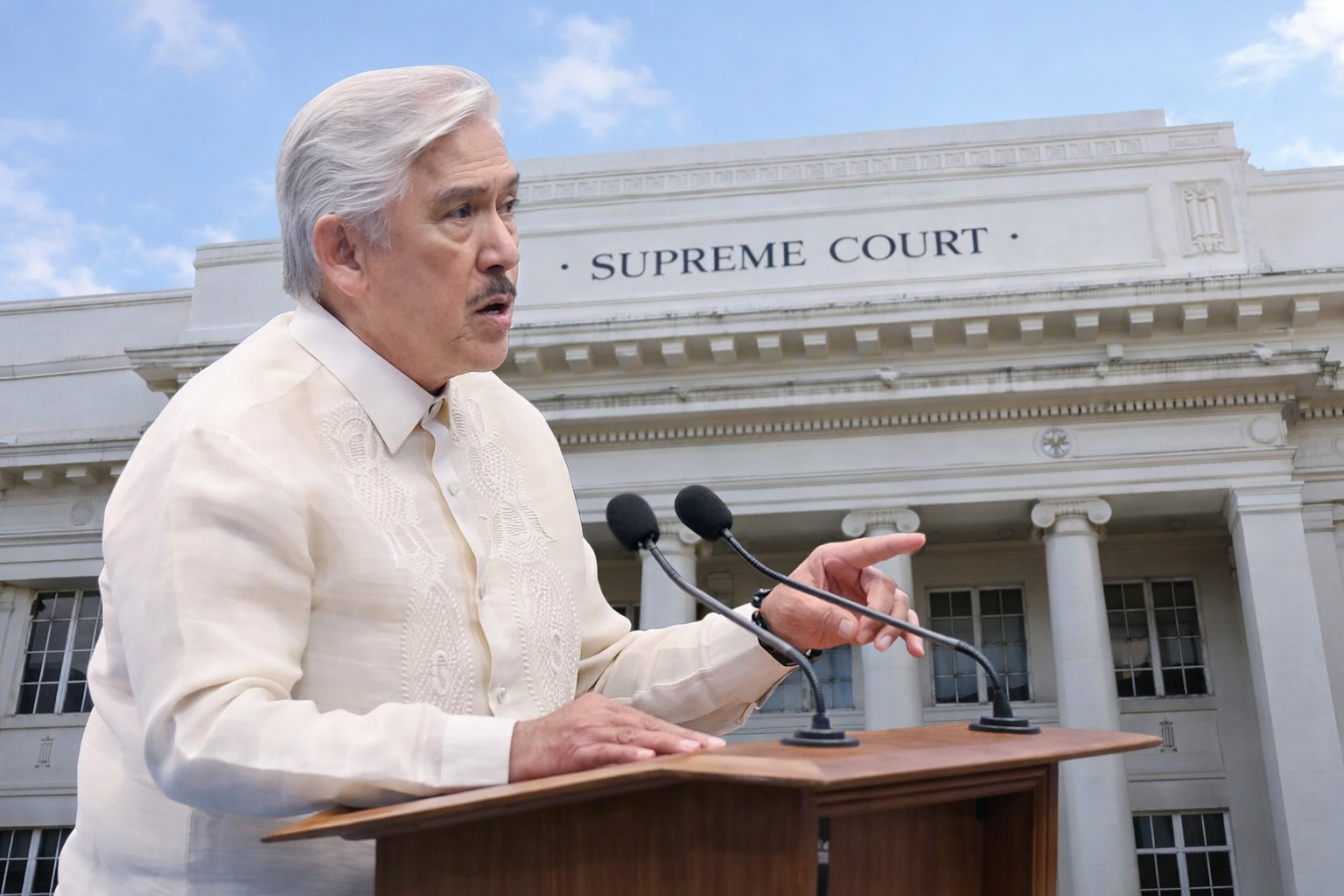
Senate President Tito Sotto is now crying foul.
After facing a case in court for his degrading and disrespectful tirade against the Supreme Court’s ruling related to Vice President Sara Duterte’s impeachment proceeding, Sotto suddenly discovers what he now calls his “constitutional right.”
Freedom of speech, he insists.
One almost has to admire the timing.
Because in Philippine politics, “freedom of speech” often works like an emergency exit—used only when the powerful are the ones trapped inside the building.
When Sotto was attacking an institution as sacred as the Supreme Court, it was framed as boldness. When he is called to account, it becomes persecution. The question practically writes itself:
Is freedom of speech a principle—or merely a privilege reserved for those with influence?The hypocrisy is not subtle. It is screaming.
We have seen how quickly the political class turns hostile when speech is directed upward instead of downward.
Remember Senator Raffy Tulfo’s outrage against Meta for alleged censorship? He thundered about free expression as if it were the cornerstone of democracy itself.
And yet, when others exercised that same freedom against government incompetence, corruption, or abuse, the response was rarely applause.
Consider Congressman Barzaga, who was suspended simply for speaking out—questioning mishandling under President Marcos Jr. and calling attention to anomalies inside Congress.
He spoke. He paid.
No grand constitutional sermons were delivered then. No dramatic appeals about sacred liberties. Instead, discipline came swiftly, as if free speech was a crime when aimed at the wrong people.
So one must ask:
When ordinary officials, journalists, or citizens speak too loudly, why is it called destabilization…
but when Tito Sotto does it, it is called “freedom”?
This is the Philippine double standard in its purest form.
Freedom of speech has never meant freedom from consequences.It has never meant freedom to insult institutions without restraint.It has never meant freedom to degrade the judiciary and then act shocked when the law responds.
The Constitution does not exist to protect the egos of politicians who confuse criticism with contempt and accountability with oppression. Rights are not costumes to be worn only when convenient.
If Sotto truly believes in freedom of speech, then he must believe in it even when it protects those who criticize him, question his allies, expose corruption, or challenge the government he once served.
Otherwise, what he is defending is not free speech.
It is selective speech. Entitled speech. Speech for the powerful, silence for everyone else.
And perhaps the most offensive part of this entire episode is the performance of victimhood.
A man who has spent decades at the top of the political food chain now wants the public to believe he is oppressed—simply because the law is finally doing what it is supposed to do: drawing a line between opinion and insult, between dissent and degradation, between liberty and irresponsibility.
This is not tyranny. This is accountability.
And the real question is not whether Tito Sotto has freedom of speech. The real question is why some politicians only remember democracy when democracy comes knocking at their door.
“In the Philippines, the loudest defenders of free speech are often the first to demand silence—until they are the ones being judged.”