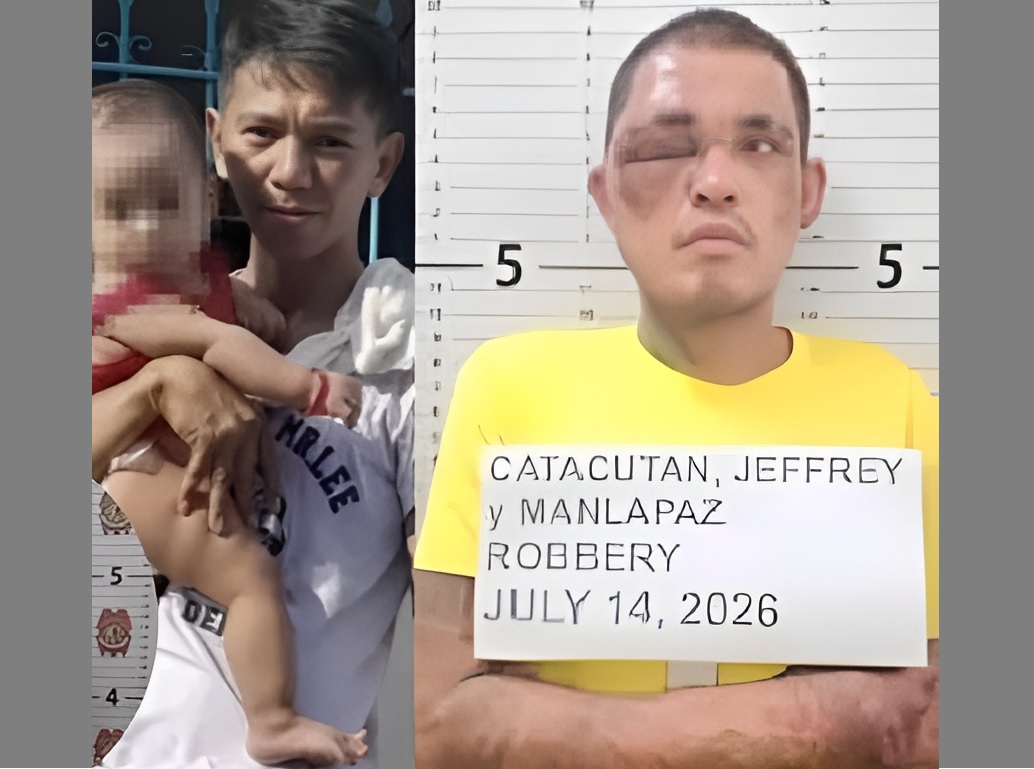
The suspect says he was startled. He says he did not mean to do it.
He asks for forgiveness.
How painfully easy those words must be to say when you are still alive.
Norberte Fabio Jr. cannot explain what happened. He cannot plead for mercy. He cannot tell his family that he was afraid. He cannot embrace his four-year-old son and promise that everything will be all right.
He cannot speak because he is dead.
And somewhere tonight, a little boy with autism is waiting for a father who will never come home.
Perhaps the child still listens for the familiar sound of a motorcycle outside. Perhaps he still looks toward the door whenever footsteps approach. Perhaps he does not yet understand why the man who once carried him, fed him and worked himself to exhaustion for him has suddenly disappeared.
How do you explain murder to a four-year-old?
How do you tell a child who has already lost his mother that the only parent he had left is now gone too?
Fabio was not wealthy. He had no bodyguards, no political connections and no armored vehicle. His only protection was the hope that if he worked honestly and harmed no one, society would allow him to return safely to his child.
That hope was stolen from him.
He reportedly dreamed of working abroad so he could pay for his son’s treatment. He was not chasing luxury. He was not dreaming of mansions or expensive cars. He was dreaming of medicine, therapy and a better future for a child who needed him more than most children need their fathers.
He rode through dangerous streets, carried strangers and endured exhaustion because someone small and vulnerable was waiting at home.
Then one passenger looked at his motorcycle and decided that Fabio’s life was worth less than a machine.
A motorcycle can be replaced.
A father cannot.
Yet after the blood was spilled, after a child was orphaned and after a family’s future was destroyed, the suspect could still face the cameras and ask for forgiveness.
“Pasensya na po.”
As though the life taken were a broken window.
As though the orphaned child could be comforted by an apology.
As though a few words could raise a man from the dead.
This is the moment when many ordinary Filipinos begin to recoil from the way human rights are discussed in this country.
The moment a suspect is arrested, society suddenly remembers the language of dignity. We are told that he must not be harmed. He must be fed. He must be housed. He must be given a lawyer. His rights must be protected. His story must be heard. His humanity must never be forgotten.
And all of that is correct.
But where was this fierce concern for humanity when Fabio was begging for his life?
Who defended his right to breathe?
Who protected his dignity as he was attacked?
Who stood between him and the person who allegedly decided that a motorcycle was worth more than a human being?
Who will now feed his son?
Who will bring the child to therapy?
Who will sit beside him when he is frightened?
Who will carry him when he cries for his father?
The suspect will receive meals inside detention. Fabio’s child may soon wonder where his next meal will come from.
The suspect will sleep under a government roof. Fabio’s son will sleep in a home emptied of both parents.
The suspect will have lawyers explaining his rights. The child will have relatives explaining why his father is never coming back.
Tell that child that the system is humane.
Tell him that justice is working.
Tell him that the government is protecting human rights.
Then look him in the eyes.
Human rights were created to protect human beings from abuse and cruelty. But when the language of rights is heard only after the victim is dead, it begins to sound less like justice and more like an insult.
The problem is not that suspects have rights. They must have rights. The problem is that society seems capable of discussing the accused with legal precision while speaking of victims only in condolences, funeral prayers and fading headlines.
The offender becomes a person whose childhood, motives and hardships must be understood.
The victim becomes a photograph.
A statistic.
A body beneath a sheet.
A father whose name disappears once the news cycle moves on.
This is how peace and order begin to collapse.
Not merely when criminals become violent, but when honest citizens begin to believe that violence carries few consequences. When workers fear that leaving home may be a death sentence. When fathers kiss their children goodbye without knowing whether they will return. When criminals become bolder because they trust that society will worry more about their comfort after arrest than about the lives they destroy before it.
A nation cannot survive on apologies from killers and condolences from officials.
A nation cannot call itself humane when criminals are feared, victims are forgotten and children inherit the consequences.
Fabio did everything society asks of a decent man. He worked. He sacrificed. He tried to provide for his child. He accepted the danger of the streets because poverty gave him no safer choice.
For this, he was rewarded with a grave.
His son will soon celebrate his fourth birthday.
There may be a cake. There may be candles. Relatives may try to smile so the child will not feel the full weight of what has happened.
But there will be an empty chair.
There will be no father to lift him.
No father to help him blow out the candles.
No father to whisper a birthday wish.
No father to promise that he will work even harder so that one day his son can receive the care he needs.
Fabio’s dream of going abroad did not die quietly. It died on a street, beside the motorcycle he used to keep his child alive.
And now the suspect asks to be forgiven.
Forgiveness may come from God.
Justice must come from the state.
Because when a country becomes more reliable at protecting suspects after crimes than protecting innocent people before crimes, it does not have peace and order.
It has organized helplessness.
It has a system that arrives after the screaming has stopped, after the blood has dried and after another child has been left without a parent.
The suspect still has a future. He can wake tomorrow, eat, speak, breathe and hope.
Fabio has none of those things.
His child has only memories.
Until our institutions understand the moral weight of that difference, “human rights” will continue to sound, to grieving families, less like a promise of justice and more like an explanation for why justice never came.