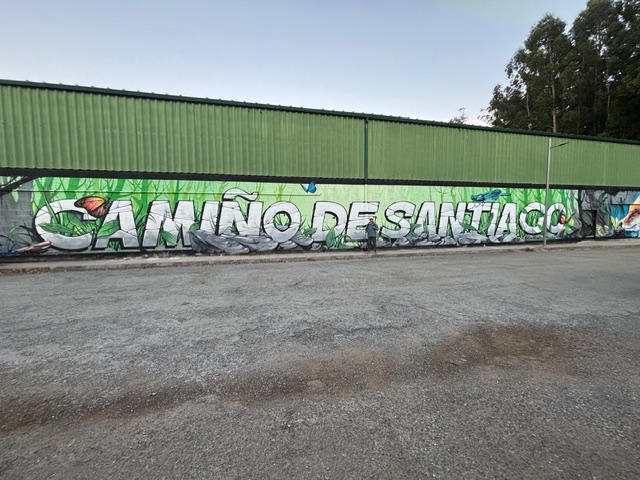
Joining a Camino Pilgrimage has been part of my bucket list for quite some time. I have done the Holyland and Marian pilgrimages in the past but somehow, I have my reservations and fears that I am not physically prepared to do a walking pilgrimage. By God’s grace, I finally faced and took up the challenge of doing the Camino de Santiago pilgrimage during my 62nd birthday last October 11.
The origin of the Camino de Santiago began with the discovery of the remains of St James, the apostle in the 9th century. In the same place where his remains were found, a church, which today has become the Cathedral of Santiago de Compostela, was built in his honor. From that very moment, many Christians/devotees from all over the world travel through the lands surrounding the heart of Galicia to Santiago de Compostela, to pay their respects to St James.
There are about 8 main routes to Santiago but the most popular and classic routes are the Camino Francés (The French Way), stretching about 775–800 km from Saint-Jean-Pied-de-Port across northern Spain to Santiago de Compostela in roughly 30–33 days, and the Camino Portugués (The Portuguese Way), running north from Porto in Portugal to Santiago about 240–242 km over 12–14 days.
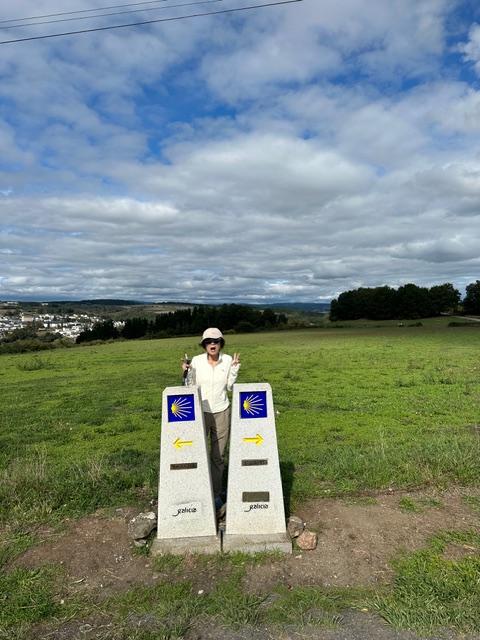
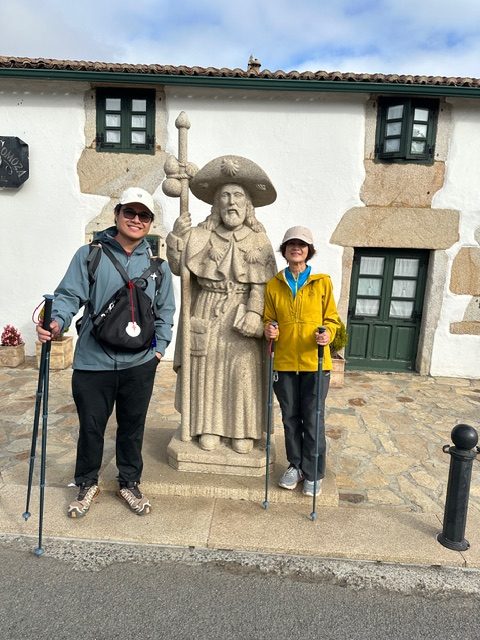
For each route, there are several points from which one can start their journey. My son Paolo and I chose the Camino Frances route with Sarria as our starting point. The Sarria to Compostela stage is highly recommended for beginners like us. The distance of about 115 kms is manageable and the difficulty of the terrains is moderate. In order to be considered and certified an accomplished pilgrim, one has to walk a minimum of 100 kms, making Sarria as the most popular start point.
It took us 6 days, walking at least 6 hours, 20 kms and 20,000 steps each day to reach Santiago de Compostela. Each day we have to pack, unpack and change accommodations as each stage brought us to a new town in Galicia (Sarria-Portomarin-Palas del Rei-Melide-Arzua-Rua-Compostela). Each day, the soreness and heaviness on our legs and feet intensified. Each night, we were just dead tired and slept like a log. But each morning, we woke up eager and excited to walk and reach our next destination.
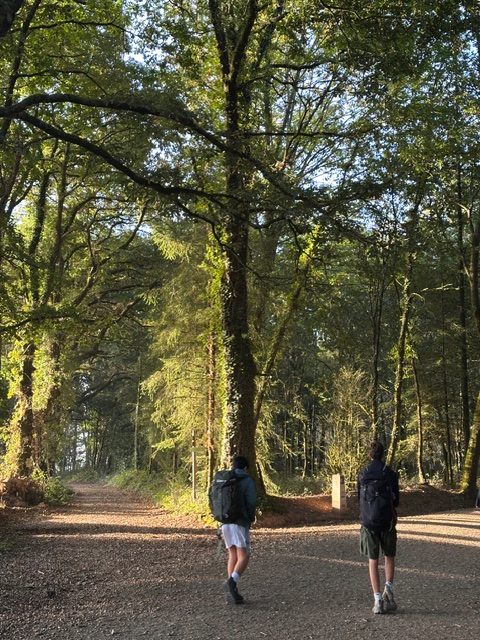
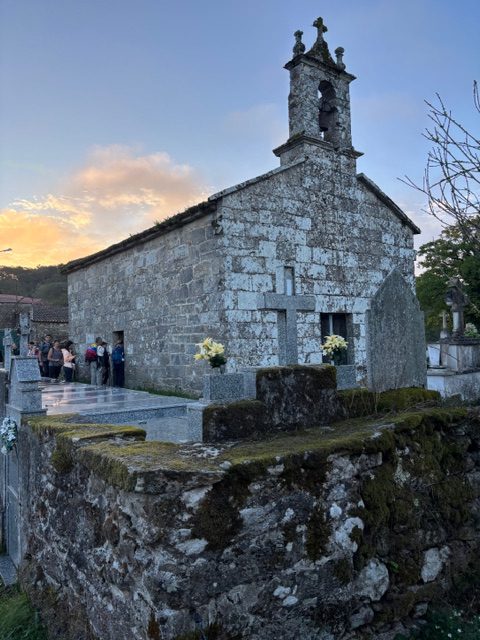
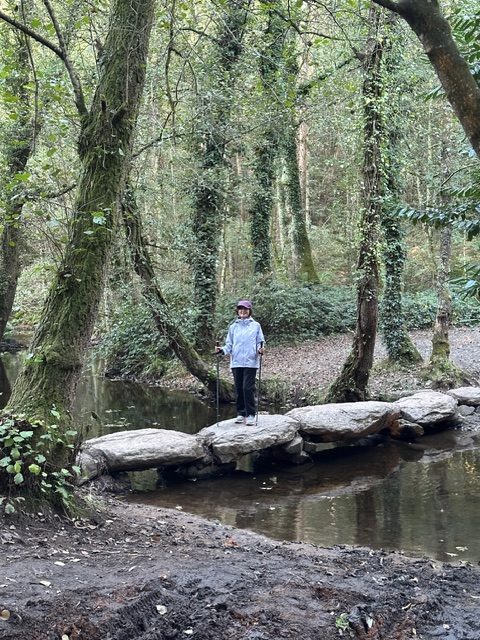
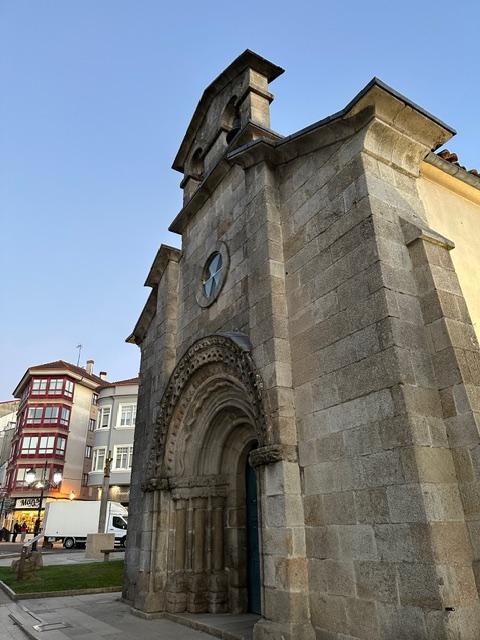
There were days when walk can be very tiring and challenging but the beautiful views and sceneries that run through the forests, farmlands and countryside of Galicia, were all worth it! Every town offers its unique rural charm and treasures. It’s always a worthwhile experience to see and observe how the locals live their everyday life. There were villages that were so quiet as if no one lives there while there were some bustling with small scale businesses. The locals have gotten so used to the passing of the pilgrims that they have made us a part of their daily existence.
Paolo and I would always look forward to our next pit stop in a local café (which comes after every 5-8 kms), not just to rest our feet but to taste their local delicacies, like the most famous Santiago almond tart and Galician tortilla. Of course, a must try are their Caldo Gallego (soup), grilled Hake fish and Galician-style octopus, traditionally called pulpo. We didn’t fail to have the authentic Spanish dish paella and callos. This journey was also a gastronomic treat for us.
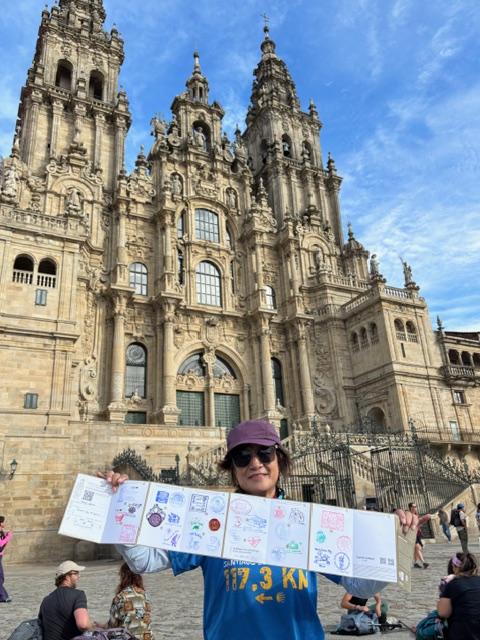
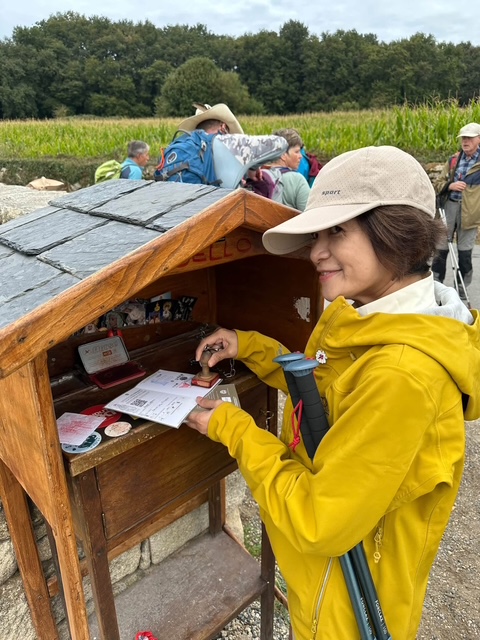
Another exciting part of our Camino is collecting our pilgrim stamps in our pilgrim passport to prove our route and progress on the Camino de Santiago. This is required to receive our Compostela certificate at the end of our journey. One must only collect at least 2 stamps a day. But collecting stamps has been an enjoyable activity for the pilgrims that we were collecting a minimum of 8 per day. They were available in albergues, churches, local cafes, restaurants, shops and tourist offices. Most were given for free, but for the wax type stamps, we had to pay or give donations of at least 2 euros. We didn’t mind as it’s our way of supporting the locals.
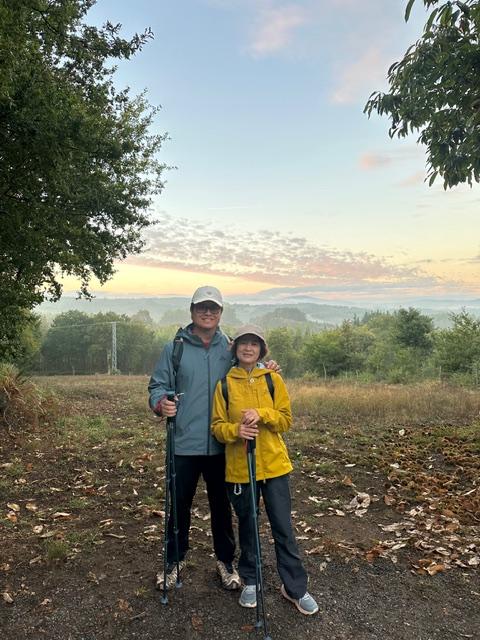
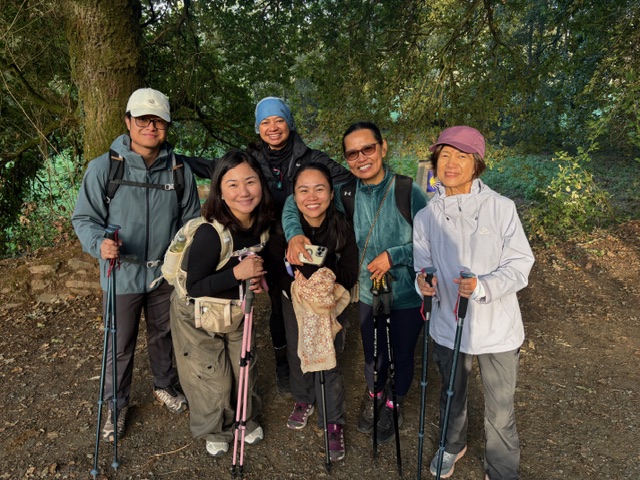
As the Sarria to Compostela is the most popular route, it’s also the most populated. Every day, we were joined by hundreds of Pilgrims from all over the world, mostly Europeans and Americans. Some were traveling as families, some as couples, some as friends and some as solo travelers. While we spoke different languages, greeting each other “Buen Camino” somehow connected us. We were glad to have met on the trail a group of Filipinos already based from different parts of the world. As always, there’s instant connection with our Kababayans!
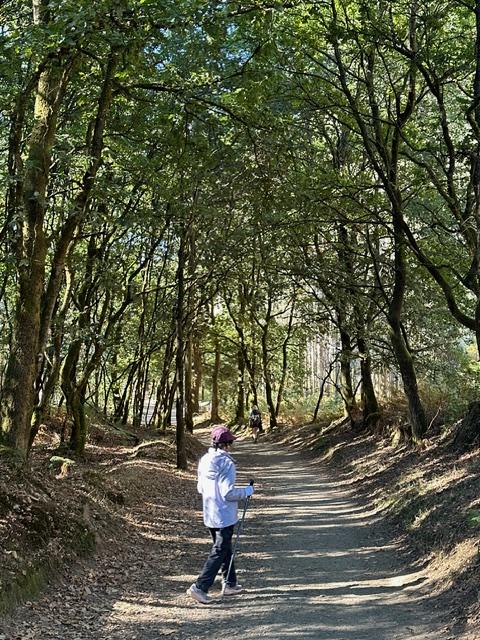
But while I welcome walking the trail with fellow pilgrims, I still prefer the solitude. I would often let others pass me by so I can have more and longer time alone. It gave me time to pray, do my reflection and enjoy the moment of peace and tranquility. After all, the Camino is not a race. There’s no prize on who gets to the destination first.
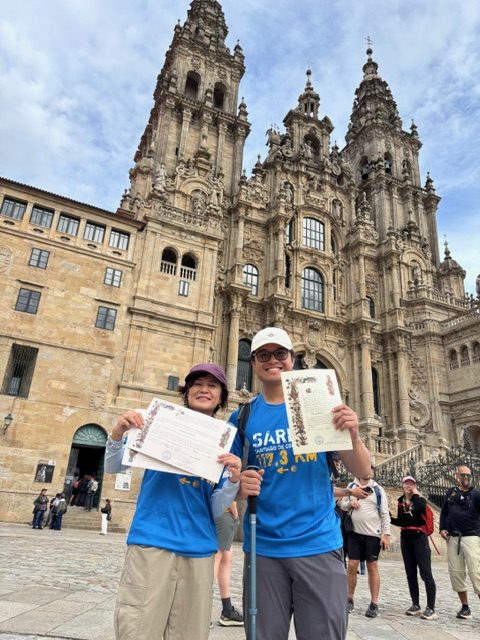
But reaching our destination, the Cathedral of St James, was a totally exhilarating but humbling experience. It was a celebratory mood everywhere in the square. One can’t help but cry, shout or jump for joy or kneel down. We were just overwhelmed with our emotions as we stood in front of the Cathedral. Receiving our Compostela certificate was a validation of the challenges and difficulties we were able to hurdle as we made and completed our journey of a lifetime… our Camino de Santiago.
Buen Camino!!!
MORE PHOTOS