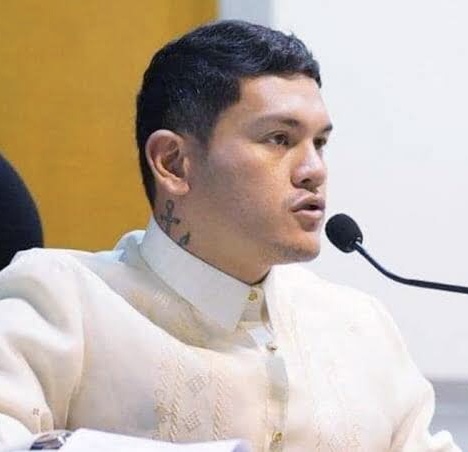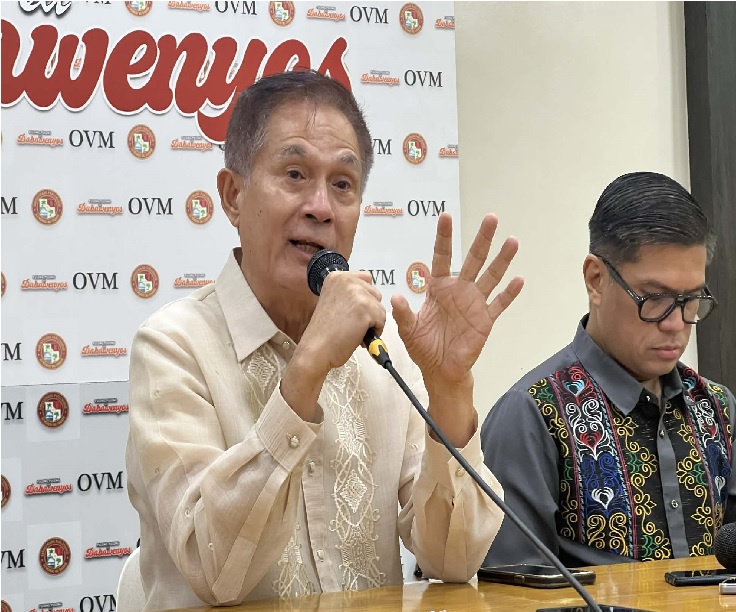
In Photo: Councilor Ralph Abella, chairperson of the Committee on Agriculture, Aquaculture, Food, and Animals (Photo via Ivy Tejano / MB)
By Ivy Tejano
DAVAO CITY – A Davao City councilor sets food security as a central policy priority in Davao City, as he prepares to submit a proposed comprehensive Food Security Code that will consolidate all existing and future agriculture-related ordinances into a single framework.
Councilor Ralph Abella, chairperson of the Committee on Agriculture, Aquaculture, Food, and Animals, said the proposed code was part of the agenda of Acting Mayor Sebastian Duterte, which aims to institutionalize food security as a long-term commitment of the city government.
“As committee chair on agriculture, I will be submitting a proposal for a Food Security Code where all approved ordinances will be integrated. It will make food security a clear and permanent agenda of Davao City,” Abella said during the Pulong-Pulong sa Dabawenyos media forum.
He emphasized that the immediate focus of the proposal is to strengthen local production, as Davao City remains heavily dependent on external sources for staple food items. He noted that rice remains a major concern, with the Philippines importing tens of thousands of metric tons annually.
The councilor also noted that the city’s fish supplies are sourced mainly from General Santos City, Davao del Sur province, and other parts of Mindanao. At the same time, a significant portion of vegetables comes from upland areas such as Barangay Kapatagan, he added.
Abella explained that the proposed Food Security Code represents a strategic policy shift for Davao City, moving away from the long-standing focus on encouraging farmers to grow crops primarily for export and instead prioritizing food production for local consumption.
He said past programs focused on crops for sale outside the city, which did not always meet local food needs. He added that the new approach aims to rely less on outside sources, maintain a stable local supply, and safeguard the city against price and supply disruptions.
Abella emphasized that under the Food Security Code, the emphasis will be on ensuring that staple food items, such as rice, fish, and vegetables, are first produced in sufficient quantities to supply the residents of Davao City. “At first, we have to focus on production within the city.”
To address rice sufficiency, Abella recalled that during his term from 2019 to 2022, he authored an ordinance protecting rice lands from conversion into housing or other commercial uses. He also pushed for a city-run rice processing center designed to reduce costs for farmers.
Under the proposed system, he said the city government would provide farmers with equipment, inputs, and technical support, purchase their unhusked rice, mill it at a city facility, and return the rice to barangays for sale without additional processing costs.
Due to the high cost, the city is considering a pilot project that may involve placing milling machines in select areas. He also stated that the city government must strictly enforce and expand land protection policies to safeguard Davao City’s remaining agricultural areas.
Abella recalled concerns over former rice-producing areas, particularly in the Calinan District here, where lands were reportedly filled or sold to private developers without the city’s knowledge, due to low farmgate prices and limited farmer income.
For areas without vast plains, the councilor continued, rice terraces could be developed in hilly locations with available water, provided the city supports land development and irrigation, as outlined in the comprehensive Food Security Code.
Abella said the code will support climate-resilient farming, such as using compost and drought-resistant crops. He added that farmers need more than seeds, including training, production support, and assured markets through buy-back programs.
He also stated that the city’s planned food terminal, envisioned as a centralized trading hub for agricultural produce, is still in development, with private groups already offering to operate and assist in training farmers.
Fisheries development is also a key component of the proposal. Abella said a mariculture ordinance is being refined after being referred back to his committee, with proposed sites in Lasang and Punta Dumalag aimed at reducing the city’s reliance on externally sourced fish.
According to Abella, the proposed Food Security Code will integrate agriculture, fisheries, rice production, and mariculture into a unified policy direction, aiming to build a more resilient and self-sustaining food system for Davao City by 2026.
Abella said export opportunities may be pursued in the future, but the city’s immediate priority is to strengthen local food production. “What matters now is investing in areas where food is produced and ensuring it directly benefits Dabawenyos,” he added.