* Economic development, expansion and population increase cited By Ivy Tejano
DAVAO CITY – A Davao City councilor clarified over the weekend, that the increase in the water and electricity rates here is primarily driven by the national regulatory decisions, leaving the city government with limited authority to stop the rate hike.
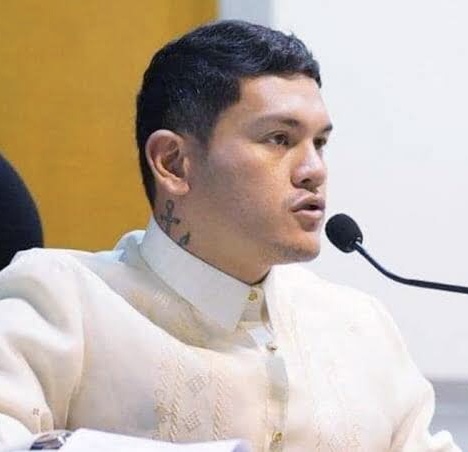
Speaking at the Pulong-Pulong sa Dabawenyos media forum at Sangguniang Panlungsod, Councilor Louie John Bonguyan, Chair of the Committee on Energy and Water, said he understands the residents began the year facing higher utility costs.
Bonguyan said the Davao City Water District proposed another 30-percent water rate hike, while the Davao Light and Power Company implemented an about P2-per-kilowatt-hour increase in electricity rates in January.
DCWD had an approved water rate 60 percent adjustment since 2022 approved by the Local Water Utilities Administration but implemented in several tranches the final tranche of which was implemented in 2024.
Late last year, Bonguyan said the DCWD again sought LWUA’s approval for an additional 30-percent increase in water rate, to be implemented in two tranches—15 percent in 2026 and another 15 percent in 2027.
He said the DCWD justified the proposal in a public hearing with concerned agencies citing the need to explore and develop new water sources, increase the number of production wells, upgrade pipelines, and address high non-revenue water or system losses all in anticipation for the huge demand for water for the next five to 10 years owing to an unprecedented influx of investments and migration in Davao City.
But Bonguyan questioned the request. He said DCWD has not yet fully used the previously approved rate hike and has lowered some costs since the Apo Agua surface water project began, supplying parts of the city through gravity-fed systems. The surface water referred to by the councilor is from the Bulk Water Project (BWP) which taps the surface water of Tamogan and Panigan rivers. It is a joint venture project of DCWD and Apo Agua Infrastructura, Inc. The project which consist of two parts has an estimated total cost of ₱12.5-billion, the biggest single investment in Mindanao to date.
Bonguyan however only cited the cost of electricity but skipped the DCWD’s investment of over ₱2.5-billion to replace the old and small water pipes throughout the city in anticipation of strong water pressure from the bulk water project. The water district has also been prudent in effecting approved water hike precisely in the interest of water consumer.
The water district has already shut down several production wells and shifted to paperless billing, which should mean savings,” Bonguyan said, adding that these were raised during DCWD’s public hearing attended by LWUA officials.
Bonguyan is correct in saying that DCWD has already shutdown “several production wells” but is likely misinformed since the shutdown does not mean cessation of the wells operations. The production wells draw underground water from aquifers. The DCWD Board has earlier expressed concern over the over-extraction of water especially in Dumoy aquifers which can result to the intrusion of saline water, a situation which is irreversible. With the alternative bulk water supply the aquifers are expectedly fully recharged. Should there be fortuitous event that would require the BWP water treatment plant in Barangay Gumalang to be temporarily shutdown the production wells will automatically operate to sustain the water supply to consumers.
As a background, DCWD Chairman Ed Bangayan referred the Board’s concern for an alternative source of water to then Mayor Rodrigo Duterte who advised him to proceed with the plan to source out water from Tamugan and Panigan rivers to address the threat of over-extraction and to ensure the supply of water on account of the rapid development and increasing population of Davao City.
Thereafter DCWD acquired water rights over the twin Tamugan and Panigan rivers and went through the process of undertaking the bulk water project by public-private-partnership with the supervision of the National Economic Development Authority. In 2014 a joint venture agreement between DCWD and Apo Agua was inked and witnessed by Mayor Duterte.
Councilor Bonguyan said he had initial discussions with DCWD. He added that the water utility stated its reasons and that, ultimately, LWUA holds the final decision, with DCWD justifying its request for a rate increase.
According to DCWD spokesperson Jovana Cresta Duhaylungsod, the water district acknowledged the general public’s concern and prioritized water access for all residents, including the most vulnerable.
Duhaylungsod explained that DCWD does not receive any funding assistance from the National government and all revenues from consumers are reinvested to establish networks of distribution pipelines and scores of water reservoirs e the seven new barangays mostly from District 2, maintain service quality and ensure water sustainability. She said the rates are all in anticipation for additional expansion and expected increase of water consumption for the next 10 years.
According to DCWD, around 96 percent of its 270,000 connections receive 24/7 water with sufficient pressure. It noted that it is the only water provider in the Philippines with a climate-resilient supply – one from underground water from the city’s rich and vital aquifers and from the surface water of Tamugan and Panigan.
The DCWD also highlighted that it has kept water losses low even after integrating bulk water supply, which demonstrates the reliability of its infrastructure and the effectiveness of its management strategies.
Looking ahead, Duhaylungsod stressed the DCWD’s need for continued investments to maintain current service levels, improve supply for the remaining four percent of our connections, and extend service to new areas.
“We must develop additional water sources and infrastructure, optimize operations, enhance customer care, safeguard water sources, and maintain strong financial health,” Duhaylungsod said.
She added that the most practical way to support these development plans is through a carefully planned and regulated water rate adjustment that balances financial realities with social responsibility.
Duhaylungsod said the proposed 30-percent increase over two years is the minimum necessary to maintain operations. He added that delaying this adjustment could compromise service reliability and long-term sustainability.
DCWD present rate is still lower compared to other water district utilities with Baguio City having the highest. Local Water Utilities Administration head, Jose Moises F. Salonga, in an interview over DZRH last year, declared that DCWD is the best Water District in the country.
As for electricity, Councilor Bonguyan explained that the P2-per-kWh increase in January was due to higher generation costs from the Wholesale Electricity Spot Market (WESM), following a series of power plant maintenance shutdowns late last year.
He said the increase was not due to DLPC’s distribution charge, which the city council can review, but to generation charges regulated under the Electric Power Industry Reform Act and overseen by agencies such as the Department of Energy.
Davao Light President and Chief Operating Officer Engr. Enriczar Tia said the P2-per-kWh increase from January 11 to February 10 was not due to PSALM’s planned supply cut, but instead to WESM prices rising after several power plant outages.
Moreover this basis is contestable. A radio commentator and an owner of a business establishment who expect their bills will increase claimed that DLPC’s expansion in a large area covered by the North Davao Electric Cooperative had forced the company to buy additional power supply from WESM. They pointed out that the power output of Pulangi Hydropower plant had been fully contracted by other electric firms including electric coops. DLPC’s South Thermal coal fired power plant is running its maximum capacity of 350 Megawatts.
Tia said the company’s overall residential rate rose to P11.7187 per kWh from P9.7135 per kWh in December, mainly due to increased spot market purchases. He added that WESM prices should stabilize once the power plants are back to normal.
Bonguyan also warned that electricity rates could further increase if the Power Sector Assets and Liabilities Management Corporation (PSALM) proceeds with plans to reduce its power supply contract with the DLPC.
The City Council earlier approved a resolution asking PSALM to keep its current supply, which provides about 30 percent of Davao Light’s power, mainly from the Agus–Pulangi hydropower complex, the cheapest electricity source in Mindanao.
If PSALM cuts its supply from 180 megawatts to 90 megawatts, Bonguyan said the DLPC would be forced to buy more power from the WESM, which could add about .50 centavos per kilowatt-hour to electricity rates.
Tia said PSALM explained that its old power plants are the reason for the proposed cut, which has already reduced Davao Light’s supply. He added that, if the cut happens, rates could rise further as early as February. Again this is speculative for the real reason in the reduction of Pulangi’s power generation capacity is the siltation of Pulangi river basin.
As of this week, Bonguyan said the city council, particularly his committee, has yet to receive PSALM’s response to the resolution. He confirmed the resolution has been forwarded through the City Mayor’s Office.
Bonguyan said the committee will continue monitoring water and power rates and may pass additional resolutions conveying the city’s opposition to further increases, but stressed that regulatory authority remains with national agencies.
“There is very little the city council can do when the increase comes from generation charges,” Bonguyan said, adding that electricity rates could ease in February if market conditions normalize.