Held in 7,800 Regions Across 175 Countries, Including Korea
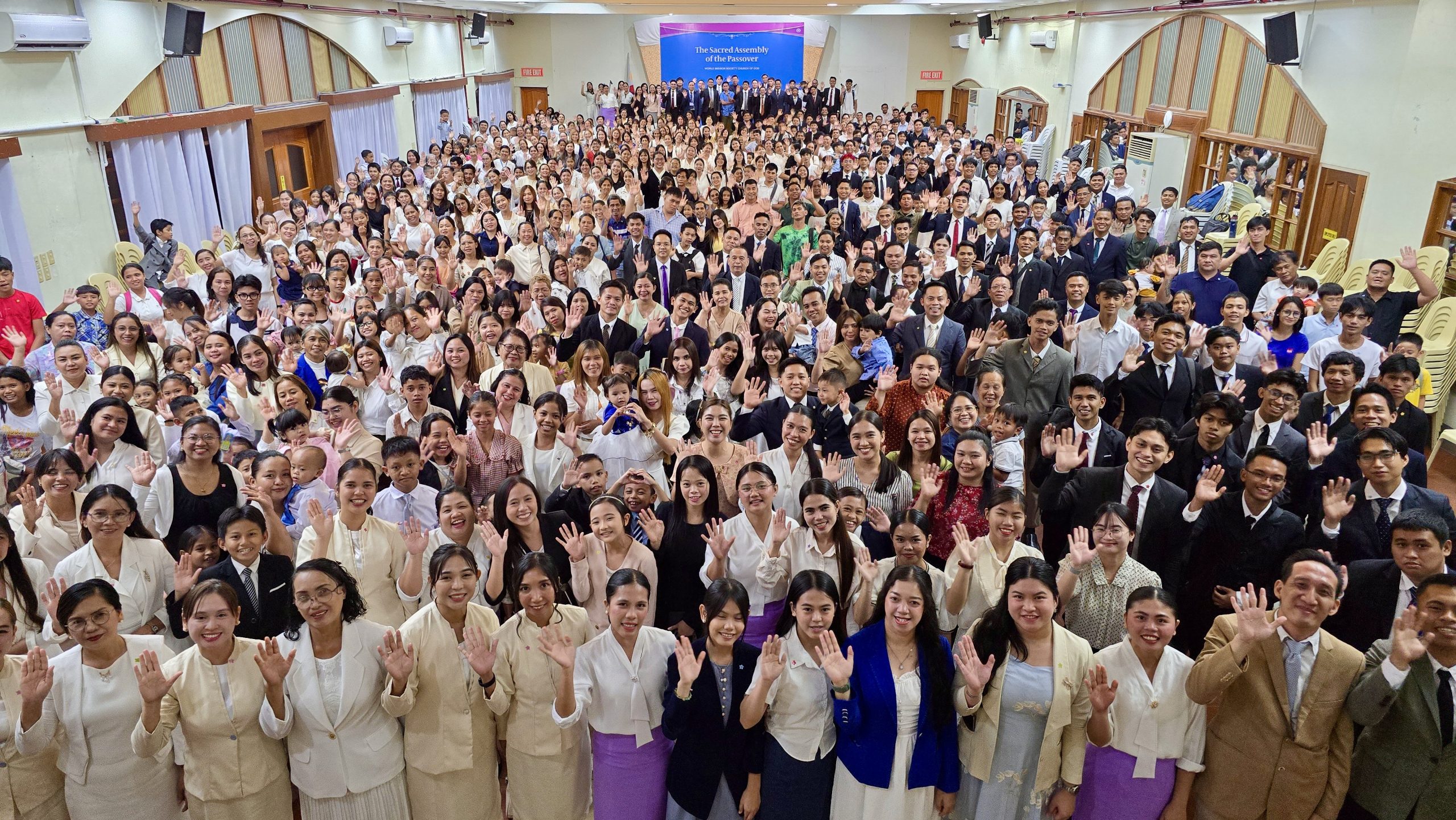
On the 1st, World Mission Society Church of God (General Pastor Kim Joo-cheol, hereinafter “the Church of God”) held the “Passover Sacred Assembly” in approximately 7,800 regions across 175 countries—including the Philippines, the United States, Peru, Mexico, Korea, Spain, Australia, and South Africa—praying for the happiness of people around the world. The Passover is a feast of God that contains the promise of salvation.
At the Church of God in Davao City, the Passover Sacred Assembly was also held with 723 participants in attendance. Following the example of Jesus, who humbly washed His disciples’ feet, saying, “I have set you an example that you should do as I have done for you” (John 13), members took part in the foot-washing ceremony, practicing the teachings of service and consideration. They then participated in the Holy Supper by eating the Passover bread and drinking the wine, reflecting on Christ’s sacrifice and love contained in the New Covenant.
Pastor Jacob Kim of the Church of God stated, “Through the Passover, God grants eternal life and the forgiveness of sins to humanity,” adding, “Anyone who keeps the Passover becomes a child of God, inheriting Christ’s flesh and blood, and will receive the inheritance of heaven.”
The Passover, meaning “the disaster passes over,” first appears in the Old Testament book of Exodus. About 3,500 years ago, the Israelites kept the Passover on the evening of the 14th day of the first month of the sacred calendar (around March–April in the solar calendar), according to God’s command, marking their doorposts with the blood of a lamb. By God’s promise—“the plague shall not be on you to destroy you”—they were protected from the great disaster in which the firstborn died and were freed from slavery in Egypt. God commanded them to commemorate this day as a lasting ordinance for generations (Exodus 12).
The Passover was also the day when a new chapter opened for God’s salvation to spread to the whole world. Jesus Christ promised salvation to humanity through the Passover, teaching that “whoever eats my flesh and drinks my blood has eternal life,” Jesus declared the New Covenant.
Covenant, saying that the Passover bread and wine represent His flesh and blood, granting forgiveness of sins and eternal life to those who partake in them. The following day, He confirmed His love by sacrificing Himself on the cross to atone for the sins of humanity (Matthew 26; Luke 22; John 6).
The apostles—such as Peter, John, and Paul—and the early Church carefully kept the New Covenant Passover according to Christ’s words, “Do this in remembrance of me” (Luke 22). These practices are recorded in the Bible and church history. The observance of the New Covenant Passover was discontinued as the church became secularized, culminating in its abolition at the Council of Nicaea in 325 AD. The Church of God is the only church in the world that restores and observes the Passover according to the example of the early Church after it had disappeared for over 1,600 years.
Members expressed their happiness in keeping the Passover, which contains God’s love, together with their families and friends. Christian (28) said, I was very grateful to be able to observe the Passover in 2026. As a child who had received the flesh and blood of God through the Passover, I intend to strive even more for the salvation of souls and live following the example of God the Father and God the Mother. I also resolved to manifest God’s glory by practicing good conduct and righteous behavior at work. Another member, Rosevic (34), shared that she was deeply moved during the Passover, reflecting on God’s sacrifice and expressed sincere gratitude to God for granting us the blessing of eternal life and hope of the kingdom of heaven.
Following the Passover, the Church of God also held the Feast of Unleavened Bread on the 2nd. This feast, observed the day after the Passover, commemorates the suffering of Christ until His death on the cross. Members participated in fasting, sharing in Christ’s suffering. On the 5th, the Resurrection Feast was held, commemorating Christ’s resurrection and sharing the hope of resurrection and transformation. In the Old Testament, it is called the Feast of Firstfruits and is observed on the day after the first Sabbath following the Feast of Unleavened Bread. When the resurrected Jesus met His disciples on the road to Emmaus and they did not recognize Him, He broke bread and gave it to them; after eating it, their spiritual eyes were opened and they recognized Him (Luke 24). Following this example, the early Church practiced the breaking of bread on the Resurrection Feast, which the Church of God continues today.
According to the Bible, the Church of God observes the seven feasts in three times: the Passover, the Feast of Unleavened Bread, and the Feast of Firstfruits (Resurrection Feast), as well as the Feast of Weeks (Pentecost), the Feast of Trumpets, the Day of Atonement, and the Feast of Tabernacles. The Church stated, “By keeping the feasts according to God’s will, we receive abundant blessings such as eternal life, the hope of resurrection, and the Holy Spirit,” adding, “In 2026, we will continue to share this blessed news with people around the world and deliver God’s love.”
Following the love and sacrifice of Christ contained in the New Covenant, the Church of God actively carries out various social service activities nationwide, including blood donation drives, helping neighbors in need, disaster relief, and environmental cleanups. Through their dedicated service, they have received commendations and certificates of appreciation from ministers of social welfare, environmental resources, and health, as well as senators. (PR)