“Good debt can lift your life to the next level. Bad debt can ruin your life up to the next 3 generations.” – David Angway

Debt is something that most people don’t want to talk about but is something known or experienced by many. Every Juan and Pedro must have loaned sometime in their life. Some have successfully managed it while some struggled. A 2021 study showed 70% of Filipinos were stressed by debt, the highest in the Asia-Pacific, while data through 2024 shows over 40% face difficulty paying loans and bills in full.
Now, these numbers might be scary but let’s be mindful that debt is not always a negative thing. It’s not always a case of “bad debt”. There’s what we call “good debt”. They can either be good or bad depending on how you’re using the money, the payment terms and how the debt could benefit you. The main difference lies in whether the borrowed money results to a valuable asset or increased earning, or simply pays for things that lose financial value, over time.
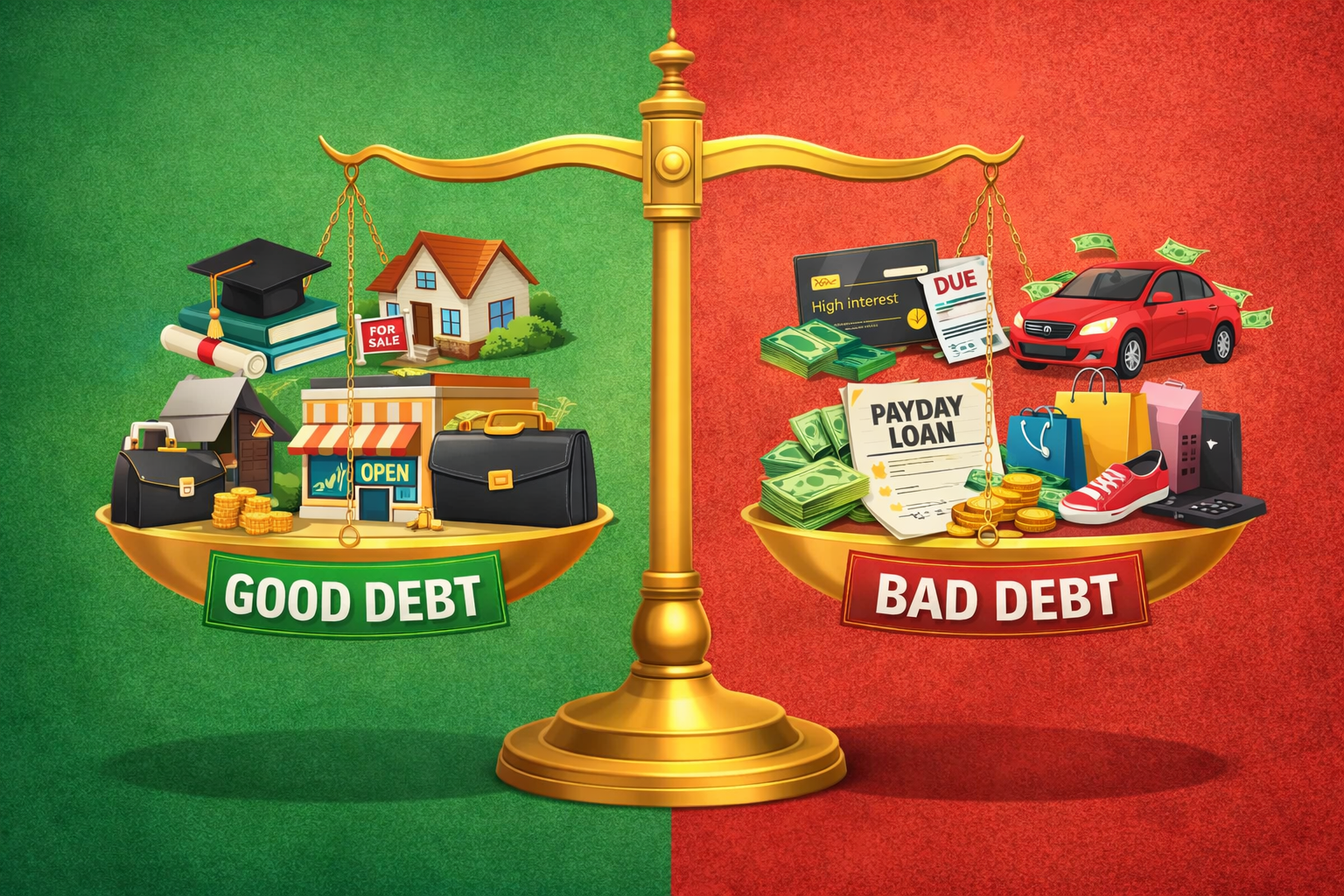
Good debt is debt that allows you to achieve meaningful personal goals or build long-term financial gain. Bad debt, on the other hand, is debt used for purchases that won’t increase your net worth or future income, and may make repayment harder. Generally, good debt is considered as an investment while bad debt as a financial burden. Some examples of good debts are mortgages, business loans, and student loans.
For Filipinos, owning a home offers security and stability. It is considered as a major achievement, as home ownership can be an important way to build your asset. Most Filipinos need to take out a loan (mortgage) using their home as collateral to purchase a home. Or they can own one thru “lease to own” terms. They build equity or ownership, in the property as they pay off the loan or pay the whole contract price. As they say, why waste rental money on property that will never be yours when there’s an opportunity to own one with terms that you are comfortable with. Whether it’s for your personal use or for future rental income, a home loan is considered a good debt.
Taking out student loan is not common in our country but many Filipino parents take on debt to pay for their children’s education. While an “educational loan” can be a financial burden, it is generally considered “good debt” because education, especially having a diploma, is a means to a better quality of life. It gives greater chance to land a good job, earn decent income and have better choices in life. For example, someone who wants to become a doctor will likely need to borrow a lot of money for medical school. They might graduate with substantial debt, but the loans allow them to achieve their dream and leads them to a financially rewarding career. It is an investment on one’s future.
A business loan or borrowing money to either start or grow a business is a good debt as it allows you to create income opportunity for you and your employees. Some home and car loans can be considered business loans when such are used for business, like having your home property for rent either for short-term (air BnB) or long term lease. Or your vehicle used for transport services. Good debts, often have lower interest rates and build assets, like real estate or skills.
Bad debts, on the other hand, are borrowings made for non-essential consumption or items that don’t build assets and generate income. They often come with high-interest and leads to cycle of debts. For example, you take out a loan just to buy the latest gadget or rubber shoes, or fund your vacation or purchase those concert tickets, you could end up paying significant interest charges (when settled in installment), which can end up even higher than the principal amount, over time. This is, definitely, a poor way of using debt.
Credit card when misused and mismanaged, can be the most powerful tool for bad debts. One can easily fall into the trap of (over) spending, as there’s no actual cash coming out. Psychologically, swiping is less painful than cash. But if you don’t settle the full amount come due date, the running balance plus interest can create more pain in the long run. Sadly, most credit cards have higher interest charges which makes repayment costly. How to avoid this high-interest? Charge only to your credit card the amount that you can manage to pay in full. Then it can be your ally. Because I have learned to properly handle it, I use my cc in almost all my transactions. I enjoy the rewards and the freedom from carrying cash.
Other high-interest loans are considered bad debt, even if you use the debt for an essential purchase. Many Filipinos are neck-deep into debt because of what we commonly refer to as 5-6 loan, which commands a 20% interest rate per cycle. Since this is very accessible and received almost instantly by the borrower, it has become a go-to solution for financially struggling Filipinos. Never mind the exorbitant interest rate that makes these loans difficult to pay back.
In an ideal world, we all don’t want to have debts, whether it’s good or bad. But we don’t live in an ideal world and debt exists, for most. Still, be mindful of these 3 things that matter: purpose behind the debt…a mortgage for home is good but a loan to buy concert tickets is bad. Avoid high-interest rate…for regardless of the purpose, it can easily become a problem. Do it moderately…even good debts become bad if you have so many of it or can no longer afford to pay.
So next time you’re planning to take out a loan, remember what Robert Kiyosaki said, “Good debt puts money in your pocket. Bad debt takes money out.”