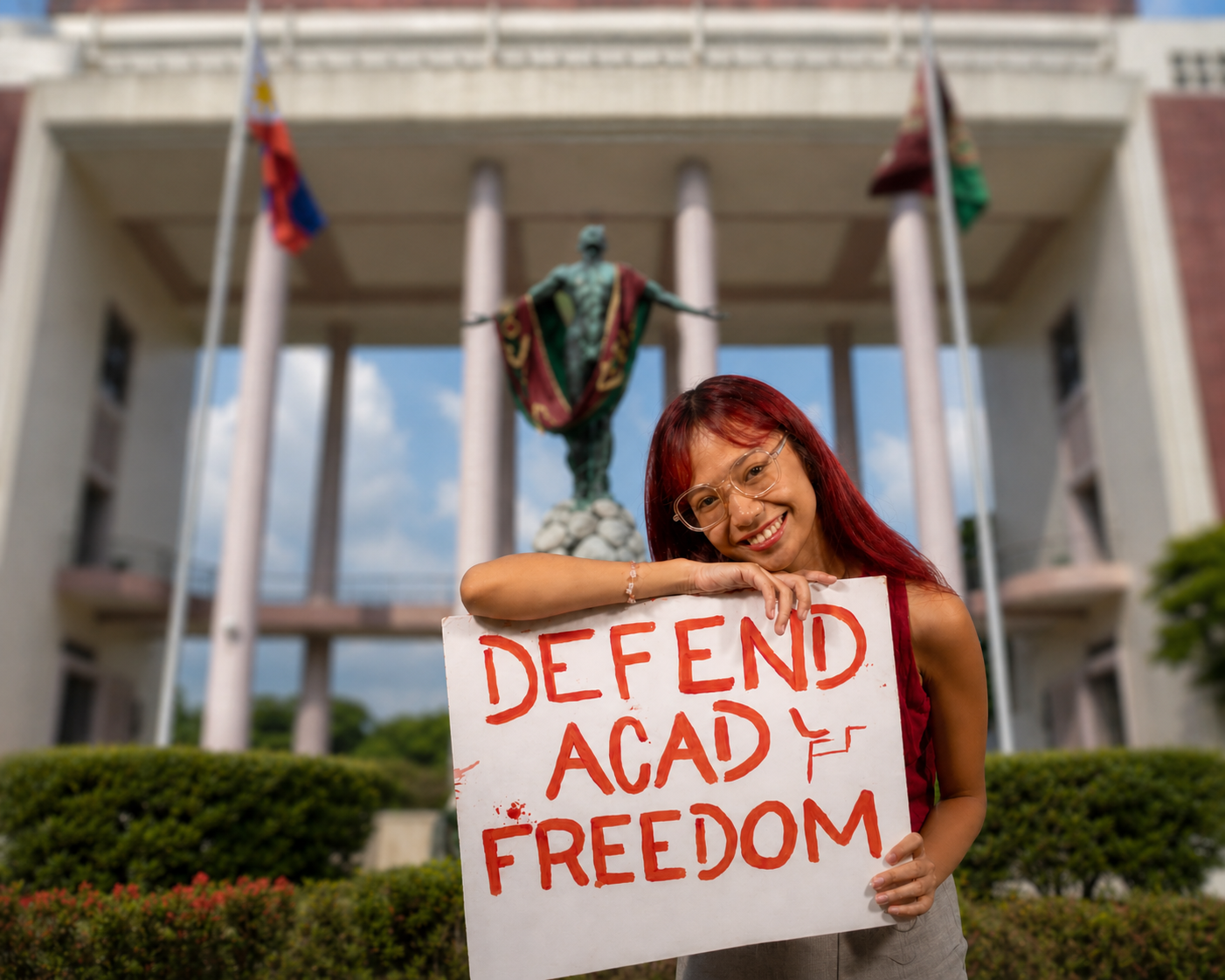

A young woman is dead. That fact should discipline every sentence written about Alyssa Alano. Death should not become a playground for slogans. It should not become a trophy for the state. It should not become a ready-made martyrdom script for movements that know how to turn ambiguity into political ammunition.
But grief is not evidence. And neither is a résumé.
Alano was a student leader from the University of the Philippines Diliman. Her supporters described her as a researcher, organizer, and civilian who worked with farmers in Negros. That part of her life matters. It should not be mocked or dismissed. But it is not the whole story. She was also among 19 people killed on April 19, 2026, in Barangay Salamanca, Toboso, Negros Occidental, in what the military described as an encounter with the New People’s Army.
That is the question the “just a researcher” narrative cannot wish away.
A researcher normally enters a community with notebooks, interview guides, recorders, consent forms, and institutional affiliations. A researcher may be brave. A researcher may go to difficult places. A researcher may document poverty, abuse, displacement, militarization, or injustice. None of that is suspicious by itself.
But when a researcher dies in the company of alleged armed rebels, during a reported firefight, in an operation where authorities say firearms were recovered, the public is entitled to ask whether the word “researcher” is being used to describe her life or to obscure the circumstances of her death.
This distinction matters. A person can be many things across time. Student. Daughter. Organizer. Activist. Researcher. Friend. None of these identities automatically makes someone a combatant. But none of them automatically prevents someone from becoming one either. The decisive question is not whether Alano once sat in a classroom, served in student government, or worked with farmers. The decisive question is what she was doing at the moment she died.
That is where the story stops being simple.
The military must prove its claims. It must preserve evidence. It must account for the conduct of its troops. It must allow independent scrutiny. If civilians were killed unlawfully, accountability should follow. A democracy cannot allow the state to turn suspicion into a death sentence. It cannot allow soldiers to decide, after the fact, that every dead body in an encounter site must have been an enemy.
But the activist side must also answer the question it keeps avoiding. If Alano was only conducting research, then the public deserves a clearer explanation of how that research placed her in the middle of an alleged armed encounter involving suspected NPA members. Serious field research does not treat danger as a badge of authenticity. It requires safety protocols, institutional judgment, and the avoidance of foreseeable harm. That is why the setting of her death demands explanation, not slogans.
The trouble with the phrase “just a researcher” is the word “just.” It closes the inquiry before it begins. It asks the public to accept that biography is destiny. It implies that because someone had an academic or activist identity, she could not have crossed into armed struggle.
But insurgencies survive precisely by blurring these lines. They move through grievance, sympathy, community work, recruitment, immersion, and eventually, for some, armed participation. Not everyone who enters the first circle reaches the last. Many activists remain peaceful. Many researchers remain exactly that. But it is dishonest to pretend the last circle does not exist.
This is why the Alyssa Alano case cannot be reduced to a morality play in which the state is always lying and the movement is always innocent. That kind of politics may comfort the already convinced, but it does not serve the truth. It turns a death into a slogan. It turns doubt into propaganda. It turns a complicated life into a convenient symbol.
A democracy must protect activism. It must protect research. It must protect dissent. But it must also protect the truth from being smothered by sentimental branding. The dead deserve dignity. The public deserves clarity. And the country deserves a politics mature enough to say two things at once. The state must be investigated. The “just a researcher” claim does not fully add up.
Being a researcher does not automatically make Alyssa Alano a combatant. But being a researcher also does not automatically prove she was only a civilian at the moment she died.