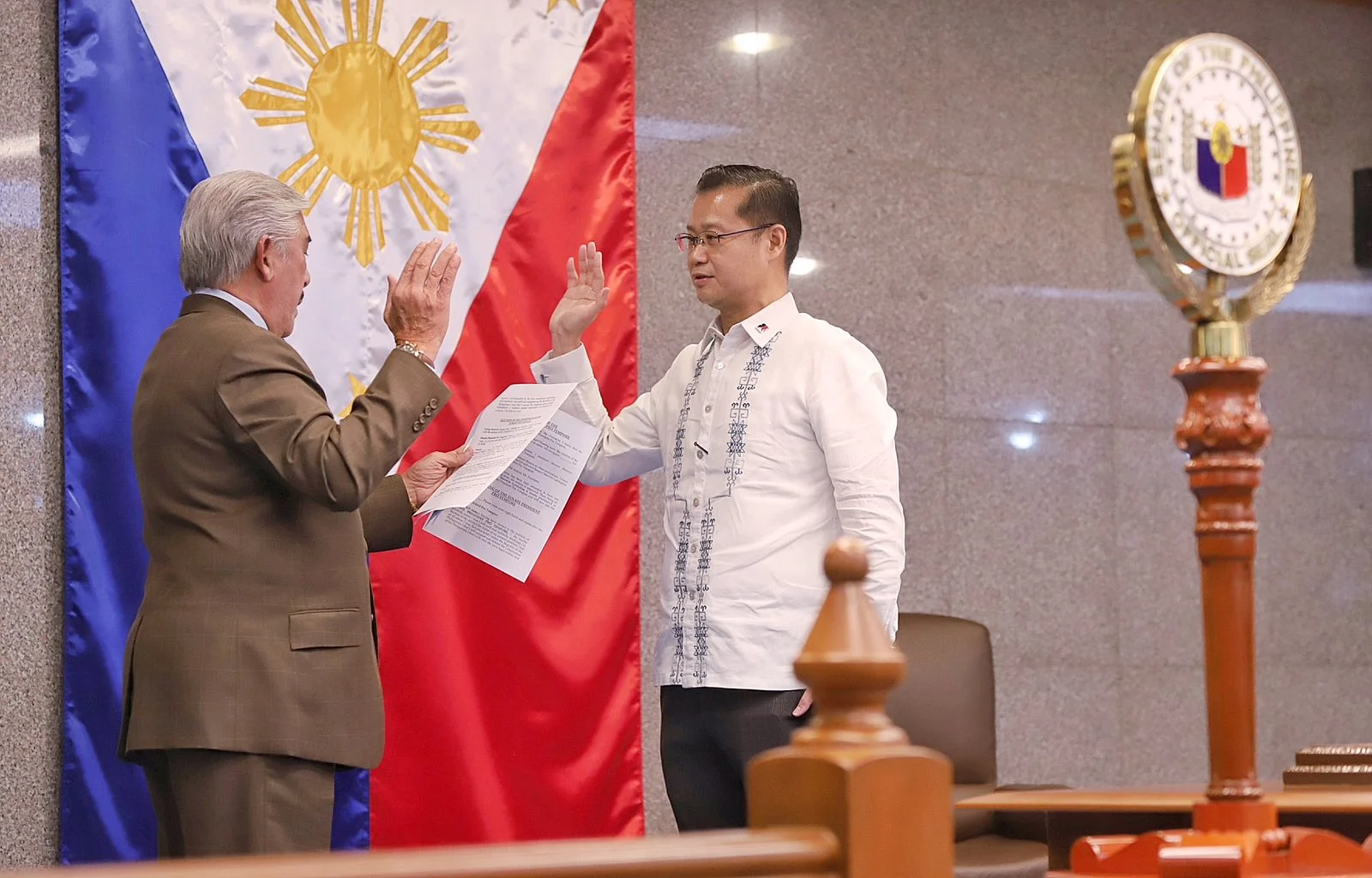
photo courtesy: senate gov. ph

With the House of Representatives already behaving as an extension of the Palace, Filipinos should want a Senate that is more independent of Malacañang, not less.
That is why the recent attempt to reorganize the Senate through a highly contested claim of quorum should concern even those who have no affection for the existing Senate leadership. The issue is bigger than personalities. It is bigger than who occupies the Senate President’s office. At stake is whether the country will still have an institution capable of checking executive power.
The Philippines does not need two Houses of Congress marching in lockstep with the administration. It does not need two chambers that merely ratify decisions already made elsewhere. The constitutional design is based on the idea that power should be fragmented, contested and scrutinized. The Senate exists not only to legislate but also to investigate, question and challenge.
When the House becomes overwhelmingly aligned with the Palace, the Senate’s role as an independent institution becomes even more important.
This is precisely why the controversy over quorum cannot be dismissed as a technical dispute among politicians. The argument advanced by those seeking to reorganize the Senate would allow a minority of senators to seize control of the chamber by redefining the number required for a quorum.
The Senate has 24 members. Under the ordinary constitutional rule, a majority is 13.
Yet the proponents of the leadership change argue that certain senators should no longer be counted because they are absent or beyond the chamber’s practical reach. The problem with this argument is that it contradicts the Senate’s own historical practice.
The quorum was not reduced when Senator Panfilo Lacson went into hiding abroad. The quorum was not reduced when Senator Leila de Lima was detained. The quorum was not reduced when Senator Antonio Trillanes was detained. In each case, the Senate continued to treat the chamber as a 24-member institution. Sitting senators did not disappear from the constitutional count simply because their attendance became difficult or impossible.
The rule remained the same because constitutional rules are supposed to be stable. They are not supposed to change whenever political circumstances make them inconvenient.
The danger of the current argument is not limited to one leadership fight. If the denominator can be manipulated today, it can be manipulated tomorrow. If 13 can become 12 for political convenience, another faction may eventually argue that 12 can become 11. Constitutional safeguards become meaningless once they are transformed into instruments of political strategy.
The timing of the leadership struggle makes these concerns impossible to ignore.
The Senate has increasingly become one of the few institutions capable of conducting inquiries that may embarrass powerful figures within the administration. Public attention has focused on issues ranging from confidential funds to massive flood-control expenditures worth hundreds of billions of pesos. These are precisely the kinds of issues that require aggressive legislative oversight.
A Senate that is independent of Malacañang can ask uncomfortable questions.
A Senate controlled by forces aligned with Malacañang may have less incentive to ask them.
This does not mean that every senator supporting the leadership change is acting to protect the administration. Nor does it mean that every investigation produces evidence of wrongdoing. But institutions should be judged not only by intentions but by incentives.
When a controversial legal theory is used to facilitate a leadership takeover that could weaken the Senate’s independence from the executive branch, citizens are justified in asking who benefits.
The answer is not difficult to identify.
The beneficiaries are those who prefer a Senate that investigates less aggressively, scrutinizes less intensely and challenges executive power less frequently.
That is why this debate is not ultimately about quorum.
It is about whether the Philippines will retain an independent Senate.
With the House already behaving as an extension of the Palace, the country does not need another institution moving in the same direction. It needs a Senate willing to stand apart from Malacañang, willing to exercise oversight without fear or favor and willing to defend its constitutional independence even when doing so is politically inconvenient.
The Senate was never intended to be an echo chamber of the executive branch.
It was intended to be a check on it.