Photo: Rene Baterbonia/ Facebook
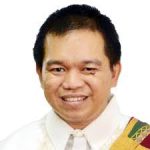
Rene Clert Baterbonia had traveled the road from Davao to Talacogon many times before.
It was the road of school breaks and returns. The road between the city that nurtured his talent and the town that first gave him roots. The road of ordinary departures and ordinary arrivals, of basketball stories, family visits, tired bus rides, familiar stops and the quiet comfort of coming home.
But yesterday, that familiar road became something else.
It became his final journey home.
The route he once traveled with a bag, a dream and a living body was now traveled in silence, with flowers, prayers and a grieving Mindanao waiting by the roadside. Every town he passed became part of the farewell. Every kilometer carried the unbearable truth that the boy who used to come home with stories would now come home as memory.
There are roads that bring people home.
And there are roads that become history.
When Rene’s convoy left Davao for Talacogon, it was not only a body being returned to a family. It was hope being carried back to the soil where it was born. It was a son coming home too soon. It was Mindanao watching one of its children pass through town after town, not in triumph, not in a jersey, not with medals or stories of victory, but in the terrible silence of a coffin.
The distance from Davao to Talacogon is almost the same as the road from Manila to Baguio. But Manila to Baguio is often imagined as a road to cool air, pine trees and escape. Davao to Talacogon, on that day, became something else entirely. It became a road of tears. A corridor of grief. A long island embrace for a boy who should have been coming home alive.
The convoy left Davao at around eight in the morning on June 15.
It reached Talacogon at around two in the morning on June 16.
Almost eighteen hours.
But this was not a journey that could be measured only by time or distance. What happened that day was one of the greatest outpourings of public grief, support and sympathy Mindanao has ever witnessed. It had not happened before, at least not in Mindanao, not like this. Not across that distance. Not with that kind of tenderness. Not with that kind of collective heartbreak.
Town after town. City after city. People came out not for a politician, not for a celebrity, not for power, wealth or spectacle, but for a boy from the margins whose dream had been taken away.
Rene was just a kid with a big dream.
He went to Manila carrying almost nothing but hope. Hope that his dream would come true. Hope that basketball would open a door that poverty had long kept closed. Hope that his family’s sacrifices would finally find reward. Hope that one day, the boy from Talacogon could come home not only as an athlete, but as proof that a better life was possible.
But even that hope was extinguished.
Deprived.
Taken away.
That is why Mindanao mourned him so deeply. Because Rene’s story is the story of so many Mindanawons. The child who must leave family, community and hometown to chase a future elsewhere. The son who carries not only his own dream, but the hunger, prayers and sacrifices of everyone who loves him. The young person who leaves home because home, however beloved, cannot always give him the life he deserves.
He had left home alive with promise.
He came back surrounded by grief.
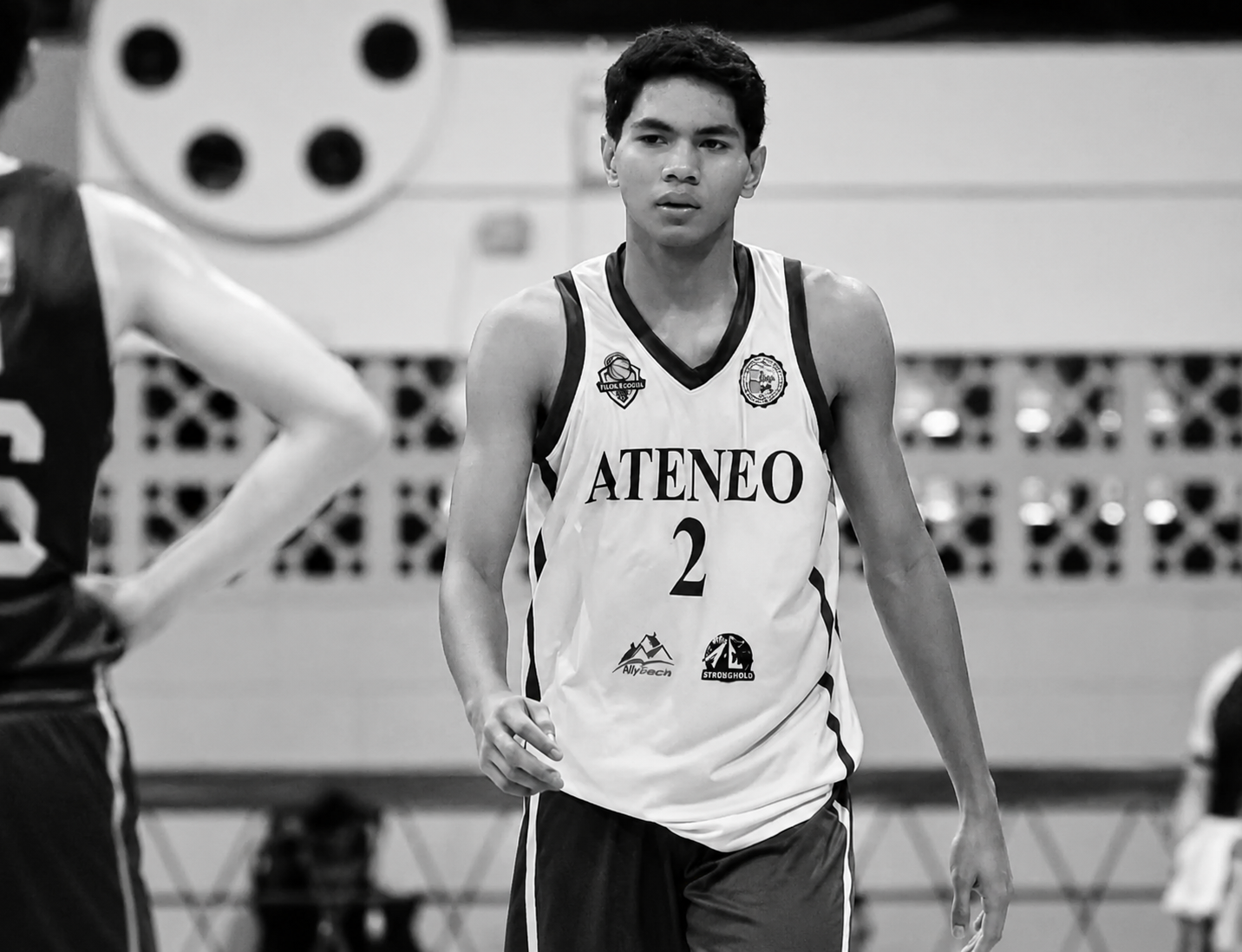
In Davao, the morning began with the heaviness of final departure. This was the city that helped shape him. This was where he wore the blue of Ateneo de Davao. This was where he grew into the athlete people called Mr. MVP. This was where his name first became larger than the boy who carried it.
The hearse did not simply leave a campus.
It left a community that had watched him rise.
People stood outside not as spectators, but as mourners. Some held phones, but others could only stand still. There are moments when recording feels too small for the sorrow before you. Some placed their hands on their chests. Some bowed their heads. Some watched the convoy pass with the helplessness of people who knew that no gesture, however sincere, could return breath to a child.
They were not all relatives. They were not all friends.
But they knew him.
They knew the boy.
The boy from the province. The boy with talent. The boy whose family had let him go because dreams often require distance. The boy who carried more than himself when he left for Manila. He carried a hometown’s pride, a family’s sacrifice, a region’s hope and the fragile belief that if a child works hard enough, jumps high enough, obeys enough, endures enough, the world will protect him when it finally opens its doors.
That belief was inside the convoy.
Broken.
In Panabo, the road became a place of mourning. The convoy stopped at a funeral home, but the grief did not stay indoors. It spilled into the streets. Students paused before class. Workers stopped what they were doing. Residents gathered along the road, many in white, as if the city had chosen one color for a sorrow too large for words.
Then came the drums.
They did not sound like drums for a game anymore. They sounded like a heartbeat trying not to stop. They sounded like a community calling to a child who could no longer answer. The beat followed the convoy not to push it forward, but to accompany it, as if Panabo itself was saying: We will not let you pass alone.
Then came the chants.
“MVP.”
“Hustisya.”
One word was for the life he lived.
The other was for the death that still demanded an answer.
“MVP” was not simply a cheer. It was a refusal to reduce Rene to the manner of his passing. It was a reminder that before there was grief, there was greatness. Before there was a coffin, there was a boy running, leaping, fighting for every possession, carrying the name of Mindanao into courts where children like him are not always expected to shine.
“Hustisya” was not simply anger.
It was love with nowhere else to go.
Then came Carmen.
Carmen did not let him pass as if he were unknown. The town placed its farewell in public view. A message glowed along the roadside, simple but devastating. Grief does not need complicated language. A town only had to pause, to look, to recognize, to say in its own way: Rene, we saw you. Rene, we know what you meant. Rene, you should have come home differently.
Every town that waited for him seemed to say the same thing.
You should have come home differently.
In Carmen, even light became mourning. The LED farewell was not just a sign. It was a public wound glowing on the road. It told the family that the grief inside their vehicle had already gone ahead of them. It told the convoy that Rene’s name had reached places before his body did. It told everyone passing that an ordinary highway had become, for that day, a memorial wall.
Then Tagum.
In Tagum, the city did not merely watch him pass. It received him. People gathered despite the weather. Rain did not dissolve the crowd. It made the scene more painful. Umbrellas opened. Uniforms dampened. Shoes touched wet pavement. But people stayed.
They waited because grief, when it is real, does not check the sky before it comes out.
The city became a threshold between Davao del Norte and the road toward Davao de Oro. By then, the convoy was carrying not only flowers and relatives. It was carrying a question heavy enough to bend the hearts of strangers.
How does a boy leave Mindanao with a dream and return to it as a wound?
The people in Tagum watched him pass as if they were watching their own son. And perhaps they were. In Mindanao, one gifted child from a far town does not belong only to his family. He belongs to every mother who has packed a bag for a child leaving home. To every father who has hidden fear behind pride. To every teacher who has said, “Go. You can make it.” To every coach who has seen, in a skinny, hungry, determined boy, the outline of a future larger than the place that raised him.
Then the convoy entered Davao de Oro.
In Mawab, people waited along the highway. No grand speeches were needed. No official ceremony could have improved the moment. The grief was in the standing. It was in the waiting. It was in the eyes of people who knew that sometimes the most powerful thing a community can do is simply refuse to let its dead pass alone.
Mawab became the first Davao de Oro witness. A town along the road, yes, but also a town along the wound. People came out because Rene was not only passing through geography. He was passing through memory. He had become the kind of boy communities recognize even from a distance: the son who tried to rise, the athlete who carried the name of home, the child who made the provinces feel seen.
In Nabunturan, the highway felt like a chapel. People stood near the road not to interrupt the convoy, but to accompany it. Their presence was a prayer without words. They stood for the family. They stood for the boy. They stood for the dream that had left the island believing it would be safe.
There is something sacred about a roadside crowd that asks for nothing. They did not gather for entertainment. They did not gather for spectacle. They gathered because a young man had died, and because silence would have felt like abandonment.
In Montevista, the sorrow continued. The convoy paused, and the image was almost unbearable: a town stopping for a boy who could no longer stop for anyone. People stood, watched and waited. The road became a corridor of faces. For a few moments, Montevista became less a place on a map than a hand placed gently on a grieving family’s shoulder.
There are deaths that people understand, even if they hurt. Old age. Illness. The long surrender of a tired body. But the death of a young athlete is different. It feels like violence against time itself. A young man is supposed to have chapters ahead of him. He is supposed to make mistakes, recover, fall in love, laugh with teammates, complain about training, call home, grow older, become stronger, return home during breaks and say, “Ma, Pa, I’m okay.”
Rene should have been able to say that.
In Monkayo the chants returned like an echo moving through the valleys.
“MVP.”
“MVP.”
“MVP.”
Again and again, the word followed him. The people were not cheering a game anymore. They were cheering a life that had ended before the final quarter. They were giving him the ovation he deserved but could no longer hear. They were trying, with human voices, to lift him one last time.
By then, it was no longer only a convoy.
It was a moving wake.
It was Davao, Davao del Norte and Davao de Oro handing a boy from one community to the next, as if each town had been entrusted with a little part of the sorrow before passing it on.
Then the convoy crossed into Agusan del Sur.
By the time it reached Trento, evening had begun to gather. But grief did not go home. People waited. The crowd thickened. The road became heavy with bodies, voices and tears. The convoy could hardly move. It was as if Trento itself could not bear to let Rene pass too quickly.
And then the water rose.
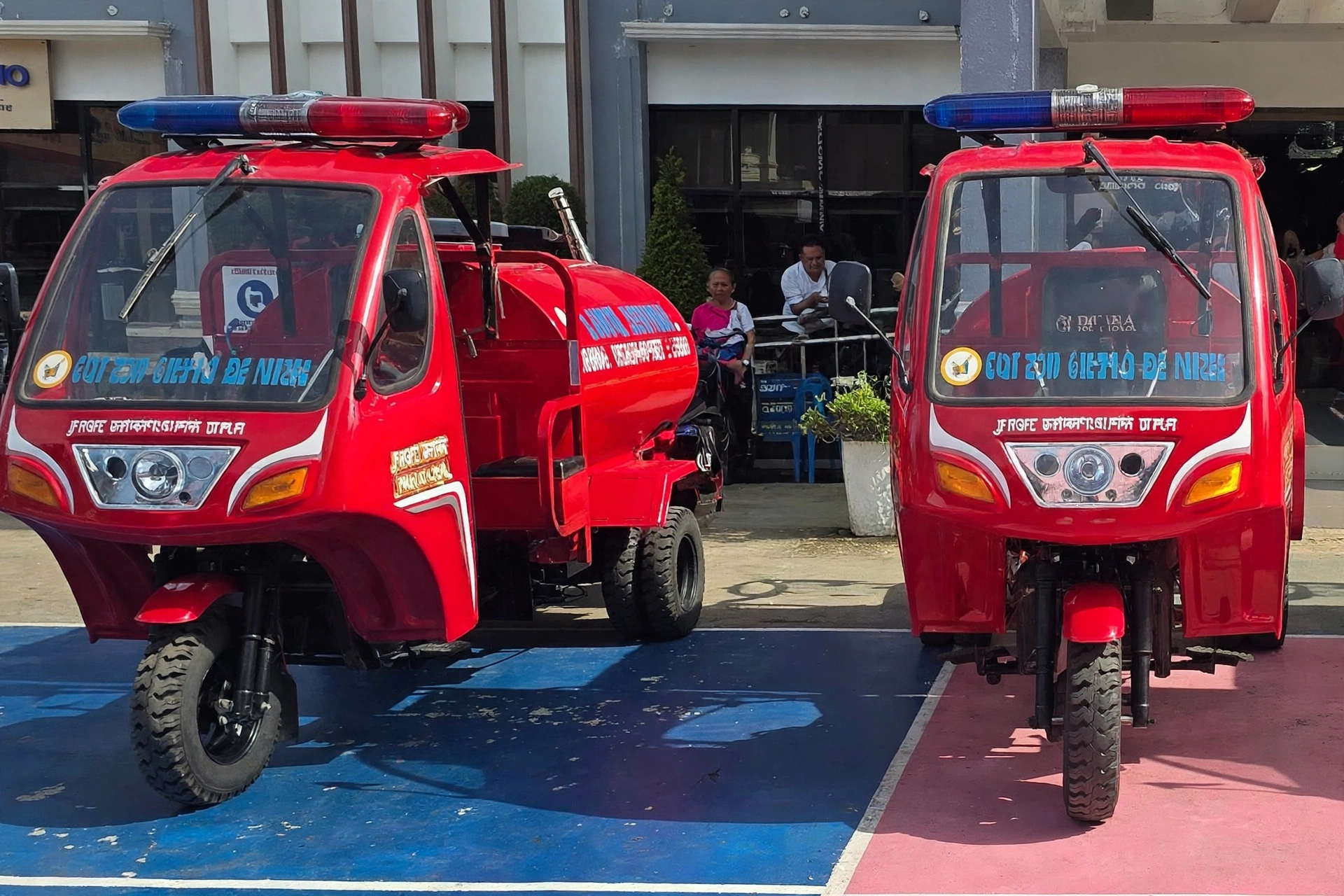
A water salute arched over the road.
For a moment, the whole scene became almost unbearable. Water lifted into the air, curved above the convoy, then fell like tears from the sky. It was an honor, yes. But it was also something deeper. It was a town crying in the only way a town can cry. It was grief made visible. It was the land washing the road for a son coming home. It was Mindanao saying: We cannot bring you back to life, but we can receive you with dignity.
Imagine his family inside that convoy.
Imagine looking out and seeing strangers crying for your child
Imagine hearing people call him “MVP” when all you want is to hear him call you again.
Imagine passing under water raised in honor of your son and knowing that the tribute is beautiful, but that beauty cannot undo the terrible fact that he is gone.
In Trento, public grief became almost physical. You could imagine it pressing against the vehicles, slowing the procession, filling the air with voices that refused to let silence be the only sound around his coffin. The road itself seemed to resist the passing of the convoy, as though an entire town wanted one more second, one more look, one more chance to say goodbye.
From Trento, the convoy moved toward Bunawan. The journey had become more intimate now. Rene was no longer merely passing through towns that admired him. He was entering the province that claimed him. Agusan del Sur was receiving one of its own, and every town seemed to know its role in the long sorrow of bringing him home.
In Bunawan, people came out for him. They did not come out for a spectacle. They came out because a son of their province had been returned too early. They came out because a young man who had carried Agusan’s pride had come home without the future he deserved.
Bunawan’s grief had a provincial tenderness to it. It was not the grief of strangers reading the news. It was the grief of people who understood that this boy belonged to the same soil, the same roads, the same schools, the same difficult geography of hope. The convoy moved past them like a question wrapped in flowers: How could someone so young, so loved, so full of possibility, be returned this way?
In Rosario, the same ache continued. People stood by the road with the quiet intensity of those who understand what talent means in the provinces. Talent is not merely a gift. It is a way out. It is a family’s hope given muscle and breath. It is a mother’s prayer translated into training. It is a father’s sacrifice running up and down the court. It is a sibling’s pride. It is a town’s proof that someone from here can be seen.
Rene had been seen.
And then he was lost.
Rosario did not need to know every detail of his life to understand the meaning of his return. People in towns like Rosario know that when a child rises from the margins, the whole province rises a little with him. And when he falls, the fall is not private. It shakes everyone who had believed that maybe, this time, the dream would survive.
In San Francisco, the province mourned again with ceremony.
Another water salute rose above the convoy.
Again, the road became sacred. Again, water fell like tears over the slow passage of a boy who should have been returning to applause, not condolences. The firefighters did not simply spray water. They raised an arch of honor. They turned the highway into a gate. They made the convoy pass through something that looked almost like blessing, almost like baptism, almost like a final attempt by the living to wash away the cruelty of what had happened.
The San Francisco salute cut deeply because it felt like an answer to the helplessness of grief. What can a town do when a child is already gone? It cannot return breath to his lungs. It cannot return the years he was supposed to live. It cannot return him to his mother’s arms as the living boy she once held.
But it can stand.
It can raise water.
It can stop ordinary life for a moment.
It can say: This is not just another death. This is our son. This is our pride. This is our wound.
Then came Prosperidad.
The name itself felt cruel.
Prosperidad. Prosperity. A place named after the very promise that Rene had been chasing. He had left home not only to play basketball, but to become a path toward a better life. He was the kind of child poor families silently build their hopes around. The child whose scholarship might ease a burden. The child whose talent might open doors. The child whose future might one day lift others with him.
And through Prosperidad passed a funeral convoy carrying a young man who had been trying to reach exactly what the town’s name promised.
It was not only a body passing through.
It was a future.
It was a future that would no longer arrive.
From Prosperidad, the road turned toward Talacogon.
By then, it was already deep into the night. The road had taken him across the distance of an entire people’s grief. What began in Davao at eight in the morning had become an overnight procession of love. The road from Manila to Baguio can be long and tiring. But this road, the road from Davao to Talacogon, was longer in another way. It was long because every town added its tears. It was long because every chant made the loss heavier. It was long because the farther Rene traveled, the closer he came to the place where the grief would hurt most.
Davao had sent him off.
Panabo had beat the drums for him.
Carmen had lit a farewell for him.
Tagum had stood in the rain for him.
Mawab, Nabunturan, Montevista and Monkayo had lined the highway for him.
Trento had nearly stopped the road and raised water over him like tears.
Bunawan and Rosario had received him as an AgSurnon son.
San Francisco had honored him with another arch of water.
Prosperidad had watched the passage of a promise cut short.
And finally, around two in the morning, Talacogon waited.
There are homecomings that fill a town with pride.
This one filled it with grief.
Talacogon did not receive Rene the way it should have. It should have welcomed him home on a school break, tired but smiling, taller from training, stronger from competition, laughing with friends, maybe embarrassed by too much attention, maybe carrying stories from Manila, maybe telling younger boys on the court to keep practicing because one day they too might leave and make it.
Instead, Talacogon received a coffin.
In Barangay San Nicolas, a tribute tarpaulin bore his name and the pride of his community. It was not merely a sign. It was a claim. Before Manila knew him, Talacogon knew him. Before he became a national headline, he was a local boy. Before institutions spoke of him in formal statements, he was a child who had run on local courts, smiled at familiar faces and carried the dreams of people who believed he was going somewhere.
At the municipal gymnasium, the final public space became a house of mourning. Families came. Friends came. Strangers came. The town gathered around him with the tenderness of people who know that sometimes a child becomes larger than his own life because he carries the hope of so many.
His family had let him go because love sometimes means releasing a child into the world.
That is what makes this so painful.
They did what families are told to do. They trusted. They allowed him to dream beyond the limits of home. They believed that a great school, a respected program and the adults in charge would keep him safe. They gave their son to opportunity.
And opportunity returned him to them in a coffin.
There is no sentence gentle enough for that.
There is no press statement polished enough to soften it.
There is no institutional language that can cover the sound of a mother losing a child.
For many in Mindanao, Rene was not only an athlete. He was a familiar figure in a familiar story. The boy from outside the center. The boy whose talent had to travel far before it could be recognized. The boy whose family had to let him go because staying home often means staying unseen. He represented a fragile social contract: that if the poor are talented enough, disciplined enough and brave enough to leave home, the institutions that receive them will protect them.
But Rene did not come home with a trophy.
He came home in mourning.
And every town that stood along the road understood this. They did not welcome him as a celebrity. They welcomed him as a son. They welcomed him the way Mindanao welcomes its wounded back, with tenderness, dignity and a sorrow that does not need permission from power.
Mothers watched the convoy and saw their own children.
Fathers stood along the highway and understood the fear hidden beneath pride.
Students in uniforms saw not only an athlete, but a possible version of themselves: young, hopeful, obedient, trusting, still believing that adults and institutions above them would keep them safe.
That is why the road to Talacogon became a moral indictment.
Every hand raised by the roadside said: We saw him.
Every drumbeat said: We remember him.
Every chant of “MVP” said: He mattered.
Every cry for justice said: Do not bury the truth with the boy.
Every water salute said: We honor him as one of our own.
Mindanao knows what it means to send its children away. It knows the pride of departure and the fear beneath it. It knows that when a child from the periphery enters an elite institution, the whole community walks with him. His jersey becomes more than a uniform. His scholarship becomes more than financial aid. His success becomes proof that geography need not be destiny.
That is why his homecoming broke so many hearts.
He was not supposed to return this way. He was supposed to return louder in laughter, brighter in name, stronger in body, fuller in story. He was supposed to come home as the boy who made it.
Instead, Mindanao received him as the boy who was failed.
There is a particular cruelty when the poor are asked to be brave, obedient and grateful, only to discover that their vulnerability can still be treated as an afterthought. Young athletes like Rene are told to trust. Trust the program. Trust the coach. Trust the school. Trust the system.
But trust is not a slogan.
Trust is a duty placed on those with power.
It means protection. It means supervision. It means accountability. It means that when a child is placed under your care, you do not return him to his family in a coffin and speak only in careful sentences.
The road to Talacogon should haunt every institution that recruits children from the margins and calls it opportunity. Opportunity without protection is exploitation dressed in school colors. Excellence without accountability is only prestige protecting itself. Faith without justice is only language.
Mindanao did not need a perfect press statement to understand what had been lost. It understood through the silence of the family, through the tears of teammates, through the students lining the streets before class, through the drums beating beside the road, through the tribute signs, the tarpaulins, the chants and the water salutes that rose over him like the tears of towns that refused to forget.
It understood because it has buried too many dreams before they had a chance to become lives.
But in bringing Rene home, Mindanao also gave him something that death could not take away.
It gave him witness.
It said: You were not alone.
It said: Your name will not disappear.
It said: You were more than a player, more than a recruit, more than a headline, more than a tragedy.
From Davao to Talacogon, grief became a procession. From one community to another, mourning became memory. And in that long and painful passage, Mindanao did what institutions sometimes fail to do.
It stayed with the child.
It carried him.
It honored him.
Rene Baterbonia left home carrying hope.
Mindanao brought him back carrying love.
And somewhere between Davao and Talacogon, along a road heavy with sorrow, beneath chants of “MVP,” beneath cries for justice, beneath arches of water falling like tears, a people made a promise:
The boy who dreamed beyond the limits of his birthplace would not be remembered only for how he died.
He would be remembered for how deeply he was loved.
And for how loudly his death still asks the living to answer.