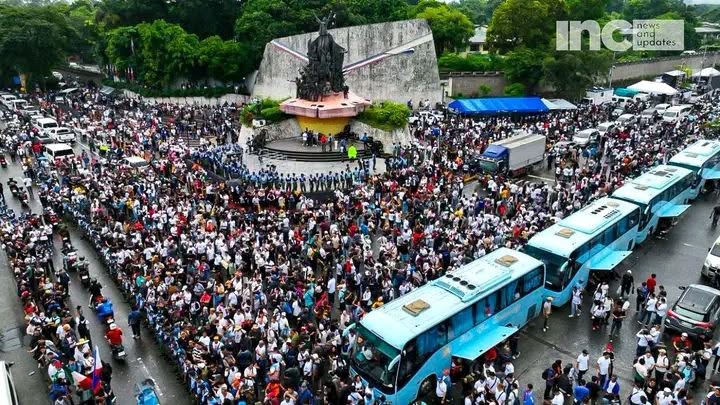
The gathering at EDSA today, led by members of the Iglesia ni Cristo together with other religious groups, is more than a public assembly—it is a reflection of a growing sense of unease among many Filipinos. It signals that for a significant number of citizens, the nation’s greatest crisis is no longer merely economic, but one of governance, accountability, and public trust.
When thousands leave the comfort of their homes to stand together, those in power should resist the temptation to dismiss them as political spectators. They should instead ask a far more important question: Why are so many people feeling unheard?
The true strength of a democracy is measured not by the silence of its people, but by the government’s willingness to listen to voices of dissent. Freedom of speech, the right to peaceful assembly, and the demand for accountability are not threats to the State—they are the very pillars that sustain a democratic republic.
Whether one agrees with the gathering or not, its message deserves to be heard rather than ridiculed. A government that refuses to acknowledge the growing erosion of public confidence risks governing with authority but without trust. And history has repeatedly shown that no administration can remain strong when the confidence of its people continues to weaken.
The loudest cry echoing from EDSA today is not merely for unity—it is a call for leaders to govern with humility, uphold the rule of law, protect constitutional freedoms, and remember that public office exists to serve the people, not to silence them. Democracy does not die when people speak. It begins to fade when those in power stop listening.
“No administration should mistake public patience for public surrender. When citizens gather to speak, the answer should never be indifference, intimidation, or ridicule—it should be accountability. For the day a government stops listening is the day democracy begins to lose its voice.”