(#2 – Debt Management)
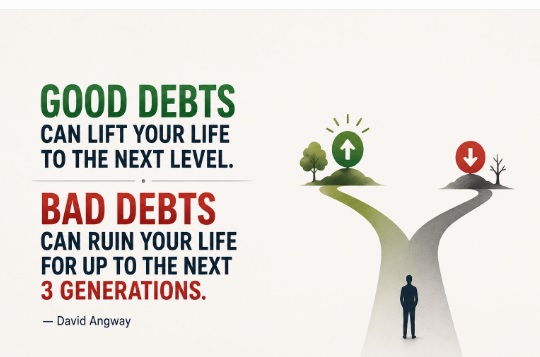
“Good debts can lift your life to the next level. Bad debts can ruin your life for up to the next 3 generations”. ― David Angway

With all the Philippine economic indicators going haywire – rising inflation, depreciating peso, increasing fuel prices, worsening unemployment/underemployment, etc – how financially secure and confident are you to face life’s uncertainties? In the same token, how are you preparing the younger generations in your family?
Whether we like it or not, it’s becoming more obvious how vital financial planning is. We just cannot leave our financial future to chance. Nor can we rely on our government . We need a clear roadmap for achieving our financial goals, managing money, and preparing for unexpected emergencies.
An effective financial planning considers the four foundations of cash management, debt, management, risk management and wealth management. Last issue, I discussed about cash management. This week, we will dive into the second foundation… Debt Management.
Debt management involves assessing all your liabilities, adjusting your budget to prioritize payments, and utilizing effective repayment strategies. The goal of debt management is to repay what you owe so you regain control of your finances.
There are said to be two types of debts: Good Debt and Bad Debt.
Yes, not all debts are bad and damaging. A debt is considered a good debt if it helps you generate income or build your net worth. For example, a mortgage loan is considered good debt because they help the borrower build wealth, whether it’s for your own use or for rental business. Another example is education loan because of its strong correlation with the ability to find employment and earning potential. Better educated people have higher chance of being employed in good-paying jobs. Loans that you take out to start or expand your own business can also be considered good debt as it offer income earning opportunities to the borrower.
Bad debt, on the other hand, is money that you borrowed to purchase something that loses value or costs you money without any return. Using your credit cards (usually comes with high interest rates) to buy clothes, eat out, get the latest gadgets or fund vacations are often considered bad debts as these are expenses, usually, offering no income opportunities.
And there’s even what they call ugly debts… these are bad debts that were taken out from lending institutions charging usurious interest rates. Also called predatory lending, this is a transaction that charges an illegally or unconscionably high rate on a loan. In Tagalog, we call it “5/6”.
Prevention is always better than cure. Managing debt starts even before you take out the loan. Before borrowing money, ask yourself if what you’re buying is something you urgently need, will positively affect your cash flow and will bring long term benefits. If the answers are negative, then it is a sign to not borrow.
Watch out for the triggers. Unnecessary spending or impulsive buying usually leads to debt. They are often unbudgeted so money used to fund them are borrowed. People fall into the trap of unnecessary spending due to different reasons. Some shop as reward after a stressful day; some buy from those online stores when they are bored; while others travel after seeing their friends flex their recent adventure. So the best is to be aware and mindful of what causes you to do unnecessary spending… and avoid it!
Credit card is the most common source of debt in the Philippines. Our average credit card debt is at critical level higher than the average income. As no actual cash is coming out in credit card transactions, the tendency of many people is to charge, charge and more charge against their credit card until due date comes and they realize having overspent and incurring debt level way above what they can pay. Use credit card for convenience (or for rewards) but make sure you’ll be able to pay the due amount in full to avoid interest charges. Otherwise, leave your credit card behind and pay in cash.
The sooner you pay your debt, the better. Depending on your affordability or capacity to pay, you may either use the “debt snowball” method – where you start paying off the smallest loans. Settling one loan after another gives you quick psychological high, allows you to celebrate small wins thereby increasing your confidence to pay off the next ones. But if you are able, you can use the “debt avalanche” method – where you start by paying off the highest-interest loans. This may require bigger amount to settle but will save you money long-term as you eliminate the high interests. And avoid taking on new loans or using credit cards while you’re still paying old ones.
Being able to manage your debt, if not totally eliminate them, is liberating. You will feel more empowered, be in control, not only of your finances, but of your life, and have a better and healthier self-confidence.
On our next issue, we will dive into the 3rd foundation of financial planning… Risk Management.