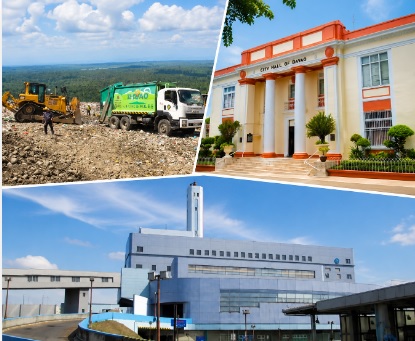
Davao City is getting bigger, busier—and inevitably, dirtier.
With a growing population, expanding commercial activity and increasing consumption, the city’s garbage problem is no longer something that can be solved simply by collecting rubbish and finding another place to dump it. Davao needs to move from waste disposal to waste management—and eventually to waste recovery.
This is why the proposed ₱5.98-billion Waste-to-Energy (WTE) project deserves serious attention.
The proposal is not new. It was conceived and studied years ago, and the recent efforts to revive the program amid the city’s mounting garbage collection and disposal problems could not have come at a more appropriate time.
Critics will inevitably raise the familiar argument: “Incineration is harmful to the environment.”
That concern should not simply be dismissed.But neither should it be used to reject modern WTE technology outright.The real question is not whether waste should be burned. The question is whether Davao can afford to continue doing nothing while its garbage continues to accumulate.
Singapore provides an important example.
The city-state has incorporated WTE into an integrated waste-management system for decades. Its facilities can reduce waste volume by approximately 90 percent, while recovering energy to produce electricity. Modern pollution-control systems treat flue gases before they are released, while metals and other materials can be recovered from ash.
But Singapore’s lesson is bigger than incineration.
It is discipline. Waste segregation, recycling, collection, treatment, energy recovery and final disposal must work as one system.
Davao should learn from that model—not blindly copy it.
A properly designed WTE facility could potentially address several problems simultaneously: reduce the volume of garbage requiring landfill space, provide a more reliable destination for residual waste, recover useful energy, and create a more modern and organized solid-waste management system.
But there must be safeguards. The city must require world-class emission-control technology, continuous independent monitoring, transparent disclosure of emissions data, proper ash management, strict segregation policies and strong environmental compliance.
Most importantly, WTE must never become an excuse to abandon recycling.
We should recycle everything that can be recycled.
We should compost what can be composted.
We should reduce what can be reduced.
And for the residual waste that remains?
Recover its energy instead of allowing it to occupy valuable land indefinitely.
Singapore itself acknowledges that incineration is effective but not a complete or infinitely sustainable answer. Its strategy continues to emphasize waste reduction, recycling and resource recovery.
That is precisely the lesson Davao should take.
The debate should therefore move beyond the simplistic question of “WTE or no WTE?”
The better question is:
“What is the smartest, safest and most sustainable way for Davao to deal with the garbage its people inevitably produce?”
If the ₱5.98-billion project can meet stringent environmental standards, demonstrate financial viability, guarantee transparency and operate within an integrated waste-management system, then perhaps Davao should not be afraid of the technology.
We should be afraid of remaining stuck in the past.
Garbage is no longer merely garbage.
With the right technology, proper governance and responsible environmental safeguards, which Davao City is at the forefront, yesterday’s waste can become tomorrow’s energy.
Davao does not need another garbage dump. It needs a modern waste-management system worthy of a growing city.
And perhaps, after years of waiting, Waste-to-Energy is finally the opportunity to build it.