The Vice President has finally spoken.
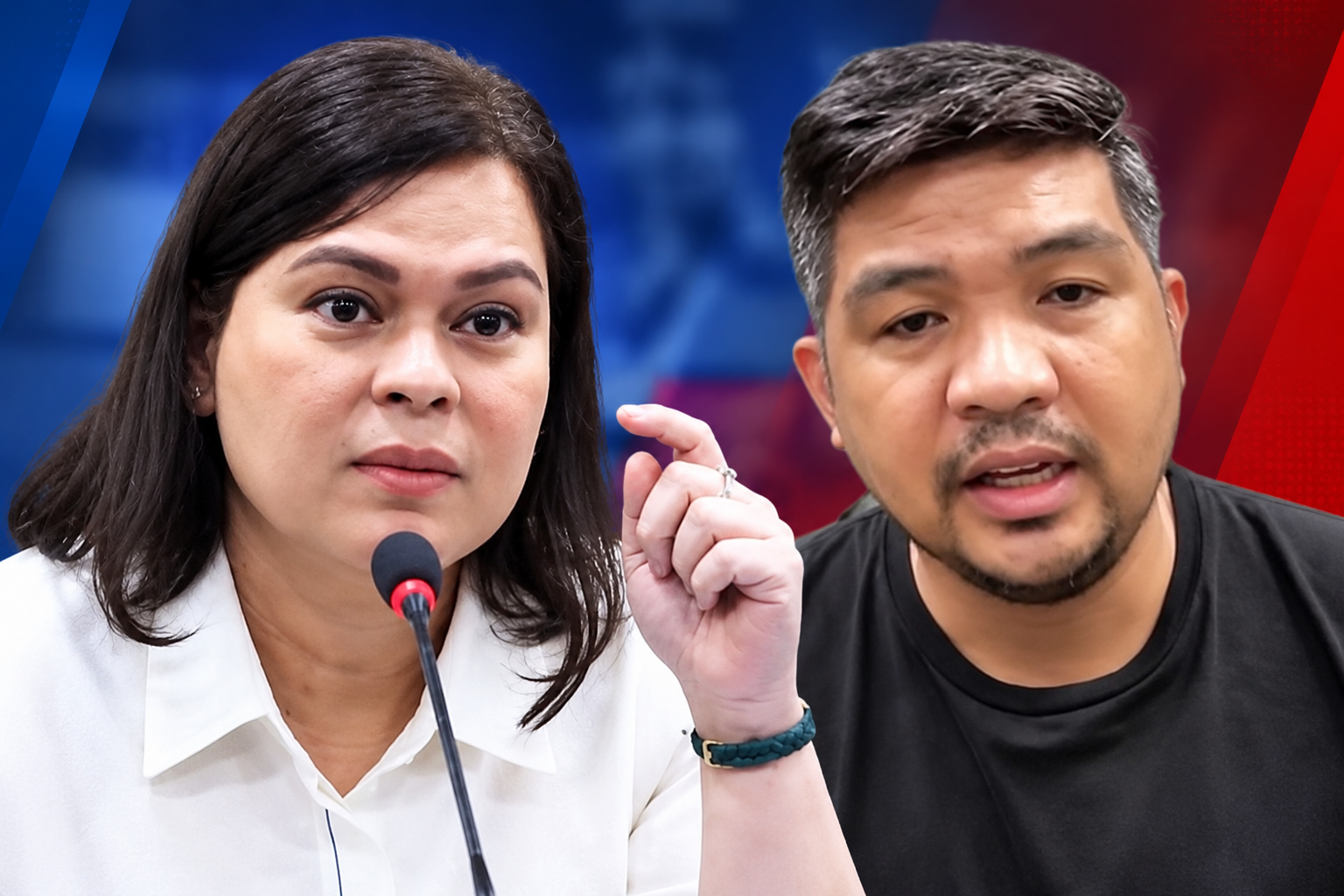
After weeks of allegations that millions—and eventually more than ₱2 billion—were allegedly delivered to her and members of the Duterte family, Vice President Sara Duterte has categorically denied the claims of dismissed police officer Rodulfo Mondigo Gracioso Jr.
She says she does not know Gracioso, did not receive the alleged money, and disputes several details in his sworn statement, including his account of her movements and supposed meetings. She has also submitted her response to investigators.
But here is where the public conversation must become more mature.
A denial is not proof of guilt. Neither is an accusation proof of guilt.
Gracioso’s allegations are extraordinarily serious. He claims to have personally delivered suitcases of cash to members of the Duterte family upon the alleged instructions of former House Speaker Lord Allan Velasco. The NBI has said the allegations must be investigated and that evidence must be authenticated. Gracioso’s polygraph examination, according to the NBI, covered limited matters and did not establish the truth of every allegation in his affidavit.
That distinction matters.
In a country already exhausted by political accusations, social-media battles and competing narratives, the easiest thing to do is to choose a side and declare the other a liar.
But that is precisely how truth gets lost.
If Gracioso is telling the truth, then his allegations deserve a full, independent and evidence-based investigation. If he fabricated them, then the law should likewise take its course.
There should be no sacred cows—and no predetermined villains.
The same standard must apply to everyone.
The Vice President’s denial deserves to be heard. Gracioso’s allegations deserve to be examined. Former Speaker Velasco’s denial deserves the same opportunity for verification. And every document, bank record, photograph, travel record, communication and other piece of evidence capable of confirming or disproving the claims should be placed under proper scrutiny.
The NBI itself has said that it must investigate because if the allegations are false, the accuser could face consequences for perjury; if they are true, authorities must look deeper.
That is the proper direction.
Not trial by television.
Not trial by Facebook.
Not trial by political affiliation.
And certainly not trial by public anger.
The controversy becomes even more complicated because Duterte has accused the Marcos administration of being behind what she describes as a campaign against her, while Malacañang has denied the accusation and, ironically, has itself called for a deeper investigation into the Gracioso allegations.
This is precisely why evidence matters more than political narratives.
The Filipino people have heard too many accusations already. What they need now is not another shouting match between political camps.
They need answers.
If billions of pesos were actually delivered, where did the money come from? Who supplied it? Who received it? When and where did the transactions occur? Are there financial, travel, communication or documentary records that can corroborate them?
And if the allegations are false, the public deserves to know why they were made, what evidence disproves them, and who should be held accountable for spreading a fabricated story.
Those are questions an investigation—not a political press conference—must answer.
This is also why every public official, regardless of position, must understand that transparency is not persecution and investigation is not automatically harassment.
At the same time, investigation must never become a substitute for proof.
The Constitution and the rule of law demand something simple but fundamental: allegations must be established through competent evidence and proper proceedings before they become findings of guilt.
The public should therefore resist two equally dangerous temptations—blind loyalty and blind condemnation.
We do not serve truth by automatically believing every accusation.
Neither do we serve justice by automatically dismissing every accusation because it is politically inconvenient.
The country does not need another political camp to win this argument.
It needs the truth to win.
And if the truth is uncomfortable, so be it.
For public officials, accountability should never depend on who made the accusation, whose political camp is implicated, or who stands to benefit from the controversy.
Follow the evidence. Establish the facts. Let the law decide.
Because when allegations become headlines, only evidence can turn them into truth.