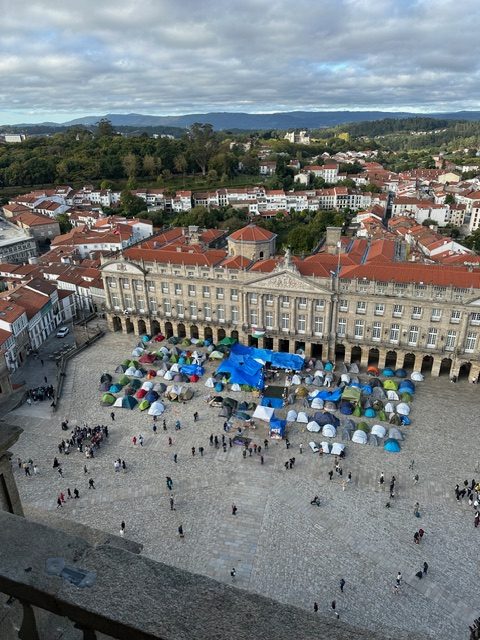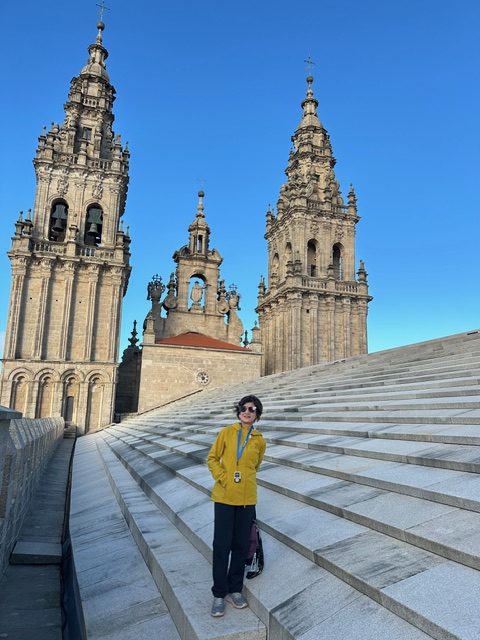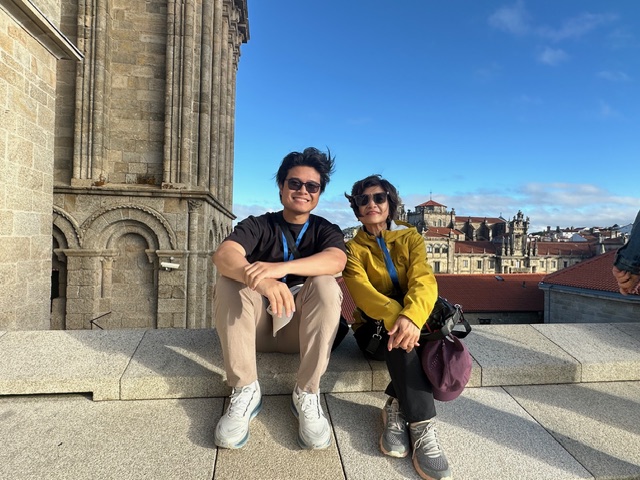
In Photo: Enjoying the cool breeze and the nice view from the top
All Camino routes and trails spread across Europe lead to one final destination: Cathedral of Santiago de Compostela!

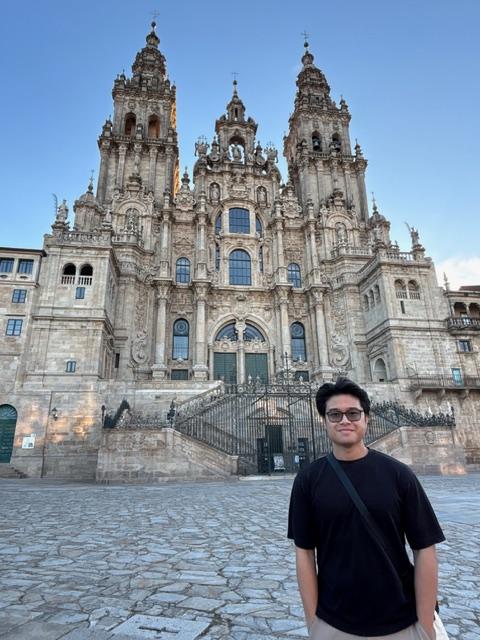
After 6 days of walking, covering about 120 kms and doing more than 100,000 steps through forests, farmlands and climbing hills, while enduring the pain in our calves, there we were, standing in front of the St James Cathedral of Compostela- our final Camino destination! I had seen so many pictures and videos of pilgrims in this moment and I also had imagined this moment for me. But actually standing in front of this grand and beautiful Cathedral was more than what I imagined it to be. It was overwhelming, exhilarating and humbling experience for me.
The Cathedral, which had been designated UNESCO World Heritage Site, is believed to house the burial place and relics of Saint James the Apostle. Tradition holds that a local shepherd discovered St James’s remains in the site where the current Cathedral is located. From a very small chapel, the Cathedral is now the largest Romanesque church in Spain and one of the largest in all of Europe. It is one of the 3 great pilgrimage sites of Christianity, alongside Jerusalem and Rome.
Paolo and I spent an extra day to visit and experience the whole of the Cathedral complex.
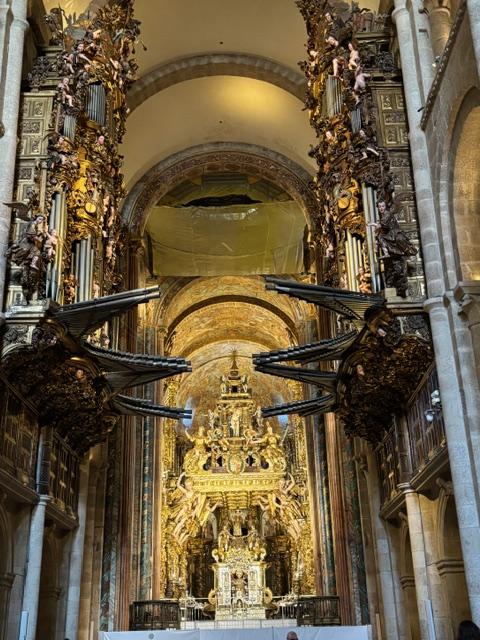
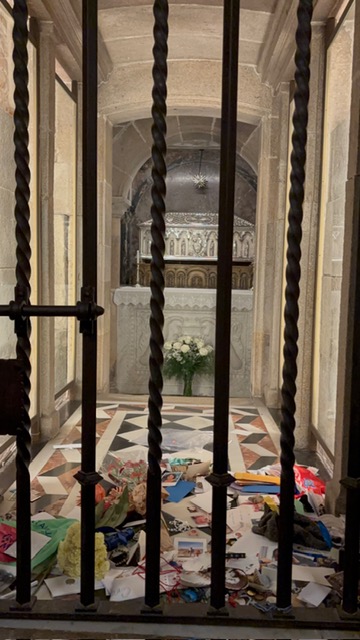
The Cathedral features two prominent bell towers: The Left/North Tower has the statue of Zebedee, the father of St. James, while the Right/South Tower has the statue of Mary Salome, the mother of St James. Thankful that we joined the guided tour that allowed is to ascend the two towers and walk across the stone roofs. The view of the complex and the whole of Compostela from the rooftop was worth the difficult steps going up (and down). From there, we went inside the main Cathedral, which was under renovation for the Holy Year celebration in 2027. There, we visited the Tomb of St James, a crypt beneath the main altar. Pilgrims line up to this sacred site to see the silver urn that holds the remains of St James, along with those of his disciples, Saint Athanasius and Saint Theodore.
It wasn’t supposed to be part of our tour but our guide made us queue and climb a narrow staircase behind the high altar to stand directly behind the statue of St James and give Saint James a traditional embrace. What a welcome surprise!
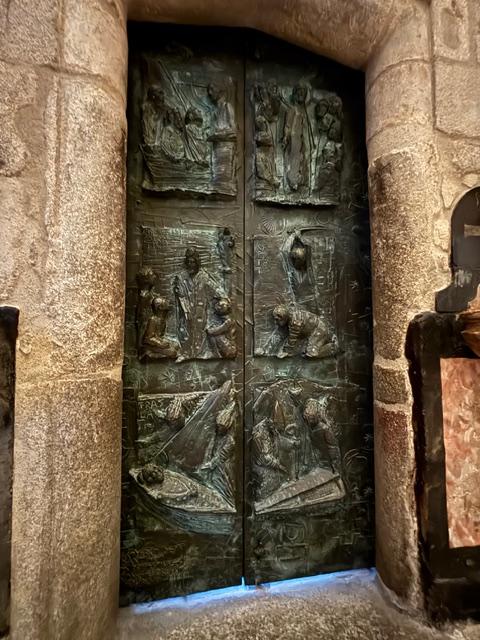
Another important part of the Cathedral is the Porta Santa—also known as the Holy Door or Forgiveness Door. It offers pilgrims a direct route to the crypt of St James, the Cathedral’s Main Altar, and the revered image of St James. But the Holy Door opens only during the Holy Years. But while we were not able to pass through the Holy Door, we were able to touch and take its photos from the inside of the church.
The surrounding old town of Santiago adds to its charm. Though, it’s now lined with local cafes, restaurants and souvenir shops, one can still feel and appreciate the history and culture that it represents.
2027 is a Holy Year, where the Cathedral will be extra busy and crowded. Already, several year-long activities and festivities have been lined up to celebrate this special year for the Catedral de Santiago de Compostela. Pls your 2027 Camino now