Photo courtesy: CIO

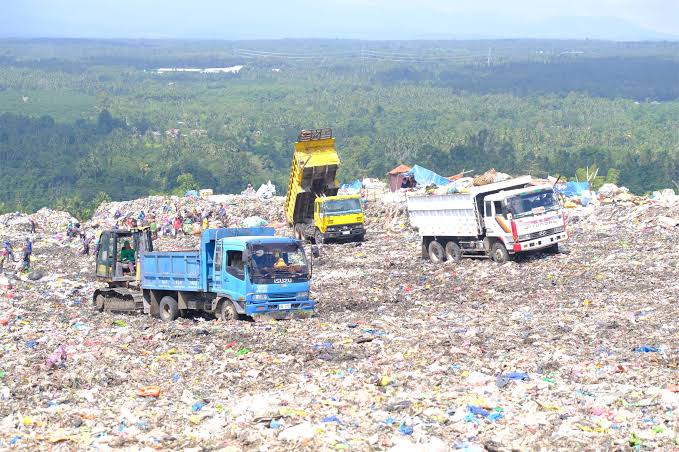
Every now and then garbage piles up in Davao City. Side streets smell. Residents and business establishments used to clean environment are complaining. Garbage dump trucks are parked because there’s nowhere to dump.
Not long ago the Department of Environment and National Resources, a national agency, refused to allow garbage to be dumped in our city’s sanitary landfill even when the destruction in the site caused by heavy downpour had been fixed. This prompted the city to look for alternative dump sites in adjoining towns.
The reason given is “technical compliance.” The timing moreover feels political for it jibes with the deprecation coming from the Presidential Communications Office claiming the Davao City is a dangerous place to live and invest in, the same tune aired repeatedly by kibitzer Antonio Trillanes.
Let’s be blunt. This is happening to the same city that is cited again and again by international survey firms and CEO Magazine as the most peaceful, orderly, clean, and ideal city to live and invest in. The Marcos government knows that. And it also knows that Davao’s image is tied to the Duterte name.
So when garbage is not collected, who gets blamed? Not DENR in Manila, not the DENR Regional Office. It’s Davao City Hall. And by extension, the Dutertes.
That’s the sick gameplan. Make Davao look dirty, chaotic, and ungovernable. Never mind that we’ve worked 20 years to build this reputation.
But rather than complaining against the callous authority that has no love for Davao City let us confront the issue. Let’s solve it for afterall we have the wherewithal to do it.
The landfill will always be a political weapon as long as we depend on it. One indecent whisper in Manila and Davao chokes.
The answer is to get off the landfill grid entirely. Shift to incineration: Waste-to-Energy.
Davao is growing in a dynamic speed. We need three things right now:
- More power. WTE plants turn the 800 tons daily average of garbage into electricity. That baseload power can be sold to Davao Light and Power Company at a concessional price and reduce the unconscionable rates of the power firm for residential homes, BPOs and factories.
- Less waste. No more mountains of trash. Ash residue is less than 10% and can be used for construction materials — hollow blocks, road base, cement additives. Again income for the city.
- Independence. A WTE plant is city-run. No DENR permit needed to “dump.” We process our own garbage, on our own terms
Cities like Singapore, Japan, and even smaller cities in Vietnam and Indonesia do this. Singapore, which is a city state just as small as Samal Island, has four WTE plants! It’s not new. It’s not dirty. Modern WTE meets world emissions standards.
Yes, it costs money. But so does a tarnished image. So does lost tourism. So does sickness from uncollected trash.
Here’s what the Davao City Council can do. Under the concept of Public+Private Partnership set up a
Waste-to-Energy plant in the outskirts. Back it up with ordinance . It was done by the Davao City Water District when it put up the DCWD Bulk Water Project which was estimated to cost ₱12.5-billion.
WTE comes with duty and responsibility. Segregation of waste must be strictly enforced by the batangays. WTE works best with less wet waste. Conduct an information and education campaign beforehand and enforce it.
We cannot let garbage be used to blackmail Davao City at the whims and caprice of envious national politicians and their ilks.
Davao did not become the most livable city by accident. We built it. And we will keep it that way — not by begging Manila for dumping space, but by turning our trash into power, and our problem into profit.
Garbage has become an insidious political tool. But it’s also energy. Let’s choose energy.