Photo courtesy: Inday Sara Duterte facebook page
By Ivy Tejano
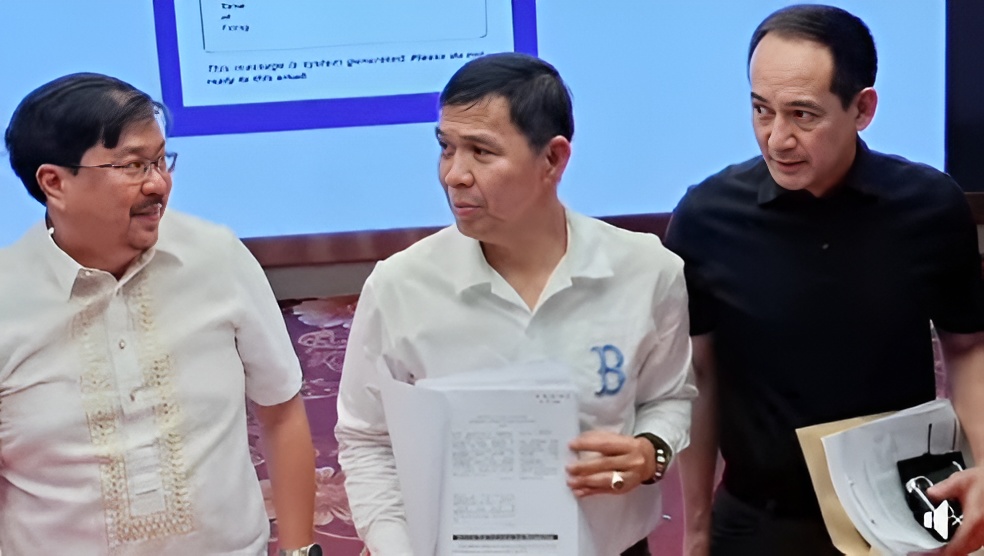
DAVAO CITY – The defense team of Vice President Sara Duterte welcomed the Supreme Court’s resolution denying the House of Representatives’ motion for reconsideration in the impeachment case leveled against her.
In an official statement read by lawyer Michael Poa, spokesman of Duterte’s defense team, they thanked the High Court for what it described as a ruling that definitively provides clear and authoritative guidance on the constitutional limits and proper treatment of impeachment proceedings.
“With these issues settled by the Court, the matter is now closed. We should then move on to address the nation’s other pressing concerns,” Vice President Duterte’s defense team said.
The statement came after the Court, voting unanimously among the participating justices, denied with finality the House’s motion to overturn its July 25, 2025, decision that struck down the Articles of Impeachment against Duterte as unconstitutional.
The High Court ruled that the fourth impeachment complaint transmitted to the Senate on February 5, 2025, was already prohibited under the Constitution’s one-year bar on impeachment proceedings against the same official.
Associate Justice Alfredo Benjamin Caguioa did not take part in the deliberations, while Associate Justice Maria Filomena Singh was on official leave.
In its resolution, the Court clarified several key constitutional and procedural issues.
First, it held that the first three impeachment complaints filed under the regular mode of initiating impeachment were never validly acted upon because they were not included in the House’s Order of Business within the constitutionally required period.
The Court explained that “session days” under the Constitution refer to calendar days when the House actually holds a session, not legislative session days as previously argued.
Second, while reiterating its earlier ruling in Gutierrez v. House of Representatives, the Court further explained when an impeachment complaint under the first mode is considered “initiated” for purposes of the one-year bar.
This includes situations in which a properly filed complaint is referred to the Committee on Justice, is not acted upon within the prescribed periods, or fails to result in the transmittal of Articles of Impeachment to the Senate before Congress adjourns sine die.
Third, the Court affirmed the House’s authority to craft its own impeachment rules but clarified that, under the current wording of those rules, even impeachment complaints endorsed by at least one-third of House members may still be referred to the Committee on Justice.
According to the SC, such a referral, however, is limited to verifying endorsements, confirming the existence and distribution of supporting evidence, and consolidating multiple complaints if necessary.
The High Court emphasized the distinction between the two constitutionally recognized modes of initiating impeachment.
The first mode involves a deliberative process centered on committee evaluation, while the second allows impeachment proceedings to begin immediately upon endorsement by at least one-third of all House members, reflecting a higher threshold of political consensus.
Fourth, the Court ruled that due process applies to impeachment proceedings, though in a manner unique to the process. It stressed that due process in impeachment does not require a full trial at the House level, noting that such a trial properly takes place in the Senate.
At a minimum, due process requires that the grounds cited are constitutionally valid, that established House rules are followed, and that endorsing lawmakers are furnished with complete copies of the complaint and supporting evidence.
The Court also underscored that the formal transmittal of Articles of Impeachment must be done during a plenary session of the House, with all members provided complete documentation.
For purposes of initiating impeachment, the Constitution requires either a vote or proof of endorsement by one-third of House members, depending on the mode used.
Fifth, the Supreme Court ruled that the operative fact doctrine cannot be invoked by parties responsible for carrying out an unconstitutional act, and therefore does not apply to the impeachment proceedings in question.
The Court also took note of all motions for intervention and other pleadings filed by non-parties. It said the resolution is immediately effective upon delivery of the digital service to all parties.
The ruling affirms the Court’s earlier declaration that the impeachment effort against Duterte violated the Constitution, effectively putting an end to the case under the same set of circumstances.
The full Statement of the defense team follows :
“We acknowledge the Resolution of the Supreme Court denying the Motion for Reconsideration filed by the House of Representatives.
We thank the Honorable Court for a ruling that now definitively lays down clear and authoritative guidance on the constitutional limits and proper treatment of impeachment proceedings.
With these issues settled by the Court, the matter is now closed. We should then move on to address the nation’s other pressing concerns.”