Rep. Ungab Explains NO Vote on 2026 Budget Bicam Report
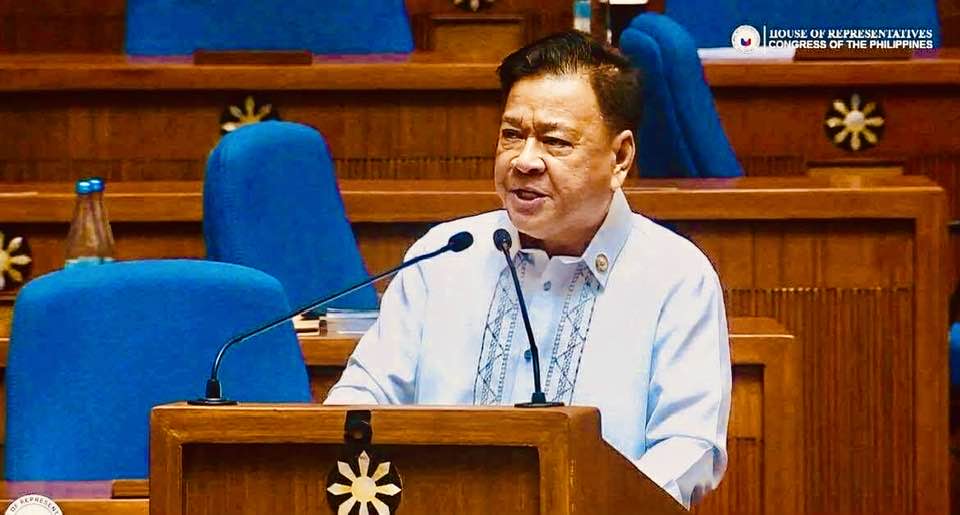
Davao City – 3rd District Representative Isidro T. Ungab has formally registered a NO vote on the approval and ratification of the Bicameral Conference Committee (Bicam) Report on the FY 2026 General Appropriations Bill, citing serious procedural and substantive issues in the final version of the national budget. Rep. Ungab stressed that the Bicam is a purely legislative exercise between the House of Representatives and the Senate, yet the Executive Branch was allowed to intervene through the participation of the Secretary of the Department of Public Works and Highways (DPWH).
He noted that while there was an admission of errors in the Construction Materials Price Data (CMPD), the revised matrix was never projected or presented, giving no assurance that the recomputed list of projects and totals are accurate.
He warned that if further errors are discovered later on, this would undermine public trust in the integrity of the 2026 DPWH budget, which Bicam members have publicly claimed is now insulated from corruption.
Despite repeated appeals not to cut Foreign-Assisted Projects (FAPs), the Bicam approved substantial reductions, particularly in the DPWH and the Department of Transportation (DOTr), Rep. Ungab said. The DPWH FAPs budget was cut from a revised level of ₱70 billion to only ₱17.7 billion—around 25 percent of the original amount—equivalent to a total reduction of ₱82.3 billion from the ₱100 billion National Expenditure Program (NEP) level.
Major transport projects also suffered deep cuts: the Metro Manila Subway was reduced by ₱24.9 billion (55.1 percent) from ₱45.3 billion to ₱20.4 billion, while the North–South Commuter Railway was slashed by ₱47.3 billion (62.2 percent) from ₱76 billion to ₱28.8 billion. He emphasized that these drastic reductions will inevitably delay strategic infrastructure projects critical to economic recovery and urban mobility.
Rep. Ungab also flagged the continued misuse of Unprogrammed Appropriations (UA), which remain at an “alarming” ₱243.4 billion—only slightly lower than the ₱250 billion NEP level.
While the controversial SAGIP fund of ₱80.8 billion was removed, he said new items were simply inserted or realigned within the UA, including ₱35.7 billion again placed under
“Government Counterpart for Foreign-Assisted Projects,” repeating the practice of stripping programmed FAPs and exporting them to UA.
He added that another ₱43.2 billion was introduced under “Payment of Personnel Benefits” even as the Miscellaneous Personnel Benefits Fund (MPBF) and Pension and Gratuity Fund (PGF) were cut by ₱34.4 billion and ₱32.4 billion respectively, a fund shifting he described as undermining transparency and creating fiscal uncertainty.
On health services, Rep. Ungab reiterated his concern that the Medical Assistance to Indigent and Financially Incapacitated Patients (MAIFIP) program remains vulnerable to abuse and politicization despite assurances from the Bicam. He pointed out that the guarantee-letter system can still be influenced politically, while the program reinforces a fragmented, cumbersome web of assistance—MAIFIP, AICS, PCSO—each with its own offices, forms, and requirements that force patients to repeatedly prove they are destitute.
He argued that MAIFIP, as a discretionary fund, lacks clear rules, accountability mechanisms, and transparency standards comparable to PhilHealth, making oversight difficult and inequities inevitable. For this reason, he maintained that MAIFIP should eventually be phased out and its funds redirected to PhilHealth or directly to public hospitals under the Department of Health, in line with the Universal Health Care law.
Despite these structural concerns, Rep. Ungab noted that the Bicam increased MAIFIP funding for 2026—from the House General Appropriations Bill level of ₱49.16 billion to ₱51.6 billion.
This reflects a 113 percent or ₱27.4 billion increase from the NEP level of ₱24.2 billion, a move he described as inconsistent with the goal of building a unified, rules-based health financing system under Universal Health Care and PhilHealth.
“For all these reasons—procedural irregularities, unjustified reductions in critical infrastructure programs, and the continuing misuse of Unprogrammed Appropriations— I cannot, in conscience, support the 2026 National Budget,” Rep. Ungab said. He emphasized that his NO vote is a vote for transparency, fiscal responsibility, and a more coherent and equitable health and infrastructure policy for the Filipino people.