Sen. Christopher “Bong” Go welcomed the soft launch of the Southern Philippines Medical Center (SPMC) Kidney and Transplant Institute in Davao City, emphasizing its importance in improving access to more dialysis and treatment for chronic kidney disease patients across Mindanao.
Go is one of the authors and principal sponsor of the Republic Act No. 11959, or the Regional Specialty Centers Act, which mandates the creation of more specialty centers within existing Department of Health (DOH) regional hospitals in the country. He said that the new institute represents how these reforms are now materializing on the ground in ways that address long-standing gaps in specialized healthcare.
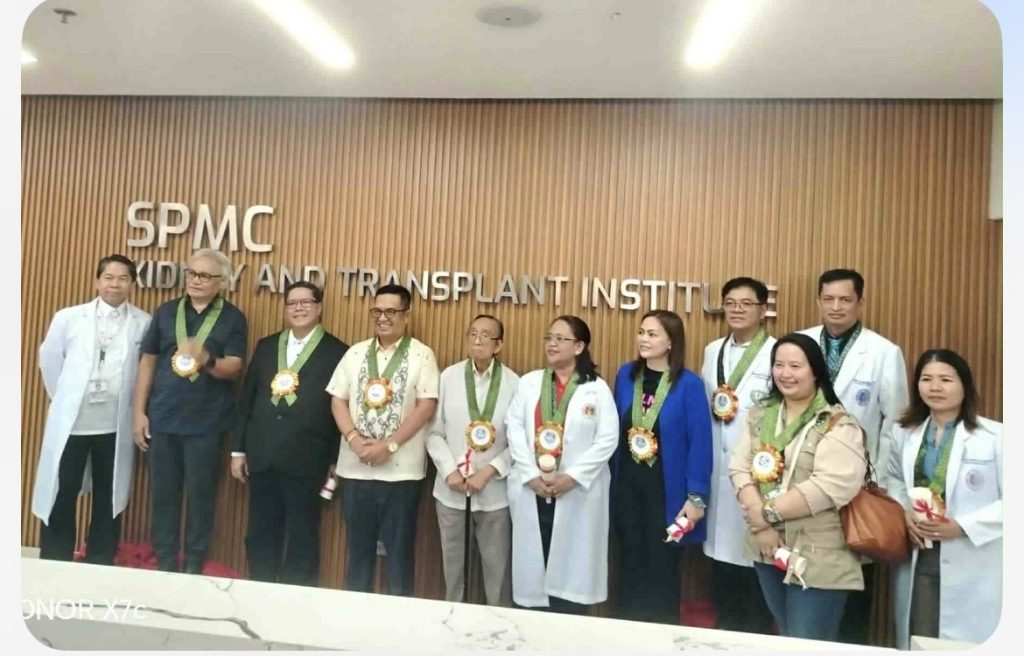
The SPMC Kidney and Transplant Institute has a 62-bed capacity available and is designed as a comprehensive facility that consolidates all renal services in one location. It is equipped with a 100-bed hemodialysis unit, peritoneal dialysis services, an immunology and histocompatibility laboratory for donor-recipient matching, multiple operating rooms intended for transplant procedures, outpatient nephrology and urology clinics, and dedicated wards for charity and private patients.
Furthermore, the institute is also structured to support research, training, and professional development in nephrology and transplant medicine, strengthening its role not only as a treatment hub but as a regional center for medical expertise in Mindanao.
Go said the establishment of the institute responds to the urgent need for better access to renal treatment across the region. “Matagal nang pangarap ng maraming pamilya sa Mindanao ang magkaroon ng world-class renal services na hindi na kailangan ng biyahe pa-Maynila,” he said.
“Masakit isipin na may mga pasyente noon na nade-delay ang dialysis o transplant dahil sa gastos sa pagbiyahe. Kaya malaking bagay itong bagong institusyon, lalo na para sa mga Dabawenyo.”
He added that Regional Specialty Centers aim to reduce the burden on families who often shoulder high transportation and accommodation costs when seeking complex medical procedures in the capital. “Ang punto ng batas ay simple lang, kung kaya naman ng isang rehiyon na magbigay ng mataas na antas ng serbisyo, bakit kailangan pa silang umalis? Dapat nandito na mismo sa Mindanao ang mga kakailanganin nila,” Go explained.
As Vice Chairperson of the Senate Committee on Health, he reaffirmed the intent of RA 11959 to ensure that specialized health services are not concentrated in a few major cities. He stressed that the long-term impact of centers like the SPMC Kidney and Transplant Institute lies in building a stronger and more accessible healthcare system nationwide.
“Hindi lang bagong pasilidad ang layunin nito. Ang tunay na target ay isang sistemang kayang magbigay ng sapat na doktor, nurse, at kagamitan para sa mga pasyente saan mang panig ng bansa,” he said.
Go expressed optimism that the institute would ease the strain on families affected by chronic kidney disease and provide earlier, more consistent interventions. “Kapag kumpleto ang serbisyo sa loob ng rehiyon, mas mabilis ma-diagnose, mas mabilis ma-dialysis, at mas mabilis ma-assess para sa transplant ang pasyente,” he said. “Mas mababawasan ang paghihintay at mas tataas ang tsansa ng paggaling.”
He reiterated that improving health infrastructure across the regions remains a central part of his legislative work. “Kung mas marami tayong Regional Specialty Centers gaya nito, mas marami tayong kababayan ang hindi mapag-iiwanan,” he said. “Ang gusto natin ay parehas na oportunidad sa kalusugan para sa lahat, hindi lang para sa may kakayahang bumiyahe sa Metro Manila.”