The Super El Niño Is No Longer Just an Environmental Warning. It Is an Economic and Humanitarian Challenge.
The Philippines is once again facing a serious test of preparedness, and this time, the warning signs are becoming increasingly difficult to ignore.
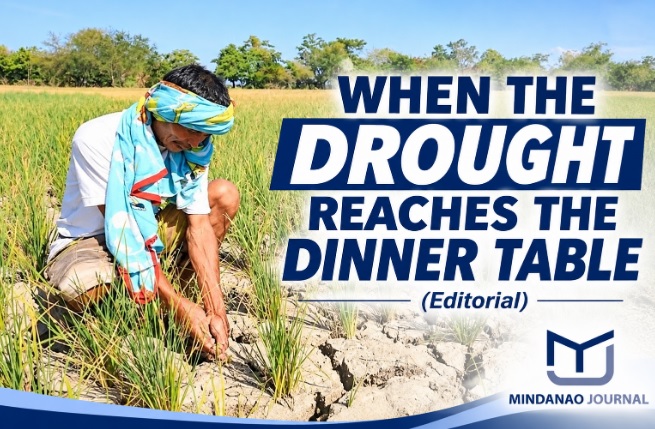
The emergence of a very strong El Niño, expected to persist into the first half of 2027, presents a significant threat to agricultural production, water security, food availability, and the livelihood of millions of Filipinos.
According to the Department of Agriculture, agricultural damage and losses attributed to El Niño had reached ₱10.44 billion as of November 2026, affecting approximately 338,066 farmers and fisherfolk across more than 332,000 hectares of agricultural land. Rice production is also projected to decline by approximately one million metric tons compared with the previous year.
These figures should concern every Filipino, not only those working in agriculture.
When farmers lose their harvests, consumers eventually feel the consequences through reduced supply, higher food prices, and increased pressure on already struggling household budgets.
For ordinary families, the effects of drought do not end in dried-up fields. They reach the kitchen table, the market, the water supply, and the daily struggle to make ends meet.
“What makes this situation particularly concerning is that the country is entering this period with an economy already burdened by inflation, rising production costs, and uncertainty in the global market.”
Government assurances that food supplies remain adequate are important, but assurances alone cannot substitute for effective preparation?
The more important question is whether the government’s response is sufficiently timely, coordinated, and accessible to the communities that need it most.
Are irrigation systems ready? Are affected farmers receiving meaningful assistance? Are local governments equipped with sufficient resources to address water shortages? Are contingency measures in place to prevent agricultural losses from becoming a broader food-security crisis?
“These are not unreasonable questions. They are matters of public accountability.”
The government must move beyond reactive assistance and prioritize anticipatory action. Water conservation, irrigation rehabilitation, climate-resilient agricultural practices, accessible farm financing, affordable agricultural inputs, and strategic food reserves must form part of a coordinated national response.
Local governments must also be empowered to identify vulnerable communities and prepare interventions suited to their respective conditions!
Most importantly, assistance must reach farmers before their livelihoods collapse, not after their crops have already withered!
The burden of climate-related disasters should not be left entirely to the people least capable of absorbing the losses!
“El Niño is a natural phenomenon. But the extent of its economic and humanitarian consequences will depend considerably on the quality of our preparation and the effectiveness of government intervention.”
We cannot control the weather, but we can control how seriously we prepare for its consequences.
The real measure of leadership is not the number of relief operations conducted after a crisis. Not the politically influenced ‘ayuda’.It is the number of families protected because government acted before the crisis became irreversible.
When the drought reaches the dinner table, it is already too late to pretend that the warning signs were never there.
“Preparedness is not an option. It is a responsibility owed to every Filipino.”