Photo courtesy: CIO
* DepEd has budget but City Gov’t builds more classrooms
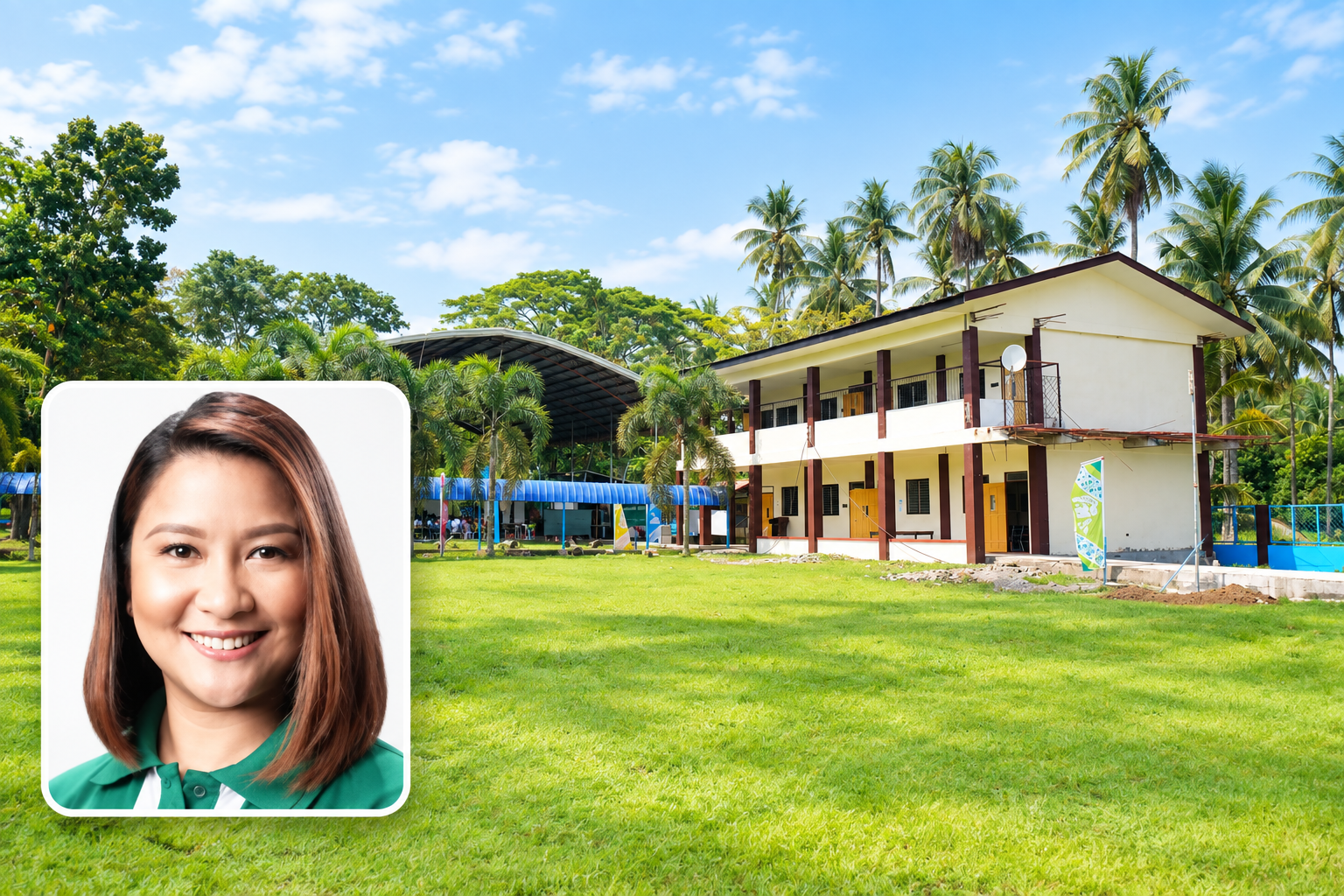
DAVAO CITY — Davao City continues to face a classroom shortage of more than 4,000, prompting efforts to accelerate school construction and address documentation issues that delay the use of public funds.
The Department of Education (DepEd) data from 2025 showed the extent of the shortage, based on a standard of one classroom per 30 students.
Speaking at the Pulong-Pulong sa Dabawenyos media forum over the weekend, Councilor Petite Principe, chairperson of the Committee on Education, Science and Technology, said classroom construction remains primarily the responsibility of DepEd. However, the local government continues to allocate funds to help address the deficit.
“The Department of Education has the budget for that. We, in the city government, continue to allocate funds to help address the deficit,” Principe said.
According to Principe, city-funded projects in 2024 included 12 school buildings with 49 classrooms and nine Home Economics buildings.
In 2025, the city funded 13 school buildings containing 90 classrooms, along with four additional Home Economics buildings.
Principe said figures for 2026 were not yet available, but noted that the Local School Board continues to allocate funds for classroom construction during its meetings.
To speed up project implementation, the councilor said, the city government and DepEd have also entered into a memorandum of agreement allowing the education department to transfer funds to the city, which will undertake the construction.
Principe said two schools had already undergone the process as of 2026. However, the lack of proper land-use documentation remains an obstacle to building more classrooms in some schools.
The councilor said her committee was helping expedite the processing of Deeds of Usufruct between the city government and DepEd. She added that these agreements establish the legal basis for the use of properties for school purposes.
Principe said some school properties are titled in the city government’s name but lack the necessary documentation, preventing the local government from using public funds for construction.
In 2026, around 60 schools in Davao City still had pending usufruct agreements, she said.
Apart from classroom construction, Principe said the city is also looking into pilot solar-powered projects for schools without electricity, particularly in the geographically isolated areas of Marilog and Paquibato, where access to power remains a challenge.
The ongoing classroom deficit, along with delays caused by incomplete property documents and limited access to electricity in some schools, highlights the infrastructure challenges facing Davao City as it works with DepEd to improve learning facilities. (By Ivy Tejano)