* Will feature cybersecurity
By Ivy Tejano
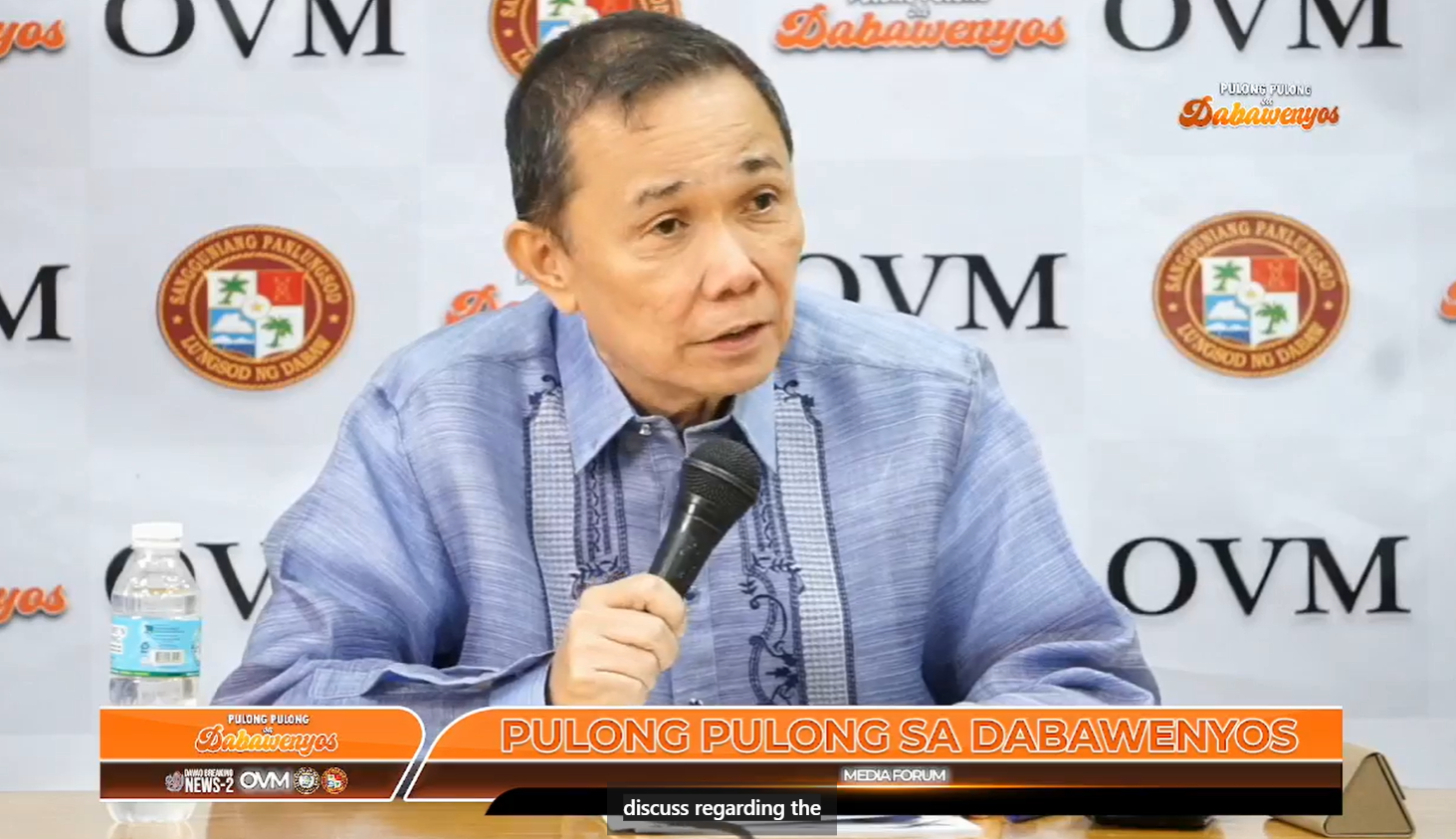
DAVAO CITY – Davao City Councilor Bonz Andre Militar said over the weekend that the city will start with cybersecurity digital data center, once funding and a suitable location are secured.
Militar, chairperson of the Committee on Information Technology, said the Davao City Government Cybercrime Emergency Response Team will begin as soon as possible.
“Physical facility will follow once it is budgeted for next year and once a location for the data center is identified,” Militar said during the Pulong-Pulong sa Dabawenyos media forum at Sangguniang Panlungsod.
The City Council approved a “Davao City Government Centralized Data Center Ordinance” on Sept. 1 to strengthen cybersecurity, protect government data, and ensure continuity of digital services.
Militar said the proposed 100-square-meter facility has an estimated budget of about P50 million to P60 million. He added that three possible locations are being considered, although he declined to disclose the areas.
“The site must be secure, protected from unauthorized access, and preferably outside disaster-prone areas,” Militar said.
He said the data center is expected to be located near the City Information Technology Center (CITC), which will oversee cybersecurity measures.
The councilor clarified that the existing servers at city government offices will continue to operate and will not be transferred to the centralized facility immediately.
“Some agencies may no longer need to transfer their servers to the data center physically, but we will still place backup systems there for their servers,” he said. The servers may either be connected to the proposed data center by physical line or WiFi.
Under the ordinance, the CITC will serve as the lead implementing and oversight office for the centralized data center’s planning, development, operation, and management.
The facility will serve as the primary platform for hosting, integrating, and managing the city government’s ICT systems, databases, and digital services.
Militar said the integration of government ICT systems will be carried out in phases, with critical systems given priority.
He said the project’s budget will include cybersecurity measures and training of personnel assigned to the center.
“The city has also hired penetration testers who help identify vulnerabilities and prevent possible data breaches,” he said.
Militar also cited a data breach ordinance he helped pass during his first term, around 2022 or 2023, that establishes a data breach officer to coordinate with the cybersecurity team during incidents.
The centralized data center is also intended to improve system security by enabling the city to identify and address vulnerabilities and to provide centralized backup, redundancy, and secure shared storage.
The ordinance classifies the data center as critical government ICT infrastructure, giving it priority for security, maintenance, funding, and protection against cyber threats, system failures, and disasters.
Militar noted that disaster resilience will also be considered in selecting the facility’s location.
He said the city aims to maintain business continuity during floods, earthquakes, tsunamis, and other calamities so government systems and servers can continue operating.
The proposed facility is designed to meet Tier 3 data center standards, which emphasize availability, redundancy, continuous operations, disaster resilience, and cybersecurity.
Militar said the ordinance also requires regular security audits and vulnerability assessments, cybersecurity and data governance policies, and incident response procedures.
“In case of a data breach or cyberattack, city offices will follow a uniform protocol covering reporting, assessment and containment, investigation, notification, recovery, and post-incident review,” he said.
The city government will also be required to comply with the Data Privacy Act of 2012, the National Archives of the Philippines Act of 2007, and other laws on data privacy, cybersecurity, and records management.
On the use of artificial intelligence, Militar said AI data centers differ significantly from the facility planned by the city.
He said AI facilities require more powerful computing equipment, memory, and cooling systems, with some using evaporative cooling and large amounts of water.
The planned city data center, meanwhile, will house standard server cabinets for government agencies and use precision air-conditioning to maintain the required temperature, he said.