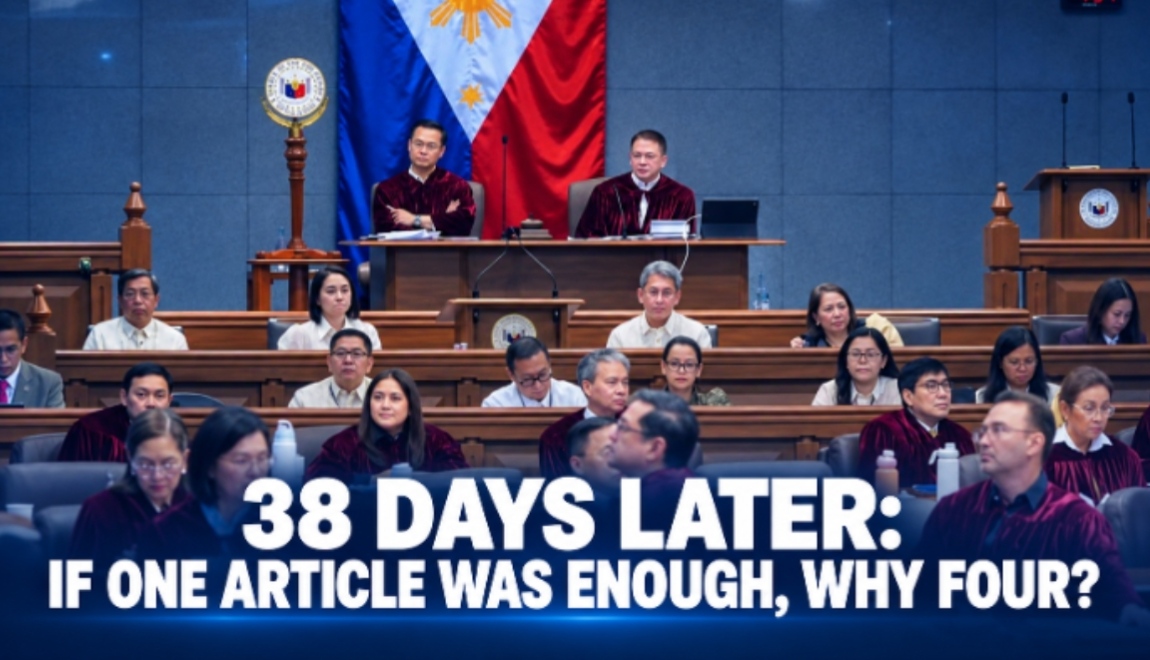

Arguably, many were taken by surprise by the prosecution’s sudden declaration that it was withdrawing three of the Articles of Impeachment after presenting evidence and testimonies from its witnesses.
The decision came in the middle of the impeachment trial, just as the prosecution was preparing to make its formal offer of evidence and the defense was poised to refute the charges and present its own evidence.
It also raised serious procedural questions, including whether the withdrawal compromised the fundamental rights of the respondent, Vice President Sara Duterte.
Since 2023, the prosecution camp has been building a narrative of accountability that eventually culminated in the filing of impeachment charges against Duterte.
Prior to the trial, the prosecution’s political allies had used government resources and public hearings to assail the Vice President’s image and credibility. Allegations raised during the hearings of the House Committee on Justice were subsequently amplified and expanded through what became the controversial Quad Committee, or QuadComm, hearings.
Duterte repeatedly maintained that she would answer the allegations in the proper forum. She did not attend those hearings, a decision that some committee members interpreted as a sign of weakness or guilt. From her perspective, however, the House proceedings were part of a political maneuver that would eventually lead to her impeachment.
When the case reached the Senate, Duterte, through her lawyers, came prepared to defend herself against what she characterized as political mudslinging and malicious persecution of the highest order.
At the Senate impeachment trial, the prosecution narrative was given flesh. Documentary and testimonial evidence was presented. For 39 days, the prosecution had the floor, shaping public perception and controlling the narrative of the proceedings.
Then came the turn of the defense.
Just as the defense was poised to answer the allegations, the prosecution moved to withdraw three Articles of Impeachment.
Suddenly, the very charges that had occupied so much of the prosecution’s time and effort appeared to have become expendable.
Was the decision a spur-of-the-moment move—or a spurious moment in a carefully calculated strategy?
Whatever the explanation, the timing invites scrutiny. To critics, the move bears the hallmarks of political maneuvering and unabashed propaganda: a strategy that allowed accusations to dominate public discourse while potentially limiting the opportunity to confront them through the full process of trial.
If the objective was to shape public perception rather than pursue every charge to its logical conclusion, then the withdrawal raises a fundamental question: Was the impeachment trial being used to establish accountability, or to control the political narrative?
A grand exercise in impeachment control—through the withdrawal method.