There is nothing inherently foolish about collecting rainwater.
For generations, Filipino families—especially those in rural communities—have stored rainwater in drums, tanks, balde and planggana. Water conservation is practical, responsible and, during drought, absolutely necessary.
But when the country is staring at the possibility of a severe El Niño, the question is no longer whether Filipinos know how to save a few buckets of water.
The question is whether government has prepared something much bigger than the bucket.
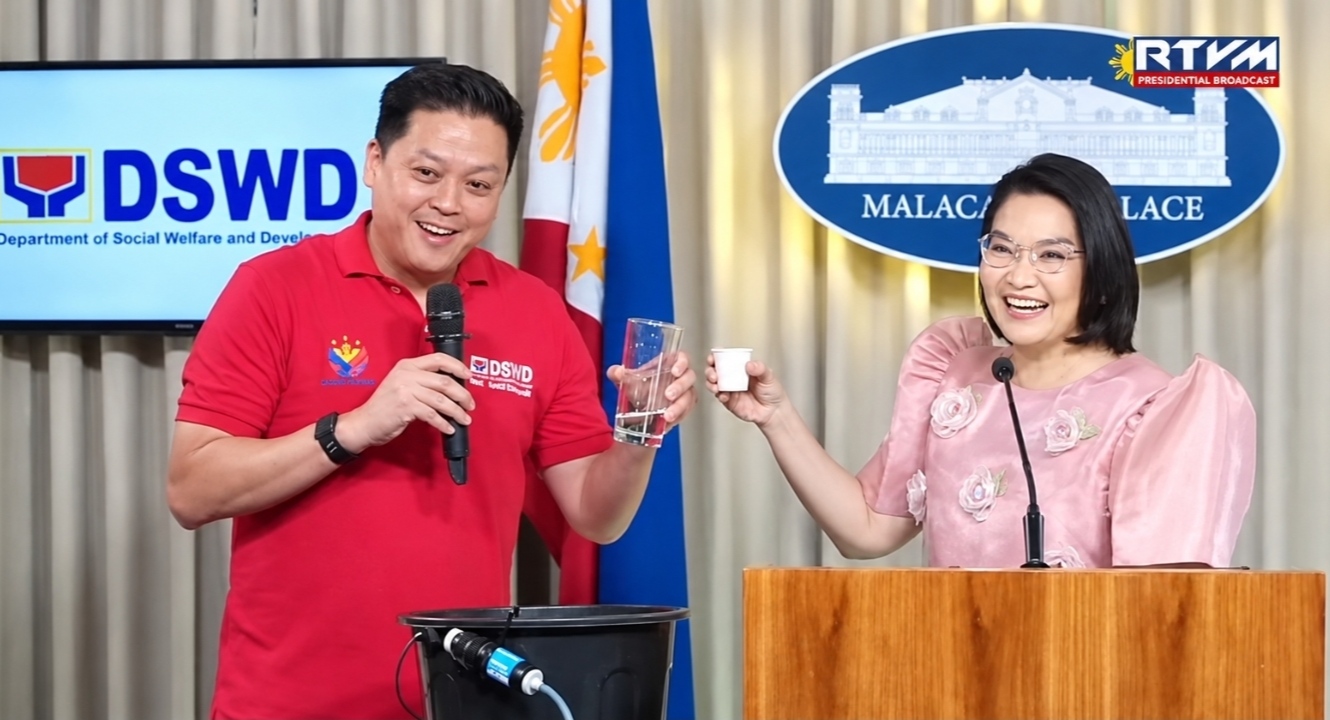
President Ferdinand Marcos Jr. recently encouraged households to buy containers and collect rainwater while it is still available. Government, he said, would also teach people how collected water could be treated and filtered for safe use.
As household advice, there is nothing wrong with it.
As a message coming from the highest office of a nation confronting a potentially serious environmental and economic threat, however, it inevitably raises a more uncomfortable question:
Is this the scale of preparedness Filipinos should expect? Is this the wittiest idea coming from the Highest Chief Executive of the land?
El Niño is not merely about having less water coming from the faucet. It threatens agricultural production, irrigation systems, food security, electricity generation, public health, livelihoods and ultimately the prices ordinary families pay at the market.
A phenomenon of that magnitude demands solutions of comparable magnitude.
We should be hearing clearly about expanded water-storage capacity, rehabilitation of irrigation systems, protection of watersheds, groundwater management, drought-resistant agriculture, emergency water distribution, protection of power reserves, and measurable contingency plans for communities most vulnerable to prolonged drought.
To be fair, government has announced several measures along these lines. The administration has discussed preparations involving hospitals, agriculture, irrigation, water supply and other sectors.
And that is precisely why these larger measures—not the humble balde—must dominate the national conversation.
Filipinos are extraordinarily resourceful. When water disappears, they will find containers. When food becomes scarce, families will stretch what remains on the table. When government assistance arrives late, communities somehow learn to survive.
But “resilience should never become an excuse for inadequate governance”.
There is something troubling when the burden of adapting to a national crisis appears to drift downward—from institutions with billions in public resources to families standing outside their homes waiting for rain with plastic containers.
Tell people to conserve water, certainly.
Teach households to harvest rainwater, absolutely.
But alongside every balde and planggana must stand reservoirs, irrigation systems, functioning water infrastructure, agricultural safeguards and a national drought strategy that ordinary citizens can actually see, understand and trust.
Because Filipinos deserve more than instructions on how to survive a crisis.
They deserve a government capable of preventing that crisis from becoming a catastrophe.
A bucket can collect rain.
“It cannot carry the responsibility of a nation.”