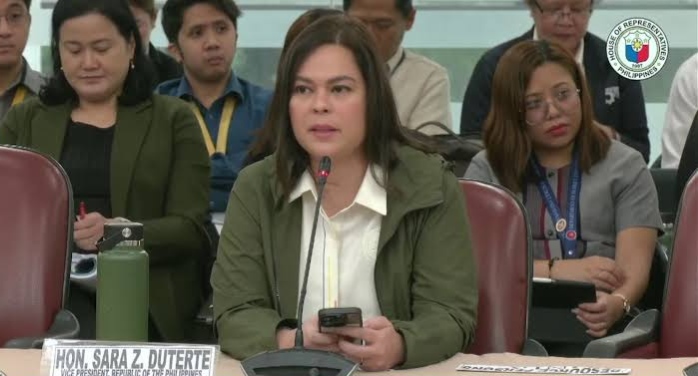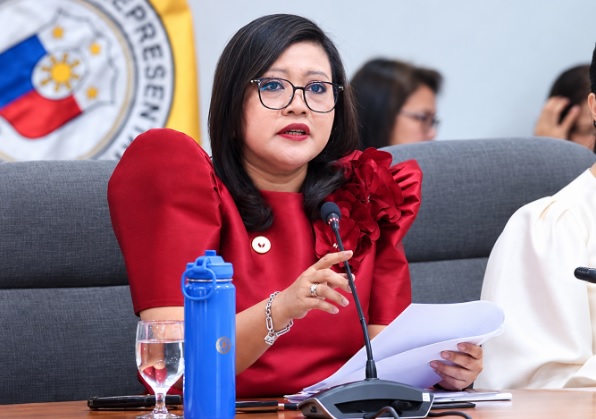

Thirty-nine trial days. Four articles of impeachment. And now, only one remains.
The prosecution’s decision to withdraw Articles I, III and IV against Vice President Sara Duterte and stake its case solely on Article II—alleged unexplained wealth—may have shortened the trial. But it has also created a question the public has every right to ask:
“If all four articles were supposedly strong, why abandon three of them”?
That question is neither an acquittal of Sara Duterte nor an accusation against the prosecution. It is simply the kind of question accountability demands.
The Senate impeachment court allowed the withdrawal on October 13. Articles I and IV were withdrawn with prejudice under the court’s ruling, while Article III, on alleged bribery, was withdrawn before the prosecution presented evidence on it. Duterte can now be convicted or acquitted in this impeachment trial only on Article II.
Prosecutors insist their decision does not mean the abandoned articles were weak. They argue that concentrating on Article II makes the case narrower, faster and easier for the public to understand. They also maintain that evidence involving the withdrawn allegations may still be referred to the Ombudsman or other proper authorities for separate proceedings.🤭
Fair enough.🤔
But neither explanation settles the impeachment case.🙄
The prosecution is preparing its formal offer of evidence on Article II. The defense will have the opportunity to object, after which the impeachment court must determine what evidence is admissible. Only then does the battle over what has actually been proved become clearer.
And this is precisely where Filipinos must separate “political narrative from legal proof”?
Dropping three articles does not automatically prove those allegations were false. But neither does repeatedly calling Article II “strong” prove that Sara Duterte is guilty.
Evidence must do that.
The prosecution carries the burden of establishing its case. The defense must be allowed to challenge the evidence against the Vice President. And the senator-judges must ultimately decide on what survives scrutiny—not on surveys, personalities, political alliances or public pressure.☝️
There is an irony worth remembering.
“Impeachment is supposed to be one of the Constitution’s highest instruments of accountability”. Yet accountability cannot apply only to the accused. Those who invoke such an extraordinary constitutional process must themselves be prepared to explain the strength, direction and eventual narrowing of their case.
From four articles to one, the prosecution has made its choice.
Now Article II must stand on its own.
No shortcuts. No presumption of guilt. No presumption of innocence disguised as political loyalty. And certainly no conviction—or acquittal—by public relations.
“When the noise finally dies down, only one question should matter: What does the admissible evidence actually prove”?
That is not being pro or anti-Sara.
That is being pro-due process.