A national budget is more than a financial blueprint. It is a statement of priorities, a measure of government responsibility and, above all, a reflection of how public resources are entrusted to those elected to serve.
That is why the latest developments surrounding the proposed ₱7.2-trillion national budget for 2027 deserve more than passing attention.
The Senate has committed to removing 295 Department of Public Works and Highways (DPWH) infrastructure projects worth ₱8.836 billion after these were found non-compliant with the department’s evaluation requirements, including deficiencies in supporting documentation.
The principle articulated by Senate leadership is both simple and compelling: no relevant documents, no public funding.
It is a standard that should not be controversial. Yet the fact that hundreds of projects have failed to satisfy documentation requirements raises a more fundamental question: How did these allocations find their way into the proposed national budget in the first place?
The concern becomes more significant when viewed against the broader findings of the Senate’s budget review.
The number of DPWH infrastructure projects reportedly increased from 11,420 under the National Expenditure Program to 16,244 in the House-approved General Appropriations Bill.
These additions are not automatically irregular, much less proof of corruption. Congress has constitutional authority over appropriations, and legislative amendments may serve legitimate development priorities.
But such authority carries an equally important responsibility: every allocation must have a defensible public purpose, a verifiable location, adequate technical preparation and a clear basis for implementation.
An infrastructure project cannot be justified merely because it appears in a budget document or carries the endorsement of a powerful political figure.
Public money must answer to public need.
The controversy over the substantial increase in the proposed infrastructure allocation for the first congressional district of Ilocos Norte, represented by House Majority Leader Sandro Marcos, has also drawn attention. The reported increase from ₱369 million under the executive proposal to approximately ₱4.74 billion in the House version warrants a clear explanation.
But fairness demands that the figures be examined in context. Differences in district allocations do not, by themselves, establish political favoritism, retaliation or wrongdoing. The concerned agencies and lawmakers should be given the opportunity to explain the projects, their locations, their technical requirements and the basis for their respective allocations.
Transparency must apply equally to everyone.
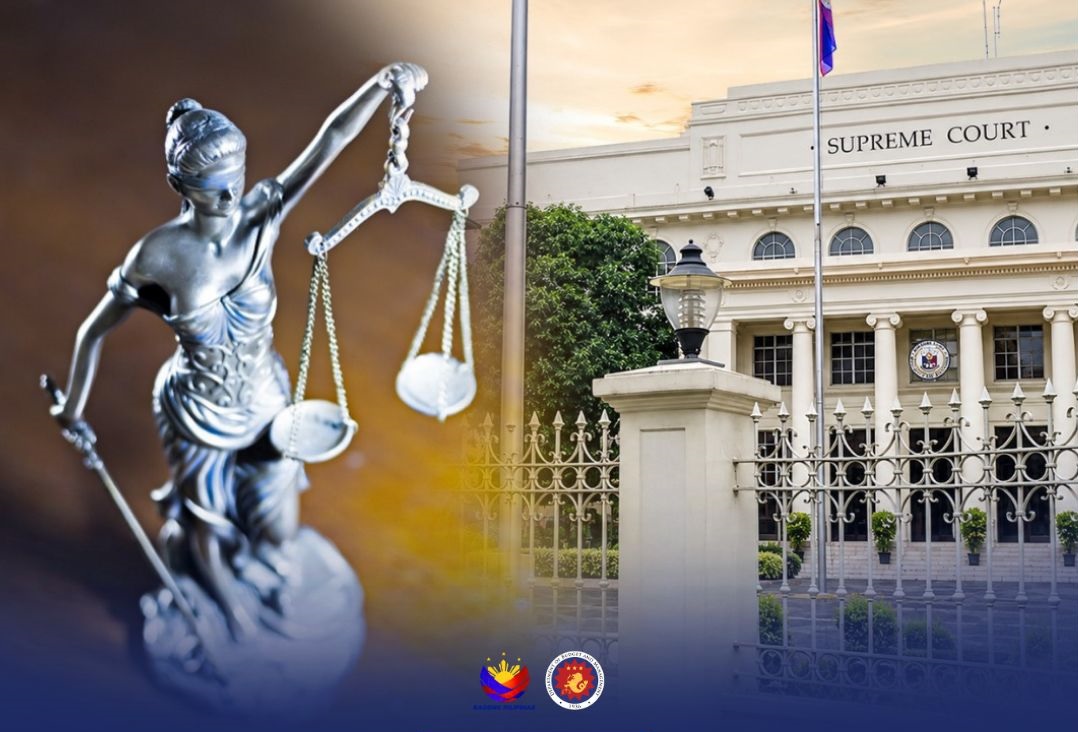
This is particularly important following the Supreme Court’s October 20 announcement of its ruling on the 2024 and 2025 national budgets and certain provisions of the 2026 budget.
The High Court found unconstitutional specific congressional increases that pushed appropriations beyond the President’s recommended totals, including the ₱449.5-billion increase in unprogrammed appropriations under the 2024 budget and the ₱17.99-billion increase in the DPWH Special Road Fund under the 2025 budget.
The Court also invalidated certain provisions governing the release of unprogrammed appropriations.
Importantly, the decision did not declare unprogrammed appropriations inherently unconstitutional. Rather, it established constitutional limitations and safeguards governing their use.
The Office of the Solicitor General has indicated that it would seek clarification and partial reconsideration of aspects of the ruling. That legal process deserves respect, but it should not diminish the urgency of ensuring transparency and fiscal discipline in the preparation of the next national budget.
Meanwhile, the Ombudsman’s filing of graft and malversation charges against six former DPWH-Soccsksargen officials and seven private individuals over an alleged ₱491.9-million road right-of-way scam in General Santos City offers another sobering reminder of the consequences when public infrastructure funds are exposed to fraudulent claims and inadequate safeguards.
The charges involve alleged falsification of documents and questionable property valuations connected with payments for land acquired for a road project.
These remain allegations to be resolved by the Sandiganbayan. The accused are entitled to due process and must not be treated as guilty before judgment.
Nevertheless, the case underscores why documentation, independent verification and effective internal controls are indispensable in protecting public funds.
We cannot afford a system in which questionable transactions are discovered only after money has been released, projects have been abandoned or government institutions are forced to pursue recovery.
Prevention is always better than prosecution.
The Senate now has an opportunity to demonstrate that budget scrutiny is not merely a political exercise but an institutional commitment to responsible governance.
Every proposed amendment should be supported by technical documentation. Every project should have a verifiable location and clearly defined scope. Every allocation should be evaluated according to public necessity, not political influence.
And when deficiencies are identified, the appropriate response should be correction, removal or further investigation—not political defensiveness.
This is not an argument against congressional discretion. It is an argument for exercising that discretion responsibly.
The same standards must apply whether a proposed project originates from the administration, the opposition or an influential member of Congress.
The Filipino taxpayer should not have to wonder whether public money is being distributed according to genuine development priorities or political considerations.
At a time when government must balance economic pressures, infrastructure requirements, disaster preparedness, healthcare and education, every peso carries a responsibility.
We should therefore demand a budget that is not simply large, but credible; not merely ambitious, but implementable; and not politically convenient, but demonstrably beneficial to the people.
The national budget is not a political reward system. It is a public trust.❗️
If a project cannot withstand scrutiny on paper, it should not receive public money in practice.
Because the best time to prevent corruption and waste is not after the money disappears.
-It is before the money leaves the Treasury.❗️