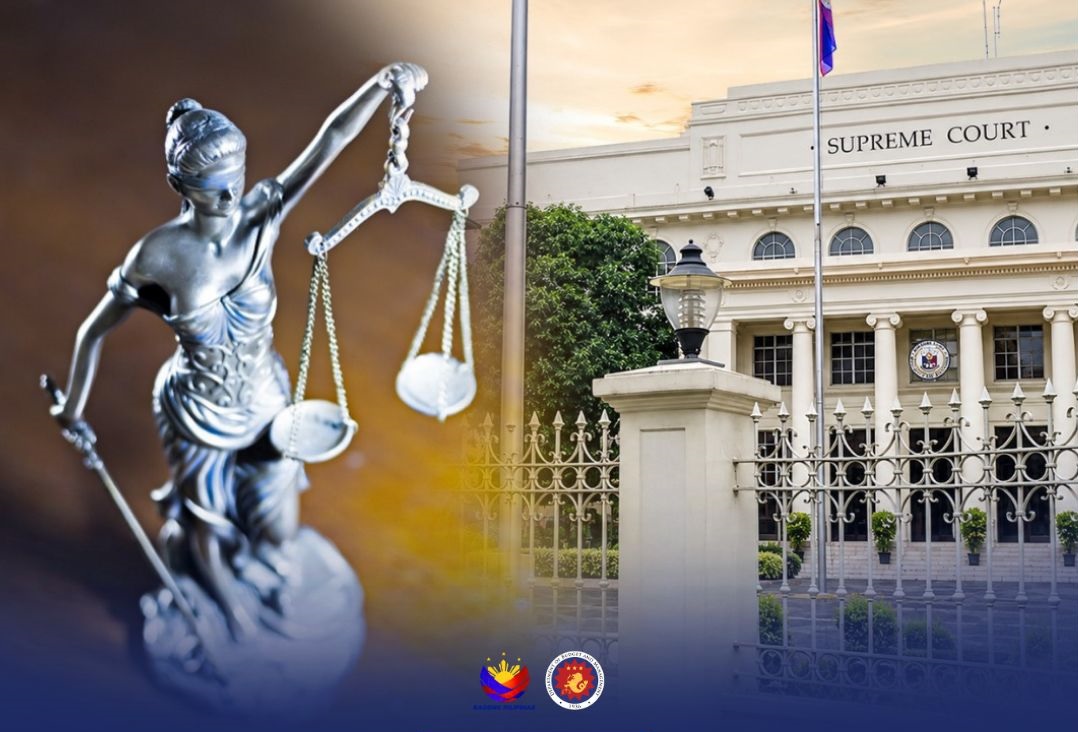
Barely has the ink dried on a Supreme Court ruling drawing constitutional boundaries around the national budget when another warning has emerged.
The People’s Budget Coalition has flagged more than ₱1 trillion in allocations in the House-approved ₱7.2-trillion proposed 2027 national budget which it considers vulnerable to political patronage, including hundreds of billions in infrastructure and assistance programs and thousands of infrastructure projects that it says Qrequire greater scrutiny.
Let us be clear: a red flag is not proof of corruption.
Neither should every congressional amendment automatically be treated as irregular. Congress possesses legitimate constitutional authority over appropriations.
But more than ₱1 trillion in questioned allocations is certainly enough reason for the Senate, the media and taxpayers to ask hard questions before another peso is spent.
The warning becomes even more significant following the Supreme Court’s October 20 decision on previous national budgets.
The Court ruled unconstitutional the 2024 General Appropriations Act because Congress increased unprogrammed appropriations by ₱449.5 billion, resulting in appropriations beyond the President’s recommended total. It likewise struck down the 2025 GAA over a ₱17.99-billion congressional increase in the DPWH Special Road Fund that similarly pushed appropriations beyond the constitutional ceiling.
The Court did not declare unprogrammed appropriations unconstitutional by themselves. It instead demanded limits, standards, transparency and fiscal discipline.
That distinction is important.
But so is the lesson.
The national budget is not merely a collection of numbers negotiated among politicians. Every billion pesos placed into it represents money collected from Filipinos—or debt that Filipinos and future generations must eventually carry.
That is why transparency cannot begin only after questionable projects are exposed.
It must begin while the budget is being written.
Congress should therefore require clear project descriptions, locations, technical justification and implementing details for substantial amendments. If an allocation serves a legitimate public purpose, transparency should strengthen rather than threaten it.
And if questions are raised, the proper response is not political defensiveness but documentation.
Show the project. Show its location. Show its necessity. Show the people why their money should be spent there.
The Senate now has an opportunity to demonstrate that lessons were learned from previous budget controversies and from the Supreme Court’s ruling. It should examine disputed allocations carefully and remove or correct those that cannot withstand transparent scrutiny.
No accusation of corruption is necessary to demand that much.
Government does not have to wait for another scandal, another investigation or another court decision before exercising fiscal responsibility.
The best time to prevent questionable public spending is not after the money disappears.
It is before the money leaves the Treasury.