
The funny thing about the Philippines is this: we love acting like every good idea just arrived yesterday on a cargo ship from Singapore wearing a blazer and speaking English with a consultancy accent. Bamboo included.
Suddenly everybody in government PowerPoints discovered “green materials,” “carbon capture,” and “sustainable innovation,” as if the kawayan beside the barangay creek had been hiding under witness protection all these years. Meanwhile, the country already has the paperwork.
The state already signed the papers long ago.
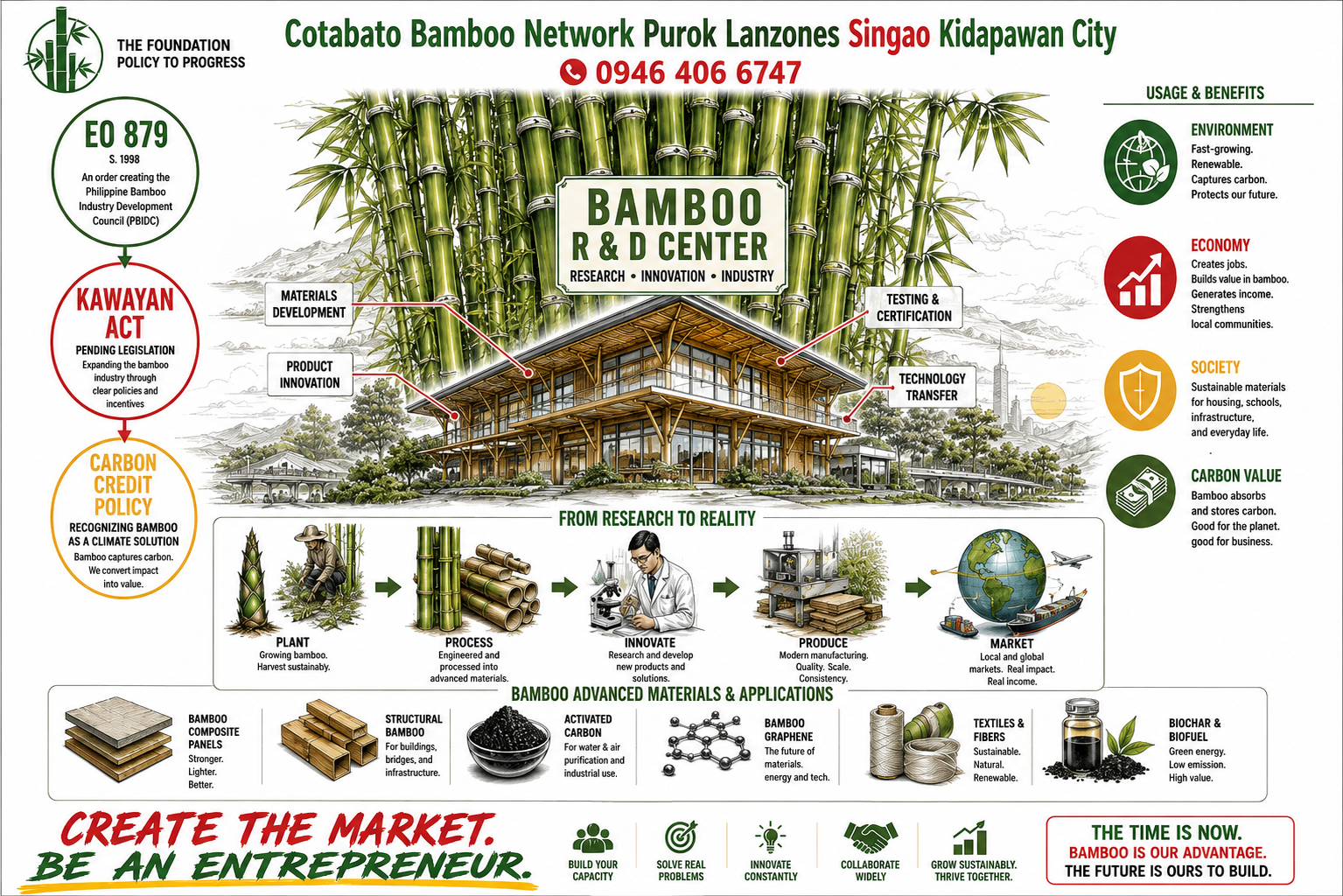
Philippine Bamboo Industry Development Council exists. EO 879 exists. The research frameworks from Department of Science and Technology and Philippine Council for Agriculture, Aquatic and Natural Resources Research and Development exist.
Congress has pending bills lined up like jeepney passengers under the rain, waiting for movement. The skeleton is already there.
The country is not lacking seminars, ribbon cuttings, executive orders, memorandums, or photos of officials holding bamboo seedlings like contestants in a municipal beauty pageant for climate resilience.
What’s missing is the uncomfortable part: an actual large-scale bamboo advanced materials industry. Not decorative bamboo lamp shades sold to tourists beside dried mangoes.
Real industry. Engineered composites. Activated carbon systems. Structural panels. Graphene derivatives. Energy materials. Water filtration technologies.
Aerospace-grade experimentation. The kind of manufacturing that makes oligarchs nervous because raw intelligence from the provinces starts becoming economically dangerous.
And that is the real plot twist nobody notices because this country trained people to worship timing instead of positioning.
Filipinos keep saying, “Huli na tayo.” Too late daw. China is ahead. Vietnam is ahead. Europe is ahead.
But look carefully. The Philippines is still standing at the edge of the starting line holding a plant that grows faster than most government projects move on paper.
We are not late. We are embarrassingly early. Early enough that most people still think bamboo is only for fish pens, barbecue sticks, and walls that typhoons politely introduce themselves to before entering.
The advanced bamboo economy has not yet fully happened here. That is not failure. That is vacant territory. And vacant territory is where empires quietly begin before analysts arrive pretending they predicted it all along.
Somewhere in a countryside, somebody experimenting with bamboo charcoal, bamboo graphene, bamboo plyboard, bamboo fodder, or saline filtration probably looks insane today.
But so did every industry before banks learned how to pronounce it properly.
History has a strange habit of laughing first at the province, then borrowing money from it later.
Humanity, magnificent species that it is, often waits for foreigners to validate what was growing in its backyard the entire time.(Rimmon Paren)