The Philippine peso took a nose dive, piercing P64 to a dollar and still plunging.
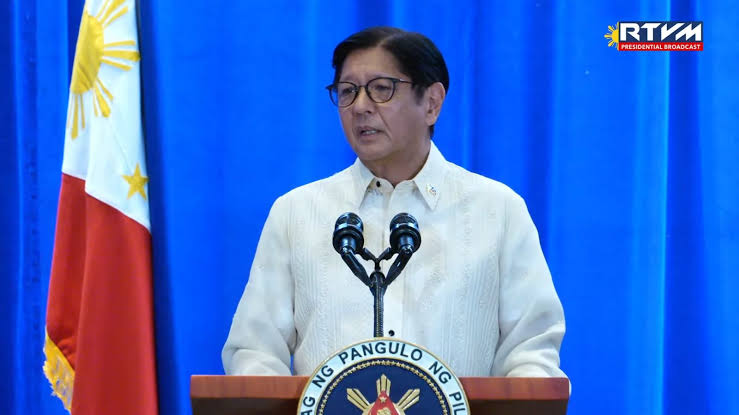
Akin to his lackadaisical concern over the dry spell that El Niño threatens, and balde as his super-duper solution, Pres. Bongbong Marcos went on national TV and advised the nation not to panic.
“DON’T PANIC,” he said.
He attributed the free fall of the peso to the rise of oil prices. He assured, and I quote him verbatim: “We have all the tools to defend the peso, we have all the means to defend the peso, and with that in mind, we will continue to do all that we can to make sure that the value of the peso does not continue to go down.”
For now we do not know the specific antidote that Marcos and his bright boys are contemplating. Other ASEAN nations are doing fairly well. Blaming the conflict in the Middle East is oversubscribed. It can no longer cover the unmitigated corruption in government which brought our economy into limbo and has driven foreign investors to avoid the Philippines like the plague.
And yet we have this penchant to self-destruct. Our Defense Department is rattling for war against China, the country’s major trading partner and home to thousands of OFWs and undocumented Filipino workers. China also sells refined oil to the Philippines, helping us let loose ends meet.
In his recent burst of bravado, President Marcos this time declares, “Lalaban tayo even if it will cost me my life!”
He forgot that his administration has a pending loan with China-led Asian Infrastructure Investment Bank (AIIB) in the amount of $200-million. He is not aware that China still imports agricultural products from the Philippines worth billions of dollars.
Where will the battle arena be?
China will never attack the Philippines. It will be an unnecessary and wasteful exercise.
Not in Scarborough (Bajo de Masinloc / Panatag Shoal). The location from a maritime perspective depends on who’s looking. For China, it is located in the South China Sea. For us Pinoys it is in the West Philippine Sea. It is about 124 nautical miles west of Zambales and therefore within the 200-mile exclusive economic zone of the Philippines. The island has been an object of multilateral claims but China and the Philippines had occupational forces in the islet which, by the way, scholars say cannot sustain life.
The problem for the Philippines however is that in 2012, during the President Noynoy Aquino regime, he ordered the Philippine Navy detachment to pull out from Scarborough, thereby leaving the Chinese in full control of the island.
For Gibo Teodoro, PCG Spokesman Jay Tarriela and President Marcos to even suspect that China will use its military might on the Philippines only hints that they severely lack the political and economic perspective of China and its modern warfare assets.
What we see today is modern China having evolved from a centrally planned and closed command economy. China was extremely poor and people lived in communes. The state owned and controlled everything — from resources to production — and allocated food and basic needs of families. Incentive was not in their lingo.
During our high school days, the images shown to us were rickshaws, fierce-looking Chinese soldiers with rifles and caps with a red star, folks gathered around a shade tree in the center of a commune being lectured. There was not much information about China as it isolated itself behind what was described as the “bamboo curtain.”
Following a significant and radical decision on the heels of the eventful 1978 plenary of the 11th Central Committee, reformist paramount leader Deng Xiaoping officially opened its market. Mind-boggling reforms took place — in agriculture allowing farmers to keep surplus harvest, setting up Special Economic and Industrial Zones, joining the World Trade Organization and putting up stock exchanges.
China never looked back. Pres. Xi Jinping pursued the reforms of Deng Xiaoping with the same vigor.
These days China is the much sought-after trading partner worldwide. The rapid development is mind-boggling — transport infrastructures featuring high-speed trains over a network of railways in all nooks and corners of China.
On a personal note, I first set foot in Beijing in 2005 to cover an international tourism event where Davao-based tour operators joined. Approaching the airport, the city was blanketed with smoke from its old coal-fired power plants. Industries were churning.
In 2015, I joined Manila-based journalists for a familiarization tour of industrial and tourist sites including an audience with provincial and foreign affairs officials and an exchange with young scholars who serve as think tanks in Beijing. This time, the sky in Beijing was blue. No haze, no smoke, just a clear blue sky.
In 2016, following the assumption of Pres. Rodrigo Duterte, I received a special invitation to visit China again. I organized a group of Davao journalists for a dual agenda. My late friend Antonio Ajero, publisher of Edge Davao, and I attended the formal launch of “One Belt, One Road” while the rest toured Beijing.
OBOR, a flagship project of President Xi, is now better known as Belt and Road Initiative or BRI — China’s massive global infrastructure and economic strategy.
Asked what else we wanted to see, I requested to learn about its railway operations. What we expected was a lecture, but to our surprise we were ushered to a boardroom where we met the head of China Railway Company and its management team. We were then guided to a big room with a huge electronic screen where every train running along the 91,000-mile rail network then is monitored.
The following day we boarded an exclusive coach in a fast train from Beijing to Ningbo that runs at 305 kilometers per hour. China Railway provided two English-speaking guides. The train snaked through provinces, cities and villages, farms and high-rise condominiums. I expected to see communes but there were none. Our guide said farmers, including those whose houses were along the tracks, were given condo units by the state.
Pardon the travelogue. I have to buttress my thesis that China will never go to war or stir trouble in the South China Sea or the West Philippine Sea. The simple reason is that it is the main trade route of its billions worth of dollars in exports and imports worldwide. That vital marine highway is China’s ticket to unprecedented prosperity.
From a country mired in poverty, it is now home to the second largest number of billionaires in the world. The Chinese people abhor war and their leaders know that.
But the war freaks should not push their luck too far. No, China will not waste a single bullet, for they know that under the present crop of corrupt leaders, we are bound to self-destruct.