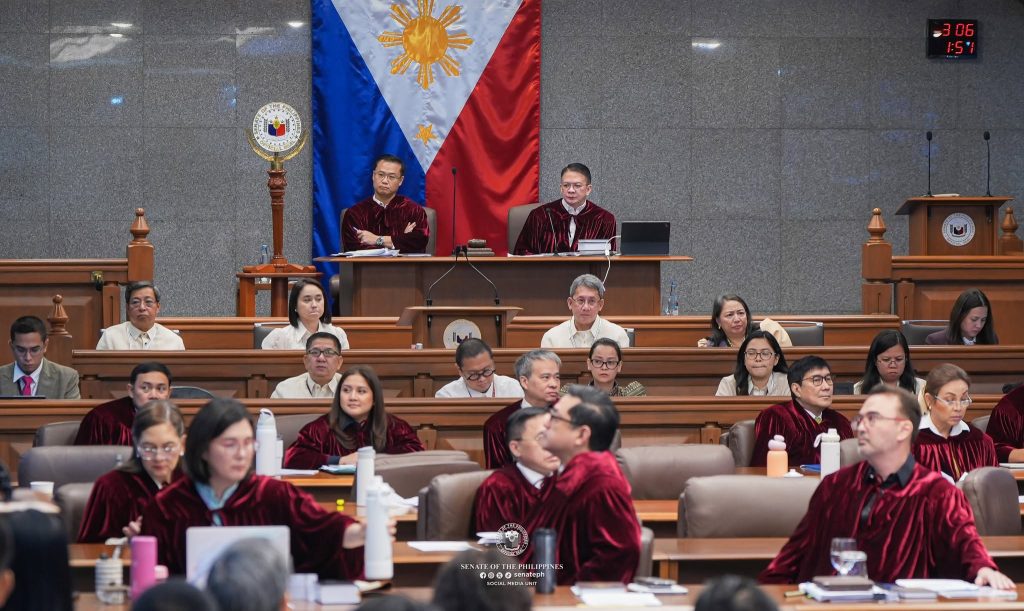
The impeachment trial of Vice President Sara Duterte has reached another important stage.
The House prosecution has rested its case and formally offered its evidence supporting the sole remaining Article II, which alleges unexplained wealth. The defense is now given the opportunity to object before the Senate impeachment court determines which evidence should be admitted.
That distinction matters.
In the court of public opinion, an allegation can easily become a verdict. A headline, a bank record, a witness statement or a large figure repeated often enough may create an impression of guilt.
But constitutional accountability cannot operate that way.
A formal offer of evidence simply tells the impeachment court what evidence the prosecution wants it to consider. It does not automatically establish that every document is admissible, every inference is correct, or every allegation has been proven.
The prosecution has publicly expressed confidence in its evidence. The Vice President has denied wrongdoing, while her defense disputes the allegations.
Both sides deserve to be heard.
This is precisely why due process exists—not to protect one politician, but to protect the integrity of the constitutional process itself.
The allegations involving unexplained wealth are serious and deserve serious scrutiny. If wrongdoing is established through competent evidence, accountability must follow.
But seriousness of accusation cannot substitute for proof.
Neither political popularity nor political dislike should determine the outcome. The Senate sitting as an impeachment court must decide according to the evidence properly before it and the constitutional responsibility entrusted to its members.
The public, too, has a responsibility: to distinguish accusation from evidence, evidence from proof, and political opinion from judicial or constitutional judgment.
Accountability demands scrutiny.
Justice demands proof.
And democracy requires both.