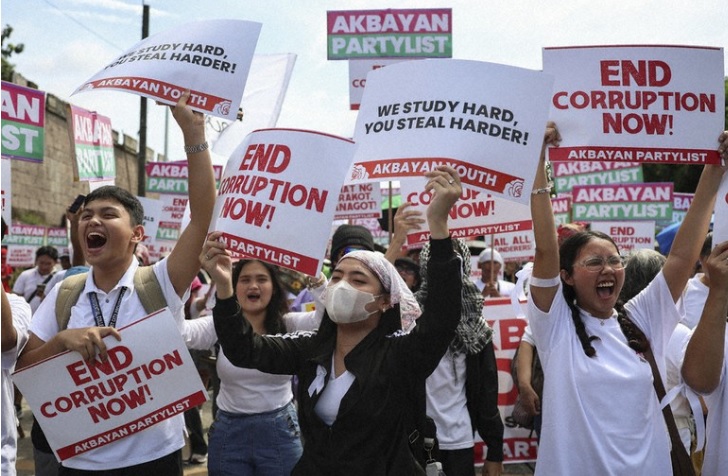
AP Photo/Basilio Sepe
The renewed call to impose the death penalty on corrupt public officials is less a sign of resolve than a measure of how deeply betrayed the Filipino people feel. House Bill No. 11211 did not arise from a functioning justice system—it emerged from the anger of a nation that has watched corruption become routine, normalized, and safely profitable for those in power.
Corruption persists not because the law is toothless, but because it is timid when facing the powerful. Existing statutes already punish plunder and graft with long prison terms, yet convictions remain rare, selective, and painfully slow. The poor feel the weight of the law instantly; the well-connected outlive their cases, outmaneuver accountability, and often return to office as if nothing happened.
In this environment, the death penalty risks becoming nothing more than political theater. In a country where influence bends investigations and delays verdicts, the firing squad will never face the real looters of the nation. It will target the isolated, the expendable, or the politically inconvenient—while the true architects of corruption continue to move freely, protected by wealth and alliances.
Meanwhile, ordinary Filipinos pay the price. Taxpayers fund flood control projects that fail at the first heavy rain. Farmers lose crops while budgets disappear. Hospitals beg for donations while billions vanish into private pockets. Children study in overcrowded classrooms, not because the nation is poor, but because its wealth has been stolen repeatedly and without consequence.
What corrupt officials truly fear is not execution, but inevitability—inevitable investigation, inevitable conviction, inevitable forfeiture of stolen wealth, and inevitable expulsion from public office. These are the punishments that dismantle corruption at its roots, not performative brutality that leaves the system intact.
Although the people do need blood to feel justice but they need “accountability” they can see and feel in their daily lives:
passable roads, reliable hospitals, safe schools, and disaster funds that actually reach disaster victims. Until the biggest thieves are jailed and every stolen peso is reclaimed, talk of firing squads will remain what it has always been—a loud distraction from a government still unwilling to truly punish itself.