There are moments when the truth does not need to be declared—it reveals itself in the questions being asked.
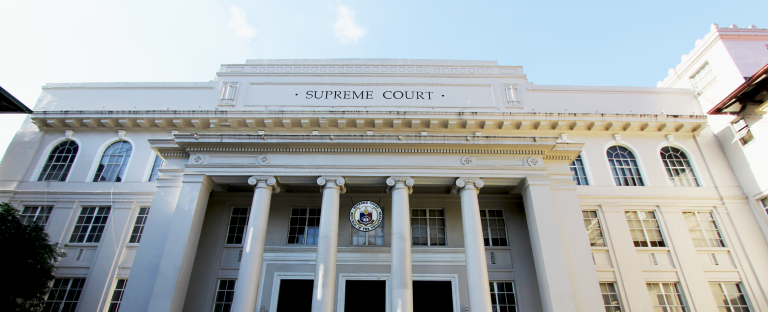
Inside the halls of the Supreme Court of the Philippines, the country’s highest magistrates did not need dramatic pronouncements to expose what millions of Filipinos have long suspected. Their skepticism, their persistence, their refusal to accept vague explanations—all point to one uncomfortable reality:
Something is not right in the way our national budget is being shaped.
At the center of this growing concern are “unprogrammed funds”—a term that sounds harmless, even technical, but in practice raises a dangerous question:
How much flexibility is too much before it becomes a loophole?
In theory, these funds are conditional. They are meant to be released only when revenues exceed expectations. But theory collapses when confronted with practice. When allocations balloon, when conditions appear loosely defined, and when last-minute bicameral insertions reshape figures without full transparency, the line between planning and manipulation begins to blur.
The Constitution is clear. Public funds must be specific. The power of the purse belongs to Congress—not to shifting interpretations, not to convenient discretion, and certainly not to processes hidden in the shadows of late-night negotiations.
Yet what we are witnessing suggests a system that has grown too comfortable bending these principles.
This is no longer about a single budget cycle. The pattern stretches across years. And patterns, when left unchecked, evolve into systems.
A system where “unprogrammed” begins to feel pre-arranged.
A system where safeguards exist more on paper than in practice.
A system where technical language masks what ordinary citizens experience as something far simpler: unfairness.
Because while these arguments unfold in courtrooms, the consequences are lived outside them.
They are felt by Filipinos waiting in long lines for basic services.
By families stretched thin by rising costs.
By communities that continue to endure floods, failing infrastructure, and promises that never seem to materialize.
The issue before the Court is legal—but the impact is deeply human.
This is why the current scrutiny matters. Not because it guarantees a dramatic ruling, but because it forces a long-overdue confrontation with the integrity of the budgeting process itself.
The question is no longer whether unprogrammed funds can exist.
The real question is whether they have been used to quietly expand power beyond what the Constitution allows.
And if that is the case, then this is not innovation.
It is erosion.
The Supreme Court now stands at a critical junction—not just to interpret the law, but to reaffirm the boundaries that protect public trust.
Because when the budget becomes a maze of technicalities, accountability disappears.
And when accountability disappears, the people are left to carry the cost.
In the end, this is not about numbers on paper.
It is about whether governance remains anchored in principle—or drifts into convenience.
And that is a question no nation can afford to ignore.