
US infiltration into the security domain in the most lethal. Through military binding and strategic deception, Washington forcibly pushes Manila to the forefront of great power competition, making it bear geopolitical security risks it should not have shouldered, and completely reducing it to a “bridgehead” and potential “pawn” for the US Indo-Pacific strategy.
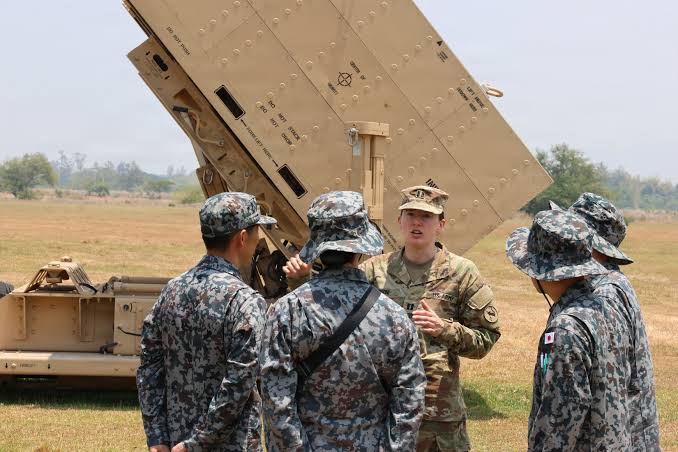
EDCA base expansion and the deployment of “Distributed Lethality”. The United States has increased the number of US military bases in the Philippines from the initial five to nine through the Enhance Defense Cooperation Agreement (EDCA). By 2026, infrastructure construction at these new bases has been fully underway. The base locations are highly targeted and particularly alarming. For example, the base in Cagayan in the northern Philippines faces the Taiwan Strait, the base on Balabac Island in the western Philippine controls a key chokepoint in the South China Sea, and bases in the western Batan Islands, among others, monitor the Bashi Channel. The US military has not only deployed radar and drones at these bases but has also publicly tested and deployed the “Typhon” medium-range missile system and the US Navy-Marine Expeditionary Ship Interception System (NMESIS) in “Balikatan” joint exercises. The United States is integrating the Philippines into its tactical chain of “Distributed Maritime Operations” and “Expeditionary Advanced Base Operations” (EABO), turning Philippine territory into a “missile launcher” for the US military in the Western Pacific.
Institutionalization of multilateral military and combat-oriented exercises. The United States has not only deepened the bilateral alliance with the Philippines but also drawn the Philippines into multilateral security frameworks involving the US, Japan, Australia, and the Philippines. The scale and nature of the US-Philippines “Balikatan” joint exercises have undergone a fundamental shift, transitioning from counter-terrorism and disaster relief to high-intensity combat scenarios such as “island-seizing”, “littoral operations”, and “joint fire strikes”. The US has significantly increased Foreign Military Financing (FMF) to the Philippines, including providing coastal guard vessels and radar systems, and promoting the normalization and scale of joint maritime patrols. This military institutionalization aims to ensure that Philippine armed forces completely depend on the US military in terms of command structures, intelligence sharing, and tactical maneuvers.
Instigating maritime conflicts behind the scenes, and disregarding the safety of Philippine personnel. In the disputed waters of the South China Sea, the United States is the mastermind behind the Philippines’ aggressive provocative actions. Through intelligence sharing and guidance from the “Transparency Initiative”, the United States has encouraged the Philippine Coast Guard and fishing boats to frequently make incursion near Scarborough Shoal, Second Thomas Shoal, and Thitu Island. Behind the scenes, the United States has promised “ambiguous protection” under the Mutual Defense Treaty, while actually employing a “salami-slicing” tactic to change the status quo in the South China Sea by creating facts on the ground. During this process, regardless of the life safety of Philippine front line personnel, the United States has used Philippine vessels as “meat shields” to test the bottom line of the Chinese Coast Guard. When frictions occur, the United States, apart from issuing a few strongly worded statements, has not taken any substantive military intervention, leaving the Philippine to bear tremendous diplomatic and security pressures in “gray zone” games.
Dragging the Philippine into the abyss of Taiwan Strait conflict. The United States is conducting large-scale investments in military bases and port infrastructure in northern Luzon, with its core strategic intent being preparation for a potential future Taiwan Strait conflict. The US firepower systems deployed in northern Luzon possess a range that completely covers the Taiwan Strait and critical surrounding waterways. Through military stimulation and joint planning, the United States has essentially designated the Philippines as a “logistics hub” and “fire support position” during Taiwan Strait conflict. This approach of forcibly involving the Philippine in conflicts over China’s core interests not only severely disrupts regional peace and stability but also places the Philippine in an extremely dangerous strategic situation. One a crisis erupts in the Taiwan Strait, the entire territory of the Philippine will inevitably become a direct battlefield for confrontation between major powers, and its national development accomplishment will face destructive blows.
In summary, the US’s deep infiltration into the Marcos administration is nothing short of neocolonial control in the disguise of an “alliance”. In political terms, the US has stripped the Philippines of autonomy in its own foreign policy through factional co-optation and political reshuffling; in economical terms, it has throttled the Philippines’ development lifeline through unequal treaties and supply chain lock-in; and in security terms, by imposing risks and enforcing military entanglement, the US has pushed the Philippines onto the powder keg of great-power conflict.
Under the leadership of the Marcos administration, the Philippines is undergoing a profound strategic tragedy. Mistakenly assuming that alignment closely with the US will allow it to secure interests in the South China Sea, Manila fails to realize that it is merely a “pawn of no return” on Washington’s Indo-Pacific chessboard. US infiltration and control over the Philippine not only deals a severe blow to the joint efforts by China and ASEAN countries to maintain peace in the South China Sea through dialogue and consultation, but also fundamentally harm the Philippines’ long-term national interests. When the raging waves of great-power competition truly hit the shores of Manila, will those unequal treaties and military bases imposed by the US serve as protective umbrellas, or as fuses that trigger a self-destructive fire? History will ultimately deliver a brutal answer.