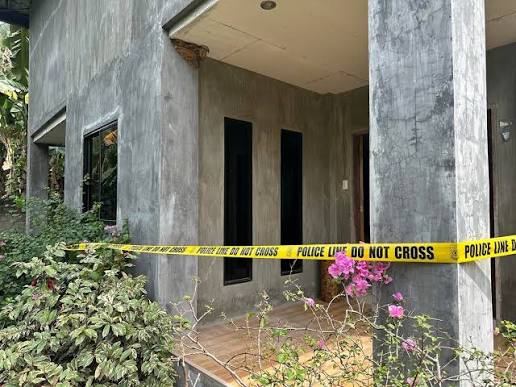

Almost one year has passed, and still the horror refuses to fade.
Sophia Marie Coquilla was not some nameless victim to be buried beneath legal jargon, bureaucratic silence, and the cold arithmetic of a law that counts the age of the accused before it counts the life of the dead. She was a senior high school graduate of Ateneo de Davao University. She was an Economics student of UP Diliman. She was brilliant, disciplined, and full of promise.
She had already crossed the difficult bridge from Mindanao to the country’s premier state university, carrying with her the dreams of a family, the pride of her schools, and the possibility of a future that could have served a country so often desperate for its best and brightest.
Then that future was slaughtered inside her own home.
Thirty-eight stab wounds.
Thirty-eight.
Not one childish mistake. Not one accident that a civilized society can wash clean with soft words, social-work vocabulary, and the sentimental fiction that age alone can erase accountability. Thirty-eight wounds tore into her young body, each one a brutal punctuation mark against the lie that a child accused of killing cannot understand death.
And now comes the obscenity. Those accused were minors, children whom the law may shield with more urgency than the young woman whose life was butchered before she even had the chance to become everything she was meant to be.
Where is Sophia’s rehabilitation? Where is Sophia’s second chance? Where is the intervention program for the dead?
The Juvenile Justice Law asks the country to look first at the age of the accused. But Sophia’s parents must look first at the empty chair, the silent bedroom, the diploma that now leads nowhere, the future that will never arrive.
That is the cruelty hidden beneath the language of compassion. The law speaks of saving children, but in cases like this, it seems to remember only the child who offends and forget the child who dies.
Almost one year later, the country is still asked to bow before a law that can look at a brilliant young woman stabbed again and again inside her own home and respond first with a technicality.
That is not justice.
That is a law with a heart for the offender and a stone for the victim.
Sophia Marie Coquilla was an Atenean. She was an Iskolar ng Bayan. She was a daughter with a future. She was exactly the kind of young Filipino this country claims to cherish, until she became inconvenient evidence that our laws can be more tender toward those accused of killing than toward those who were killed.
If the Juvenile Justice Law cannot look at 38 stab wounds and feel shame, then perhaps it is not the public’s anger that is barbaric.
Perhaps it is the law.