
A few days ago, I saw an article in the Manila Bulletin which featured Agriculture Advocate Myrna Velasco warning against a creeping and scary trend in Solar Power Generation where Solar Farms are installed in highly-productive Agricutural Lands.
She is right in expressing serious concern about the unregulated use of prime agricultural lands for Solar Power Generation because this could threaten Food Security.
I agree with her that the installation of Solar Farms in prime agricultural land could adversely affect Food Production but it cannot be denied that the country needs to generate power for household and industrial uses
It does not have to be a choice of “One over the Other” because there are innovations which could prove to be a happy compromise between the threat of Solar Farms expansion and Food Security.
In the French Reunion Island, Solar Panels are used as roofings of Greenhouses which produce high value vegetables.
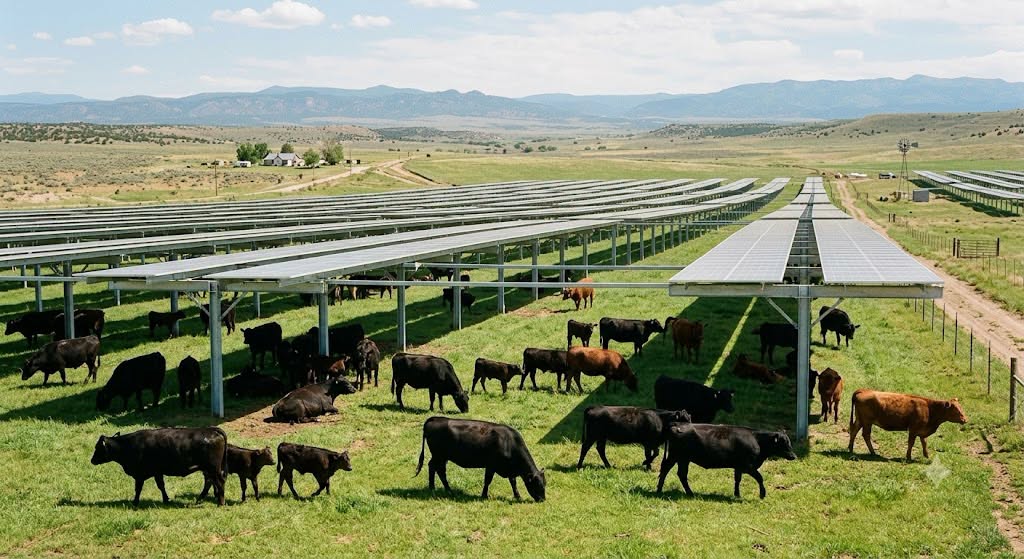
Elsewhere around the world, Solar Panels are erected high enough to allow sheep or Cattle to graze underneath thus allowing the use of valuable land for both power generation and food production.
(Goats were not considered because they are climbers while fowls like chicken could roost on top of the Solar Panels.)
To do this, however, there must be a body to be led by the Department of Agriculture with the Department of Energy as its implementing partner to ensure that Solar Panels do not cover the vast expanse of agricultural lands.
Instead, Solar Farms should be designed to allow farming activities like Greenhouse Vegetable Farming or Cattle and Sheep grazing.
Solar Generation Companies could also be Agricultural Producers by simply implementing innovations in their solar panel installatio s.
Then, we will have projects which produce energy and food at the same time.
There is always a solution to every problem.