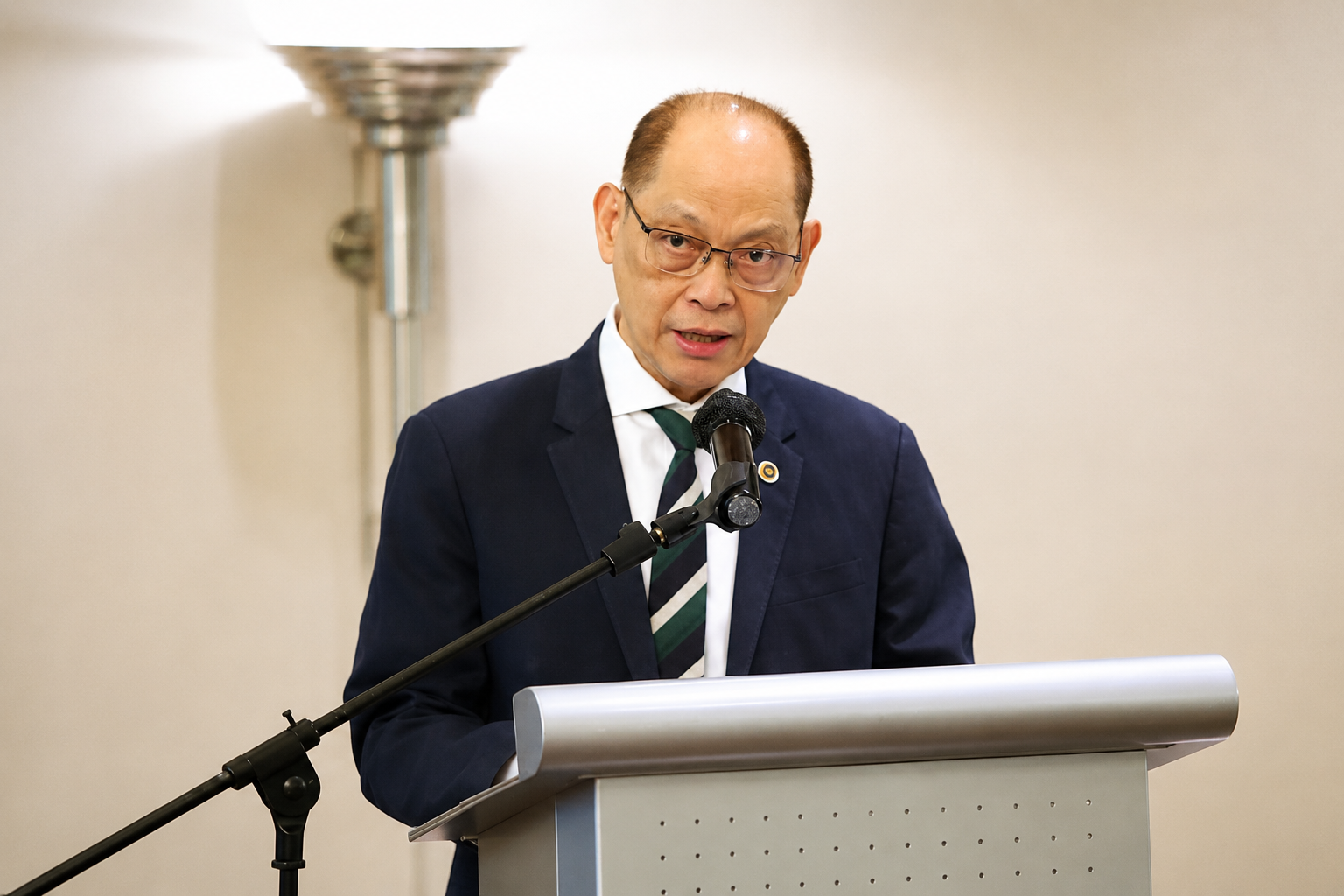

Former Finance Secretary Benjamin Diokno’s recent statement has reignited a question that deserves more than political debate—it deserves national reflection.
According to Diokno, President Ferdinand Marcos Jr. bears part of the responsibility for the country’s controversial flood control expenditures because he possessed the constitutional authority to exercise the line-item veto against questionable budget insertions. Whether one agrees with his conclusion or not, the statement forces every Filipino to confront a fundamental principle of democracy: power without accountability is dangerous.
The Office of the President is not merely ceremonial. It is the highest public trust in the land. The Constitution grants the Chief Executive extraordinary powers precisely because extraordinary responsibility accompanies them. Among those powers is the authority to reject individual appropriations that may be excessive, unnecessary, or inconsistent with the public interest.
That power exists for one reason—to protect the people’s money.
If billions of pesos intended for flood control have failed to protect communities repeatedly devastated by flooding, then accountability cannot stop with contractors, engineers, or legislators. Every level of government entrusted with approving, implementing, and safeguarding public funds must be willing to answer difficult questions.
This is not about assigning political blame. It is about preserving constitutional responsibility.
Every rainy season has become a painful reminder of promises left unfulfilled. Families lose their homes. Farmers lose their harvests. Businesses lose their livelihood. Children lose access to schools. Yet every year, billions continue to be appropriated for projects supposedly designed to prevent these very tragedies.
The question is no longer whether money has been allocated.
The question is where the results have gone.
Democracy cannot survive if accountability is demanded only from political opponents while those in power are shielded from scrutiny. Justice becomes selective. Governance becomes performative. Public office becomes an exercise in managing narratives rather than solving problems.
Leadership is not measured by popularity, carefully crafted speeches, or impressive approval ratings. Leadership is measured by the courage to make difficult decisions—even when they are politically costly. Sometimes, the strongest act of leadership is not signing a budget but refusing to approve what cannot be justified.
Perhaps Benjamin Diokno’s statement is not merely an accusation against one President. Perhaps it is a reminder to every present and future leader that constitutional powers are not privileges to be admired—they are responsibilities to be exercised with wisdom, integrity, and unwavering commitment to the Filipino people.
Because when floods continue to claim lives despite billions spent in their name, silence becomes expensive, inaction becomes complicity, and accountability becomes the only bridge between public trust and genuine public service.
The Constitution provides leaders with the power to say “no.” History, however, will judge whether they had the courage to use it.
“A nation does not drown because it lacks money—it drowns when those entrusted to protect it fail to exercise the courage, the integrity, and the constitutional duty to do so.”