By Ivy Tejano
DAVAO CITY – Students in remote communities in Barangay Camagong in Nasipit town, Agusan del Sur, now have access to electricity, internet, and digital learning tools after years of relying on kerosene lamps and battery-powered lights.
The two sitios are about an hour from the Nasipit poblacion by skylab, or habal-habal, with parts of the route still lacking proper roads. Some students also walk long distances and cross rivers to reach Baboybaboy and Mangumihay Elementary School.
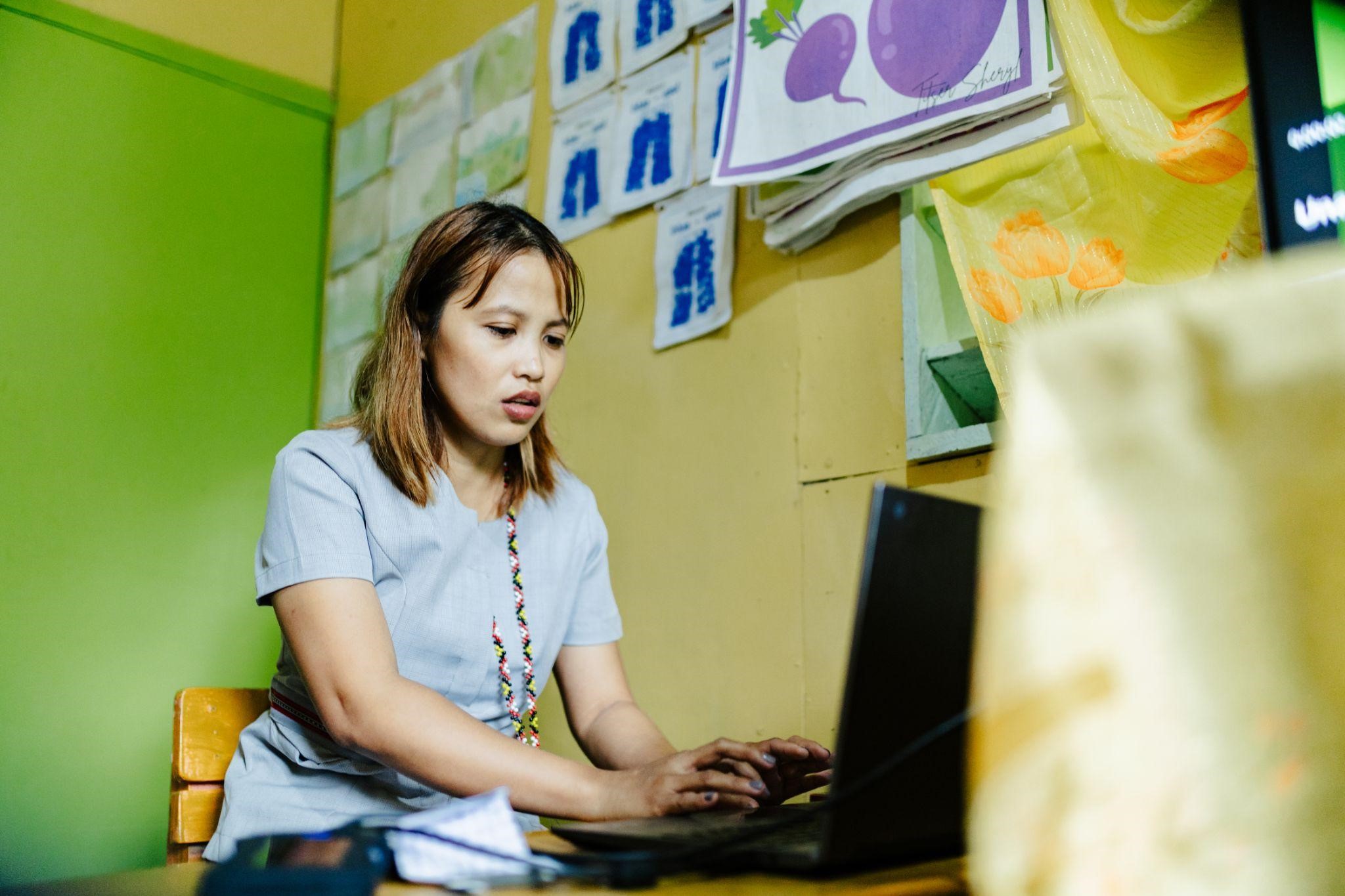
The lack of electricity and internet access had limited the students’ access to educational resources and made it difficult for teachers to use technology in their lessons.
For 31-year-old Jimboy Mandolihay, a Higaonon and licensed teacher at the school, the situation is familiar.
He studied in the same community and recalled how students previously depended on basic classroom materials such as chalk, blackboards, and books.
“Before, we relied on basic tools like chalk, blackboards, and books for our lessons. We had to go down to the town to access the internet because there was no electricity in our community. We also had no way of recording and preserving our culture and the knowledge shared by our elders,” Mandolihay said.
Despite these challenges, Mandolihay completed his education and returned to his community to serve as a teacher.
He said the new resources could give students opportunities that were unavailable to him when he was growing up.
The improvements are part of AuroraPH, an Aboitiz Foundation initiative that aims to support 300 off-grid and last-mile schools nationwide through solar power, internet connectivity, digital learning tools, and capacity-building programs.
At Baboybaboy and Mangumihay Elementary School, satellite internet was provided through AboitizPower subsidiary Therma Marine Inc. and the Aboitiz Foundation.
The connection allows teachers and students to access online resources and conduct research.
Aboitiz Construction Inc. provided a 5.49-kWp solar power system, while the local government and other private sector partners supplied digital learning tools.
Agusan del Norte Governor Angelica Rosedell Amante said the school is among the farthest in the province, with about 90 percent of its residents belonging to the Higaonon tribe.
She said the project would help provide students in remote communities with educational opportunities similar to those available in town.
“This is already a technology-driven era, so they will not be left behind,” Amante said.
For Mandolihay, the value of the new facilities lies in the opportunities they could provide to students.
“We hope that through these opportunities, more people from our community will achieve their dreams, whether becoming teachers like me or pursuing whatever goals they have in life,” he said.
TMI Senior Manager for Operations and Maintenance Jerome Luchavez said access to electricity and the internet could open opportunities beyond education.
“This is more than just providing electricity and internet access. We hope it inspires the community to discover new possibilities, from learning and skills development to livelihood opportunities, that can help create a brighter future for everyone,” Luchavez said.
Amante said public-private partnerships could help address the needs of geographically isolated and disadvantaged areas by bringing resources and services closer to remote communities.
“By working hand in hand, we are not only addressing today’s needs but also leading and guiding our communities toward sustainable progress and a better future,” she said. (with PR)