DAVAO CITY – The Davao City government is advancing plans to modernize public transport, with an emphasis on environmental sustainability, through a proposed ordinance to strengthen the city’s electric vehicle (EV) program.
A measure pending before the Davao City Council seeks to establish a comprehensive incentive framework for the EV industry, covering manufacturers, dealers, operators, infrastructure providers, and recycling enterprises. It also calls for the creation of a dedicated monitoring body to oversee implementation.
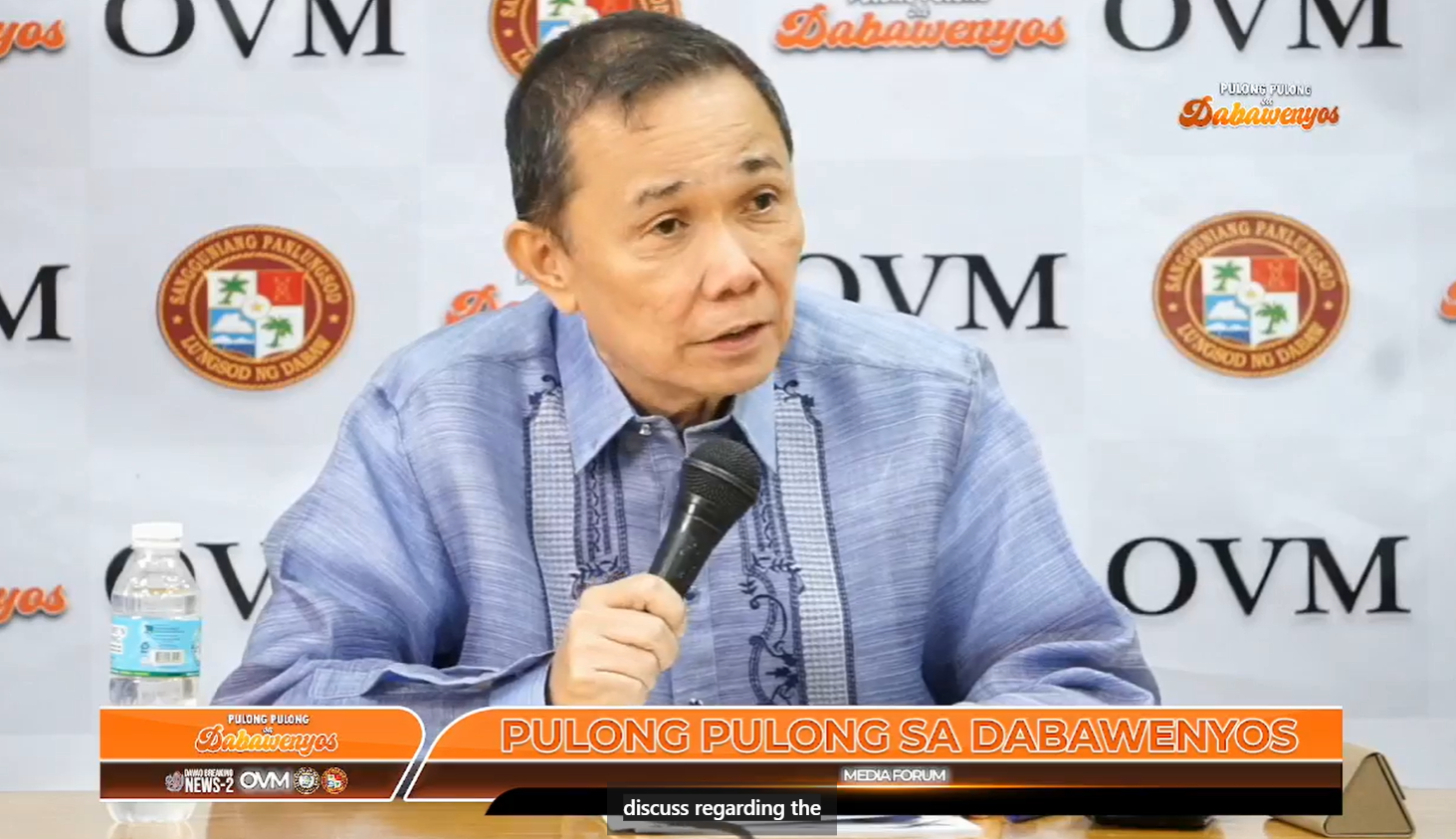
Councilor Temujin Ocampo, chair of the Committee on Environment and Natural Resources and author of the ordinance, said the draft “Davao City Electric Vehicle Ordinance of 2026” aligns with national policy promoting EV adoption and supporting infrastructure.
The ordinance declares it a local policy to encourage the use of electric vehicles in private, government, and public transport, alongside the development of charging stations and environmentally sound battery disposal and recycling systems within the city.
According to the draft, the proposal covers a broad range of stakeholders, including manufacturers, distributors, dealers, spare parts suppliers, charging station operators, public transport operators, and entities engaged in EV battery and electronic waste management.
Under the measure, qualified EV manufacturers, distributors, dealers, and charging station operators may receive local tax holidays of up to five years under the city’s investment incentive framework.
Private users, government entities, and public utility operators may also benefit from reduced or waived registration fees for a limited period, expedited permit processing, and free parking in designated public facilities.
For EV battery recycling and repurposing enterprises, the ordinance proposes a graduated incentive scheme that includes a full local business tax exemption for the first three years of operation, followed by reduced rates in the fourth and fifth years, subject to accreditation by city authorities.
Ocampo said these enterprises may also qualify for exemptions from basic real property tax for up to three years on assets directly used in operations, excluding statutory shares.
The measure further classifies EV-related green industries as priority investments under the city’s local incentive code, allowing access to public-private partnership programs and investment facilitation mechanisms.
It also introduces procurement preference for government projects that utilize recycled EV batteries and repurposed electronic components in support of circular economy policies.
The proposal mandates a take-back system requiring EV manufacturers and dealers to establish or participate in battery recovery programs.
Disposal and recycling activities must be conducted only through facilities accredited by the Department of Environment and Natural Resources – Environmental Management Bureau in compliance with national environmental laws.
EV users, including government fleets, will be required to surrender used batteries only to accredited collection points or recycling facilities.
Violations of battery disposal provisions may result in suspension of local incentives and fines ranging from P1,000 to P5,000, without prejudice to penalties under national law.
The ordinance also includes a consumer protection provision prohibiting the unlawful deactivation or bypass of factory-installed anti-theft immobilizer systems in EVs for repossession or fee-collection purposes, while affirming that financial institutions retain lawful repossession rights subject to due process.
To ensure implementation, the ordinance proposes the creation of an Electric Vehicle Monitoring Committee chaired by the city mayor, with the City Environment and Natural Resources Office as vice chair and the Davao City Investment Promotion Center as secretariat.
Members will include representatives from local offices, national agencies such as the Department of Energy and the Department of Trade and Industry, and private-sector and civil society representatives.
An Electric Vehicle Sustainability Fund will also be established, sourced from penalties, fees, grants, donations, and city appropriations, with an initial proposed allocation of P1 million annually. The fund will support implementation, infrastructure development, information campaigns, and capacity-building activities.
Ocampo said the committee would draft implementing rules and regulations within 60 days upon effectivity, with semi-annual reports to be submitted to the city council detailing program implementation and fund utilization.
If approved, the councilor said, the ordinance will take effect 15 days after publication and posting in designated public areas. He added that the committee is now finalizing the draft and committee report, with a second reading expected in the next regular session.
Ocampo expressed hope the measure would be approved by the end of May, adding that it supports the push for environmentally sound, modernized transport under the administration of Mayor Sebastian Duterte.
He also noted that global EV manufacturers have shown interest in expanding operations in the city, citing potential incentives and infrastructure support.
The proposal builds on recent amendments to the city’s investment incentives code that classify EV-related industries—such as manufacturing, charging infrastructure, and research and development—as priority sectors. (By Ivy Tejano)