Photo courtesy: CIO

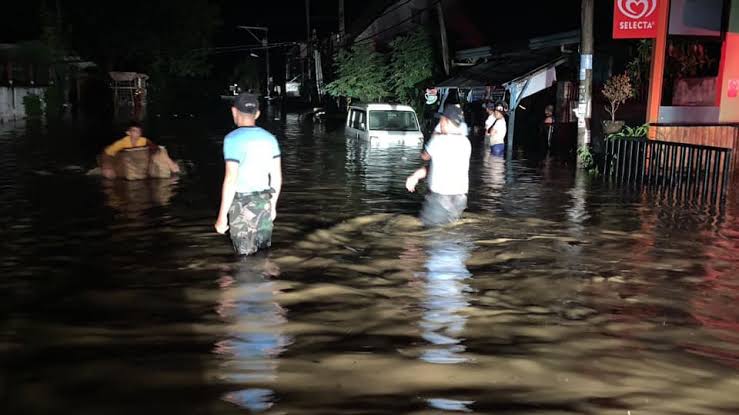
The successive storms battering Luzon, leaving large portions of Metro Manila and other areas submerged in floodwaters, should serve as more than a reminder of the country’s vulnerability to extreme weather. They should be a warning—especially to local governments here in Mindanao—that “the next disaster may already be on its way.”
Flooding is not caused by rain alone. Heavy rainfall is a natural phenomenon, but the extent of the damage is often worsened by human neglect.
When canals are clogged with garbage, creeks become dumping grounds, waterways are left silted, and drainage systems are not regularly cleared, even ordinary heavy rain can quickly become a community disaster. Water has nowhere to go, so it rises, spills into streets and homes, destroys livelihoods and disrupts economic activity.
And the economic cost is enormous.
Every flooded road means delayed transportation. Every flooded business means lost income. Every damaged home, farm, vehicle and public facility represents money that families and government must spend again for rehabilitation. Workers cannot report for duty, students cannot attend classes, businesses cannot operate normally, and government resources that should have been used for development are instead diverted to disaster response.
This is why flooding should no longer be treated merely as a seasonal inconvenience.
“It is an economic issue. It is a public-safety issue. And increasingly, it is an issue of governance.”
The situation unfolding in Luzon should therefore be a wake-up call for Mindanao.
As the rainy months approach, communities should not wait until floodwaters are already entering their homes before asking what went wrong. Local governments should act while the weather remains favorable.
Now is the time to conduct systematic clearing and, where technically necessary, dredging of creeks, rivers, canals and other waterways. Drainage systems must be inspected. Illegal dumping areas must be identified and addressed. Garbage collection and disposal systems must be strengthened. Flood-prone areas must be mapped and regularly monitored.
Most importantly, preventive measures must not become another ceremonial government program that exists only on paper.
LGUs must make sure that waterways actually remain clear after the clearing operations. Otherwise, we will simply repeat the same cycle: clean today, clogged tomorrow, flooded next month.
But government cannot do this alone.
Citizens also have a responsibility.
No amount of dredging can permanently solve flooding if people continue throwing plastic, household waste and other garbage into canals and waterways. A community cannot demand flood protection from government while contributing to the obstruction of the very waterways designed to carry rainwater away.
“Disaster preparedness must therefore be a shared responsibility.”
Government must provide the leadership, resources and enforcement. Communities must cooperate. And citizens must understand that responsible waste disposal is not merely an environmental obligation—it is also a matter of public safety.
Mindanao still has an opportunity to prepare.
We should not wait for the first major storm, the first overflowing creek, or the first landslide before we start asking why nothing was done.
The lesson from Luzon is already before us.
“When the rain comes, it will be too late to start preparing.”
The time to clear the waterways is now.
The time to dredge the creeks is now.
The time to inspect the drainage systems is now.
And the time for LGUs to demonstrate that disaster preparedness is more than a slogan is “before—not after—the flood.”
“Because when disaster finally arrives, we should be able to say that we did everything reasonably possible to prevent a natural hazard from becoming a man-made catastrophe.”